Choi Byeong Hyeok, Chen Changyan, Philips Mark, Dai Wei
Department of Environmental Medicine, New York University Langone Medical Center, New York, NY, USA.
Center for Drug Discovery, Northeastern University, Boston, MA, USA.
Oncotarget. 2017 Dec 15;9(4):4440-4450. doi: 10.18632/oncotarget.23269. eCollection 2018 Jan 12.
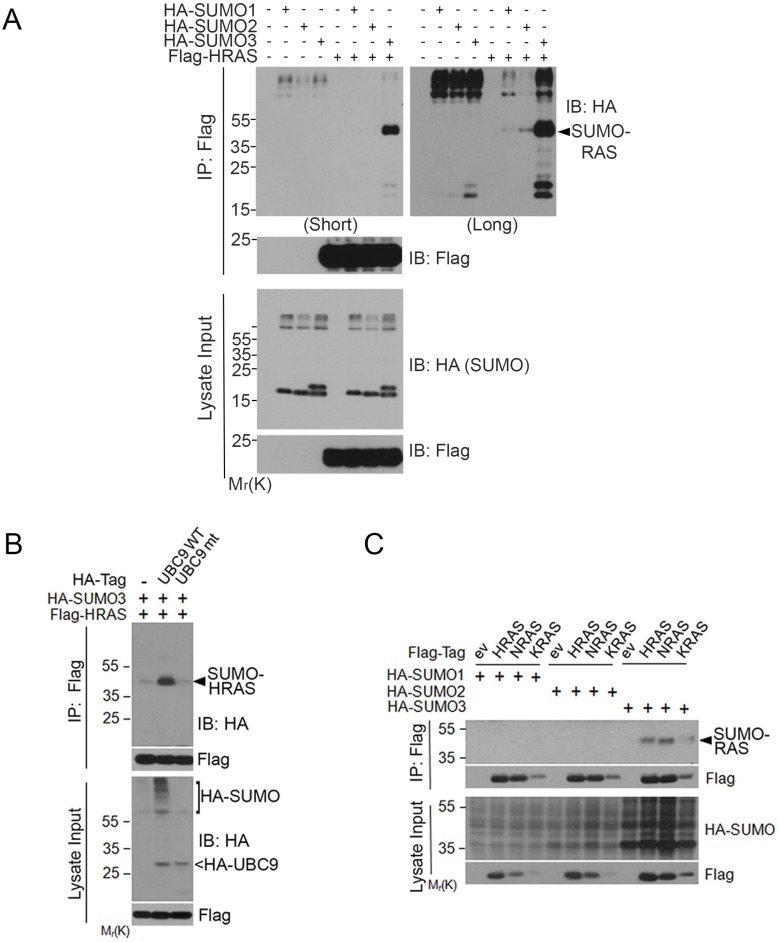
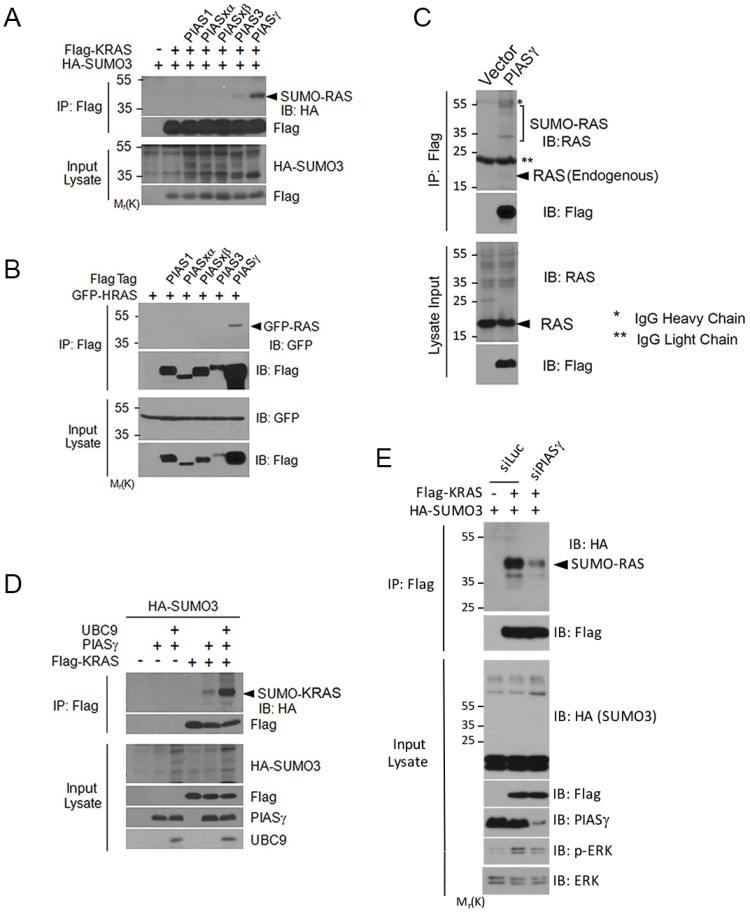
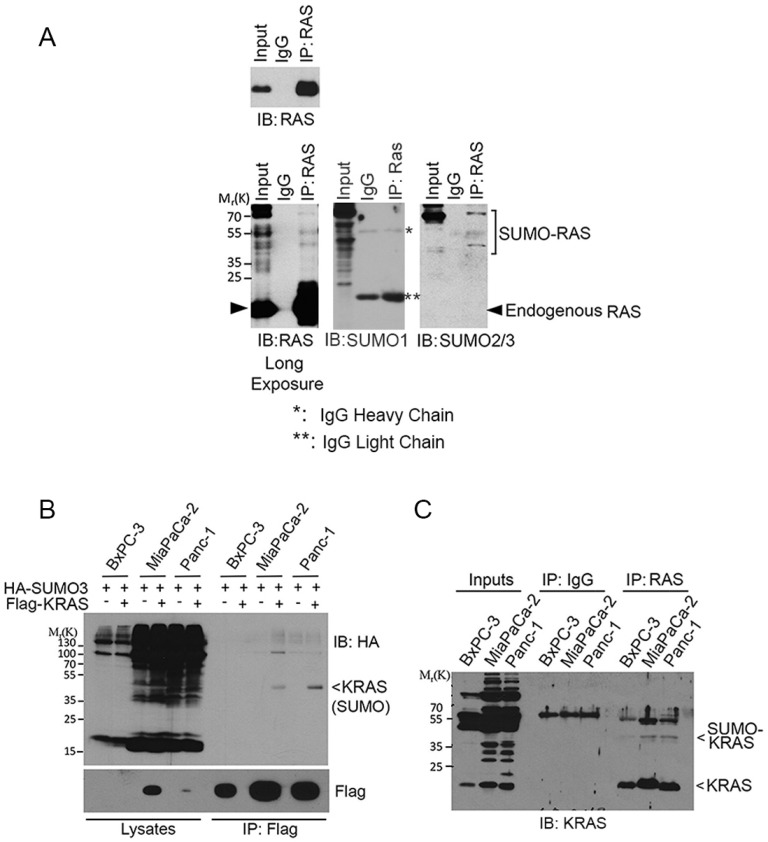
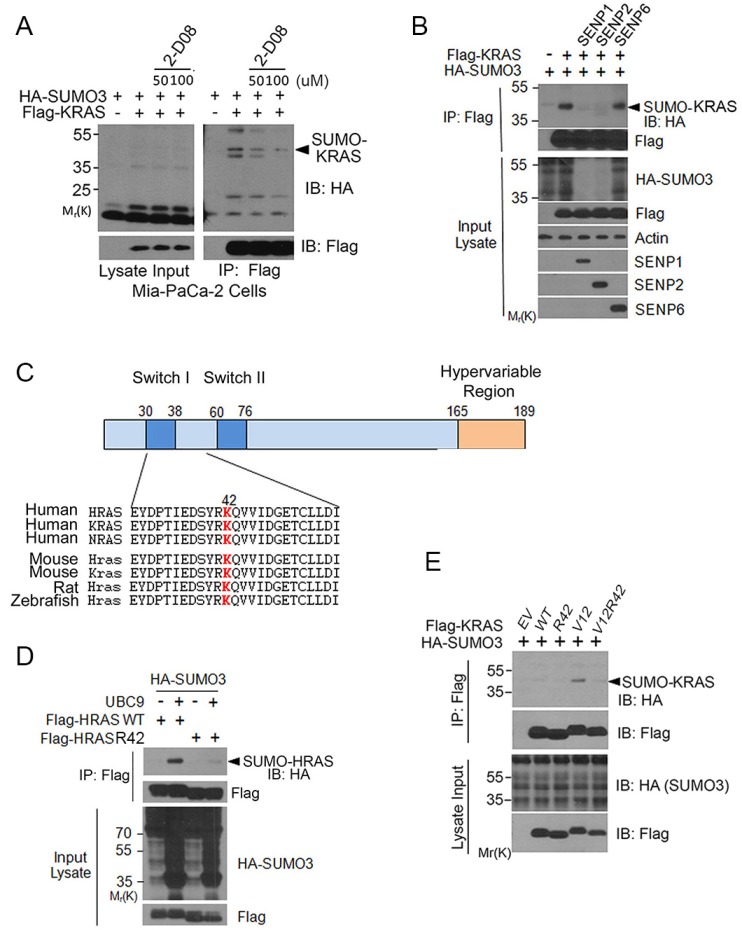
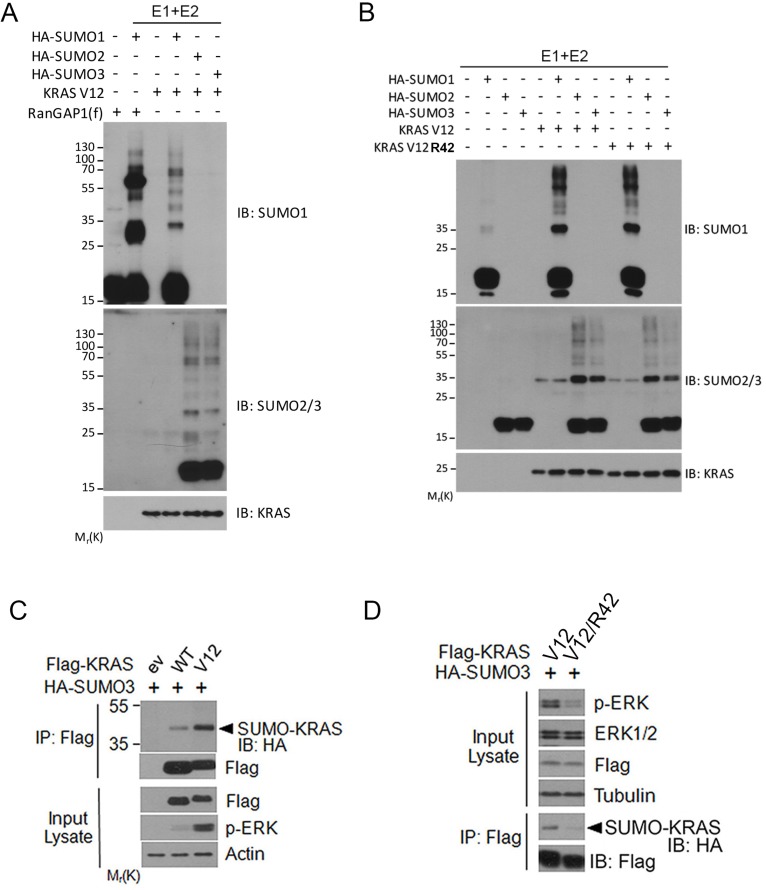
RAS proteins are GTPases that participate in multiple signal cascades, regulating crucial cellular processes including cell survival, proliferation, differentiation, and autophagy. Mutations or deregulated activities of RAS are frequently the driving force for oncogenic transformation and tumorigenesis. Given the important roles of the small ubiquitin-related modifier (SUMO) pathway in controlling the stability, activity, or subcellular localization of key cellular regulators, we investigated here whether RAS proteins are posttranslationally modified ( SUMOylated) by the SUMO pathway. We observed that all three RAS protein isoforms (HRAS, KRAS, and NRAS) were modified by the SUMO3 protein. SUMOylation of KRAS protein, either endogenous or ectopically expressed, was observed in multiple cell lines. The SUMO3 modification of KRAS proteins could be removed by SUMO1/sentrin-specific peptidase 1 (SENP1) and SENP2, but not by SENP6, indicating that RAS SUMOylation is a reversible process. A conserved residue in RAS, Lys-42, was a site that mediates SUMOylation. Results from biochemical and molecular studies indicated that the SUMO-E3 ligase PIASγ specifically interacts with RAS and promotes its SUMOylation. Moreover, SUMOylation of RAS appeared to be associated with its activation. In summary, our study reveals a new posttranslational modification for RAS proteins. Since we found that HRAS, KRAS, and NRAS can all be SUMOylated, we propose that SUMOylation might represent a mechanism by which RAS activities are controlled.
RAS蛋白是参与多种信号级联反应的GTP酶,可调节包括细胞存活、增殖、分化和自噬在内的关键细胞过程。RAS的突变或活性失调常常是致癌转化和肿瘤发生的驱动力。鉴于小泛素相关修饰物(SUMO)途径在控制关键细胞调节因子的稳定性、活性或亚细胞定位方面的重要作用,我们在此研究RAS蛋白是否通过SUMO途径进行翻译后修饰(SUMO化)。我们观察到所有三种RAS蛋白亚型(HRAS、KRAS和NRAS)均被SUMO3蛋白修饰。在多种细胞系中均观察到内源性或异位表达的KRAS蛋白发生SUMO化。KRAS蛋白的SUMO3修饰可被SUMO1/ sentrin特异性蛋白酶1(SENP1)和SENP2去除,但不能被SENP6去除,这表明RAS SUMO化是一个可逆过程。RAS中的一个保守残基Lys-42是介导SUMO化的位点。生化和分子研究结果表明,SUMO-E3连接酶PIASγ与RAS特异性相互作用并促进其SUMO化。此外,RAS的SUMO化似乎与其激活有关。总之,我们的研究揭示了RAS蛋白一种新的翻译后修饰。由于我们发现HRAS、KRAS和NRAS都可以被SUMO化,我们提出SUMO化可能代表一种控制RAS活性的机制。