Department of Bionanoscience, Kavli Institute of Nanoscience, Delft University of Technology, Delft, Netherlands.
Zernike Institute for Advanced Materials, University of Groningen, Groningen, Netherlands.
Elife. 2018 Feb 14;7:e31510. doi: 10.7554/eLife.31510.
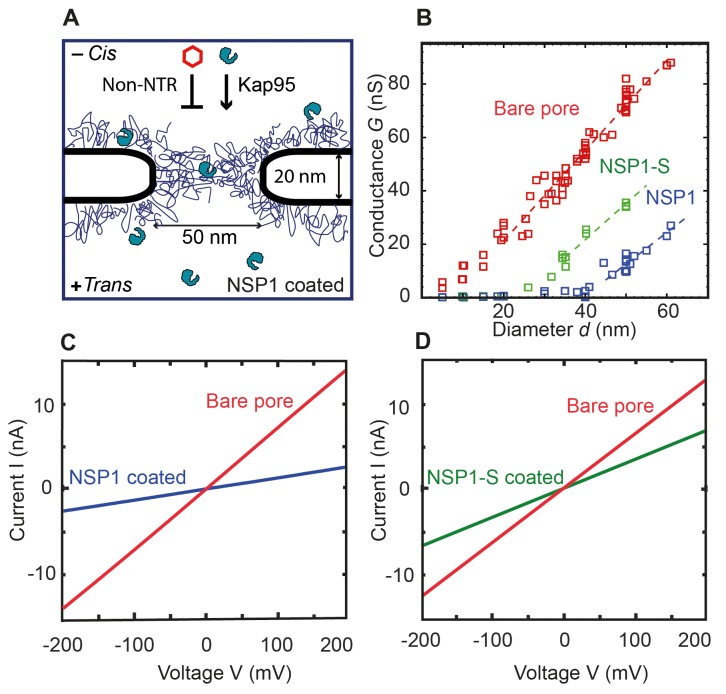
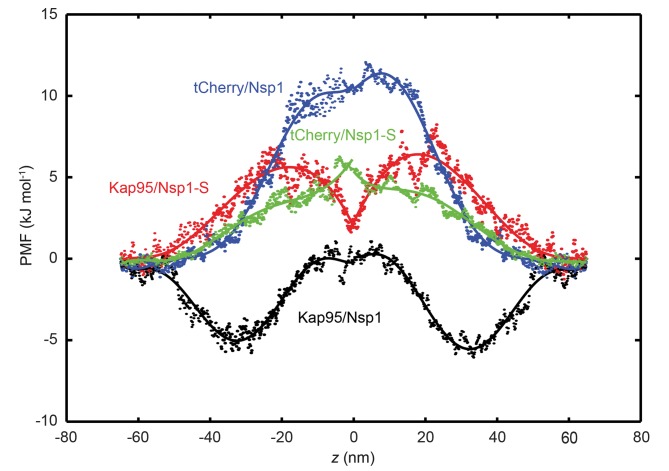
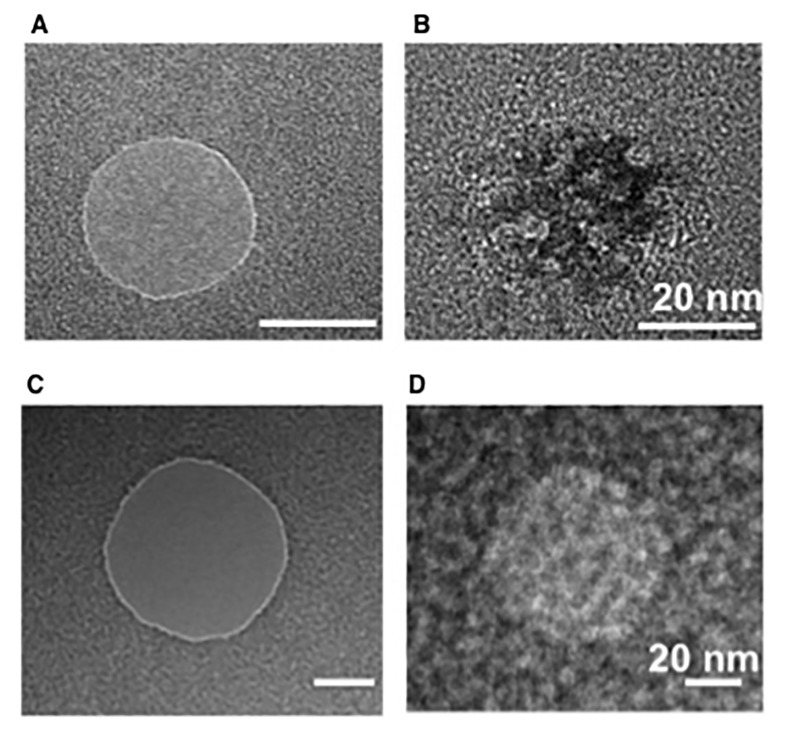
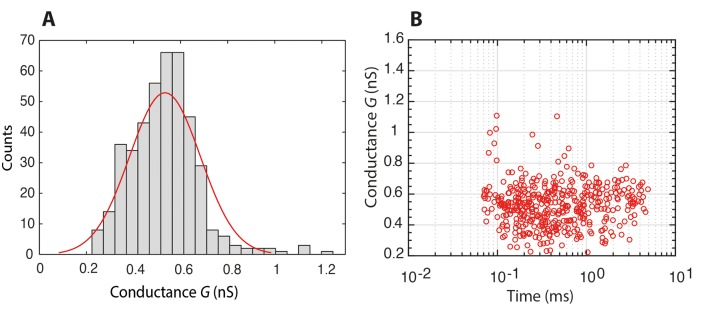
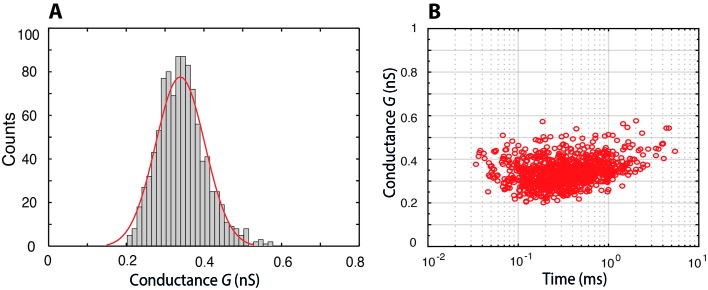
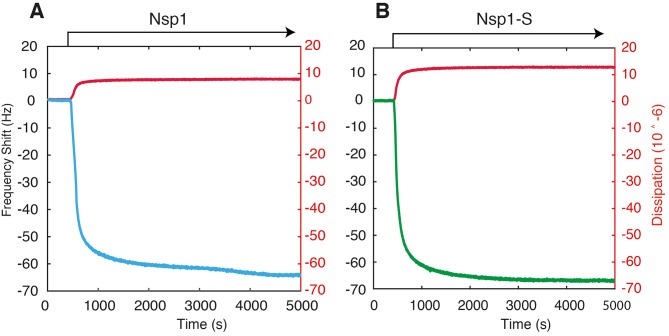
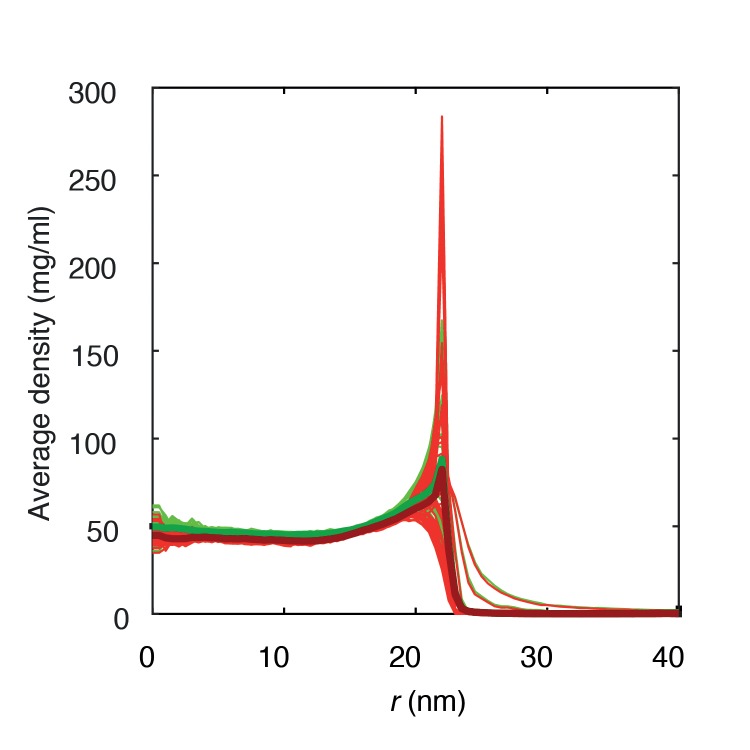
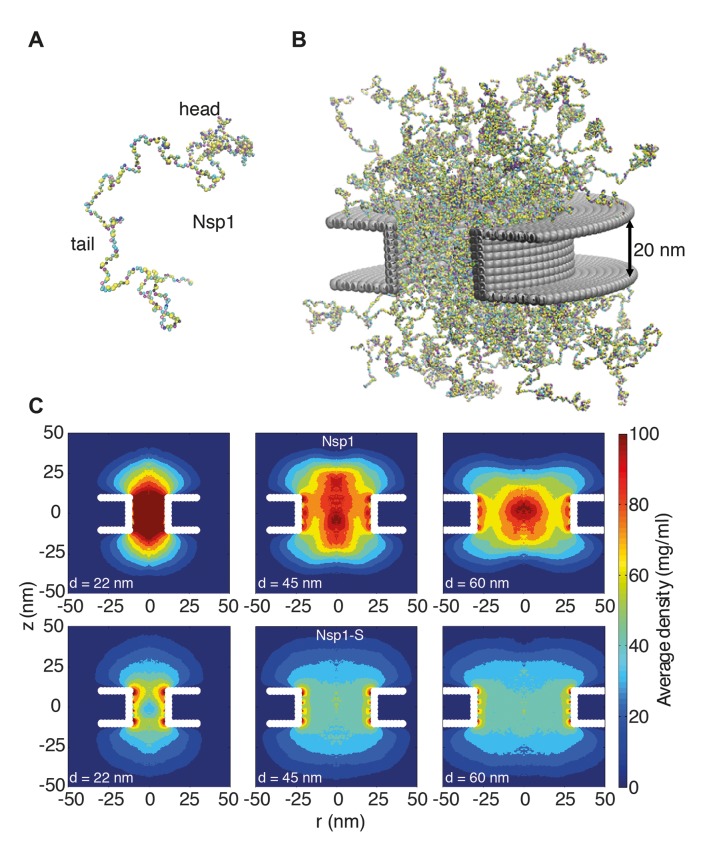
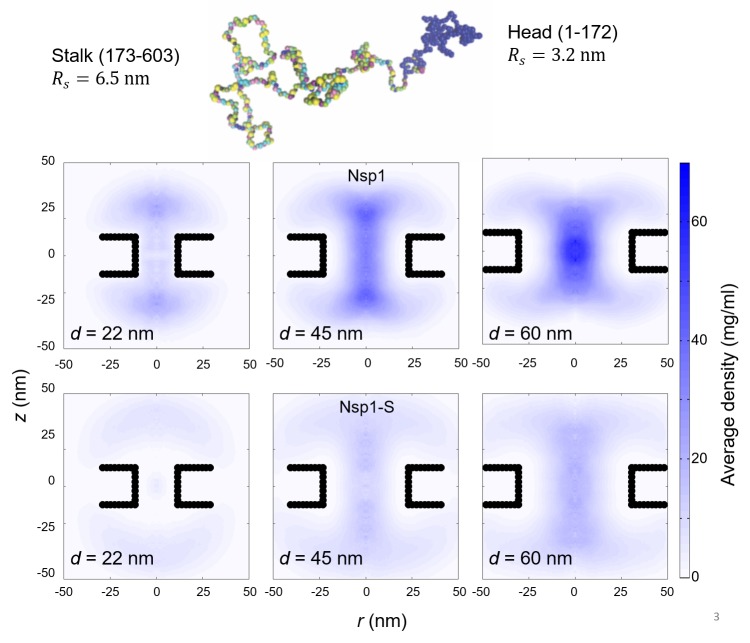
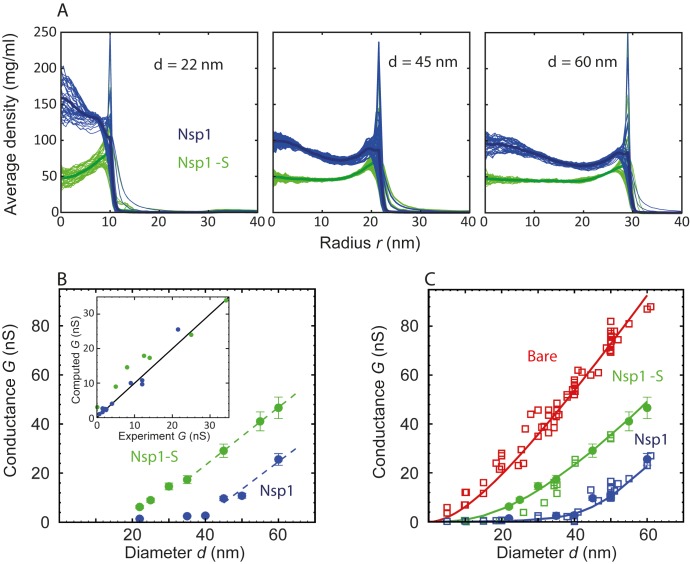
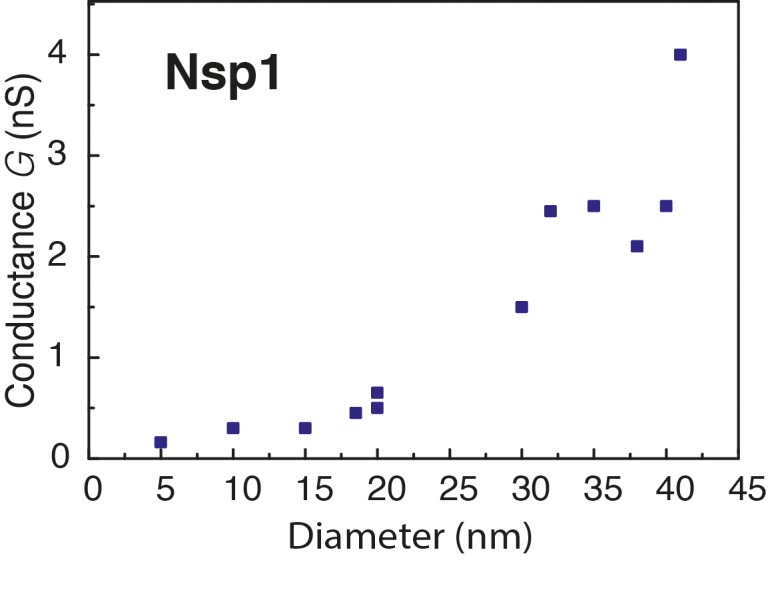
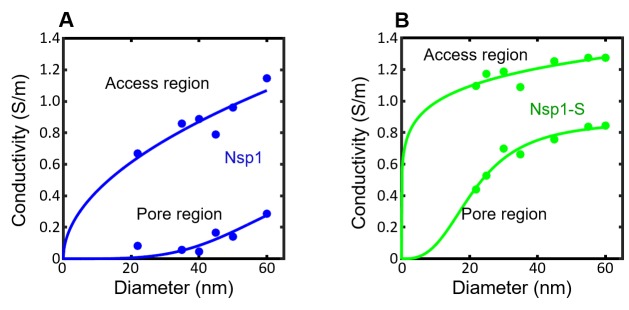
Nuclear pore complexes (NPCs) lined with intrinsically disordered FG-domains act as selective gatekeepers for molecular transport between the nucleus and the cytoplasm in eukaryotic cells. The underlying physical mechanism of the intriguing selectivity is still under debate. Here, we probe the transport of ions and transport receptors through biomimetic NPCs consisting of Nsp1 domains attached to the inner surface of solid-state nanopores. We examine both wildtype FG-domains and hydrophilic SG-mutants. FG-nanopores showed a clear selectivity as transport receptors can translocate across the pore whereas other proteins cannot. SG mutant pores lack such selectivity. To unravel this striking difference, we present coarse-grained molecular dynamics simulations that reveal that FG-pores exhibit a high-density, nonuniform protein distribution, in contrast to a uniform and significantly less-dense protein distribution in the SG-mutant. We conclude that the sequence-dependent density distribution of disordered proteins inside the NPC plays a key role for its conductivity and selective permeability.
核孔复合体(NPC)由内在无序的 FG 结构域排列而成,在真核细胞中充当核质间分子运输的选择性门控。这种有趣的选择性的潜在物理机制仍存在争议。在这里,我们通过附着在固态纳米孔内表面的 Nsp1 结构域来探测离子和转运受体在仿生 NPC 中的运输。我们研究了野生型 FG 结构域和亲水 SG 突变体。FG 纳米孔表现出明显的选择性,因为转运受体可以穿过孔转运,而其他蛋白质则不能。SG 突变体孔缺乏这种选择性。为了解开这一显著差异,我们提出了粗粒化分子动力学模拟,结果表明 FG 孔表现出高密度、不均匀的蛋白质分布,而 SG 突变体孔则呈现均匀且密度显著较低的蛋白质分布。我们得出结论,NPC 内无序蛋白质的序列依赖性密度分布对其导电性和选择性渗透性起着关键作用。