Guo Shujuan, Yan Xingyu, Shi Feifei, Ma Ke, Chen Zi-Jiang, Zhang Cong
Key Laboratory of Animal Resistance Research, College of Life Science, Shandong Normal University, Ji'nan, Shandong 250014, China.
Hebei Medical University Nursing School, Shijiazhuang 050000, China.
J Reprod Dev. 2018 Apr 13;64(2):179-186. doi: 10.1262/jrd.2017-088. Epub 2018 Feb 15.
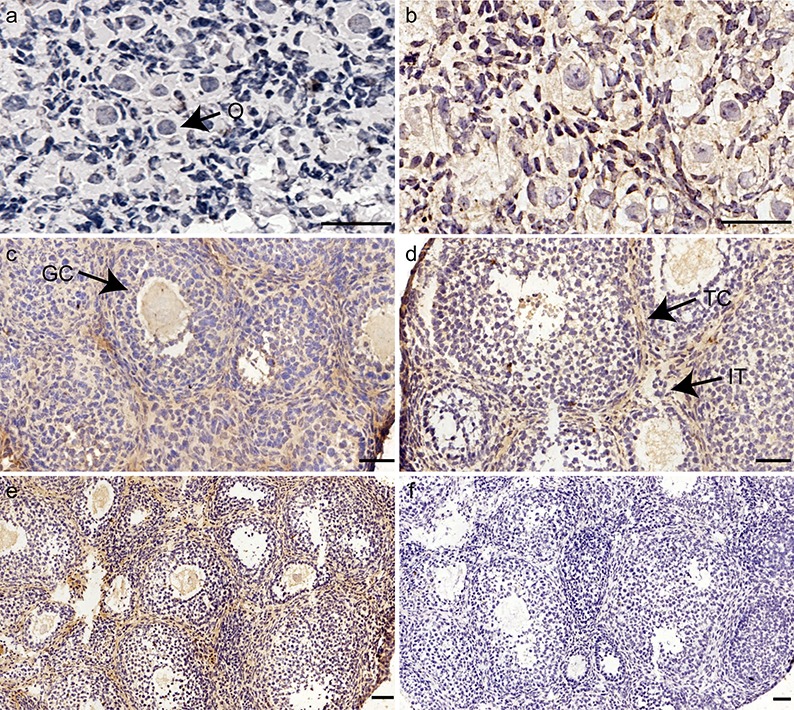
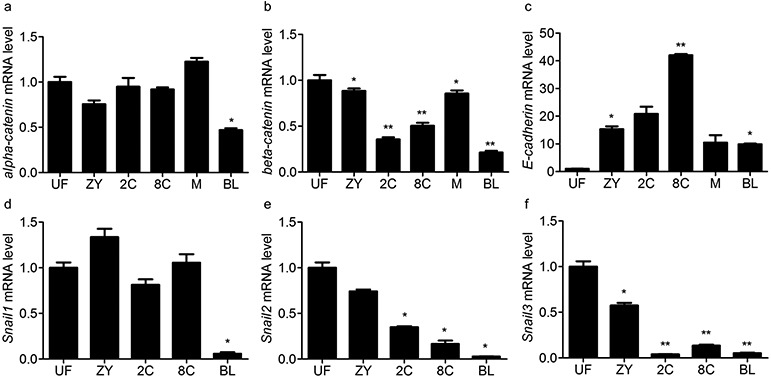
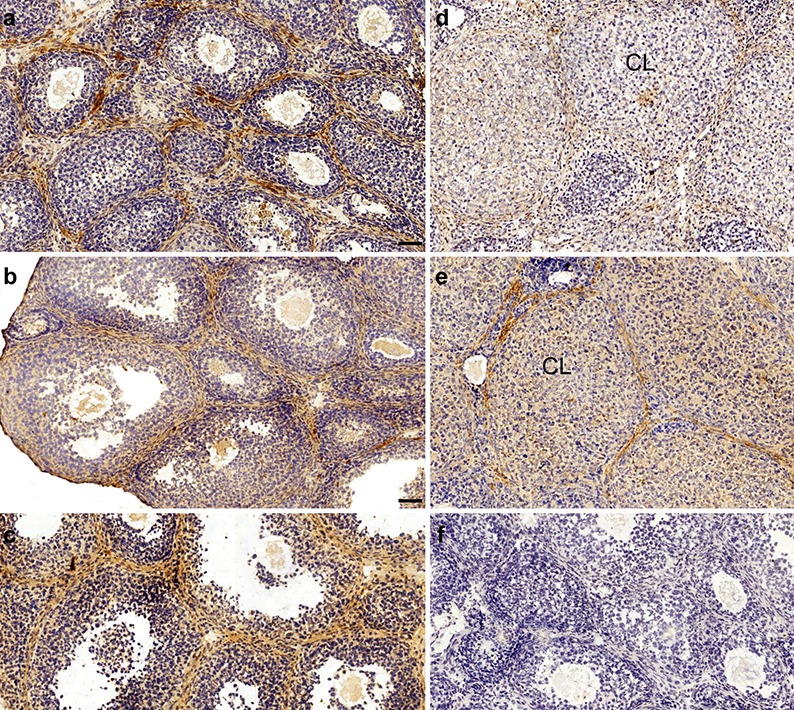
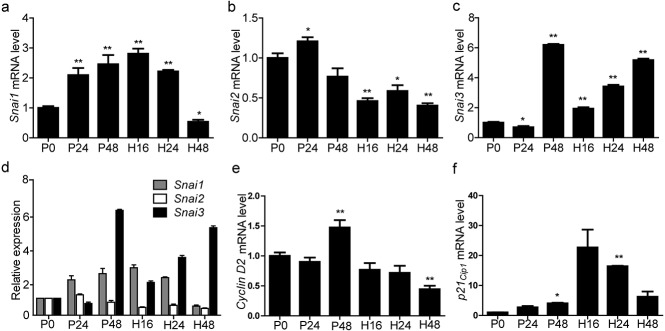
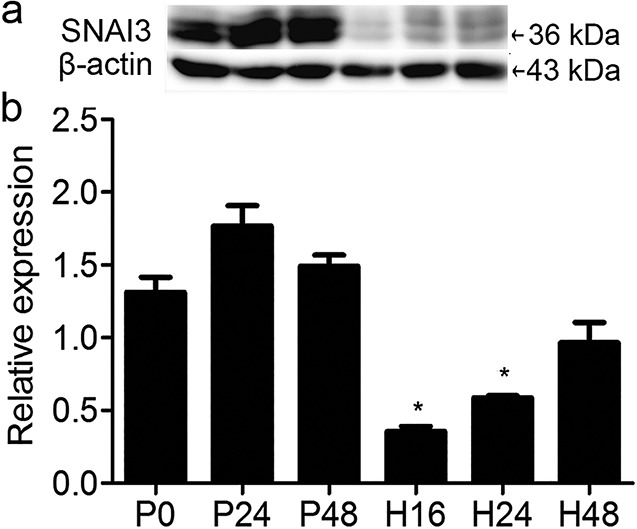
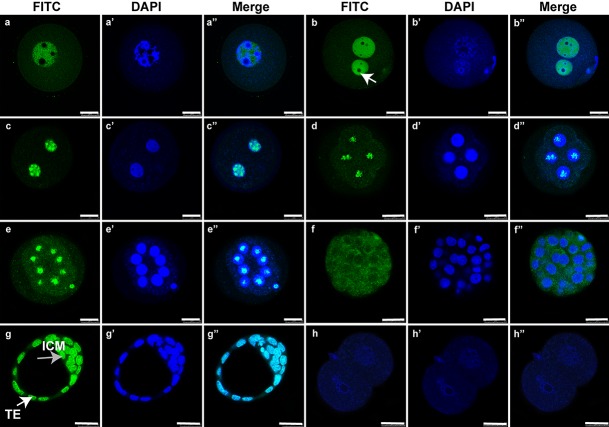
The Snail gene family includes Snai1, Snai2, and Snai3 that encode zinc finger-containing transcriptional repressors in mammals. The expression and localization of SNAI1 and SNAI2 have been studied extensively during folliculogenesis, ovulation, luteinization, and embryogenesis in mice. However, the role of SNAI3 is unknown. In this study, we investigated the expression of SNAI3 during these processes. Our immunohistochemistry data showed that SNAI3 first appeared in oocytes by postnatal day (PD) 9. Following this, SNAI3 was found to be expressed consistently in theca and interstitial cells, along with oocytes. In gonadotropin-treated immature mice, the expression of SNAI3 did not change significantly during follicular development. The expression of SNAI3 was reduced during ovulation, after which it increased gradually during luteinization. Similar results were obtained from western blot analyses. Furthermore, real-time polymerase chain reaction (RT-PCR) analyses revealed varying mRNA levels of different Snail factors at a given time in gonadotropin-induced ovaries. During early embryo cleavage, SNAI3 was localized to the nucleus, except the nucleolus at the germinal vesicle and one-cell stages. From two- to eight-cell stages, SNAI3 was localized only to the nucleolus. Thereafter, SNAI3 was detected only in the cytoplasm, except during the blastocyst stage when it was localized to the nucleus of the trophectoderm and the inner cell mass. RT-PCR results showed that the expression of Snail superfamily genes was decreased during the blastocyst stage. From the eight-cell to morula stage, when compaction occurs that is a prerequisite for blastocyst formation, Snai3 mRNA was expressed at very low levels and was opposite to the highest expression level of the compaction-related gene, E-cadherin, at the eight-cell stage. Taken together, our results suggest that SNAI3 likely plays some roles during folliculogenesis, luteinization, and early embryonic development.
Snail基因家族包括Snai1、Snai2和Snai3,它们在哺乳动物中编码含锌指的转录抑制因子。在小鼠卵泡发生、排卵、黄体化和胚胎发生过程中,对SNAI1和SNAI2的表达及定位进行了广泛研究。然而,SNAI3的作用尚不清楚。在本研究中,我们调查了SNAI3在这些过程中的表达。我们的免疫组织化学数据显示,SNAI3在出生后第9天首次出现在卵母细胞中。此后,发现SNAI3在卵泡膜细胞和间质细胞以及卵母细胞中持续表达。在促性腺激素处理的未成熟小鼠中,SNAI3的表达在卵泡发育过程中没有显著变化。SNAI3的表达在排卵期间降低,之后在黄体化过程中逐渐增加。蛋白质免疫印迹分析也得到了类似结果。此外,实时聚合酶链反应(RT-PCR)分析显示,在促性腺激素诱导的卵巢中,特定时间不同Snail因子的mRNA水平有所不同。在早期胚胎分裂过程中,SNAI3定位于细胞核,但在生发泡期和单细胞期除外,此时它定位于核仁。从二细胞期到八细胞期,SNAI3仅定位于核仁。此后,仅在细胞质中检测到SNAI3,但在囊胚期除外,此时它定位于滋养外胚层和内细胞团的细胞核。RT-PCR结果显示,囊胚期Snail超家族基因的表达降低。从八细胞期到桑葚胚期,当发生致密化(这是囊胚形成的前提条件)时,Snai3 mRNA表达水平极低,与致密化相关基因E-钙黏蛋白在八细胞期的最高表达水平相反。综上所述,我们的结果表明,SNAI3可能在卵泡发生、黄体化和早期胚胎发育过程中发挥某些作用。