Bryant Richard A, Hutanamon Thea
University of New South Wales, New South Wales, Australia.
PLoS One. 2018 Feb 15;13(2):e0151747. doi: 10.1371/journal.pone.0151747. eCollection 2018.
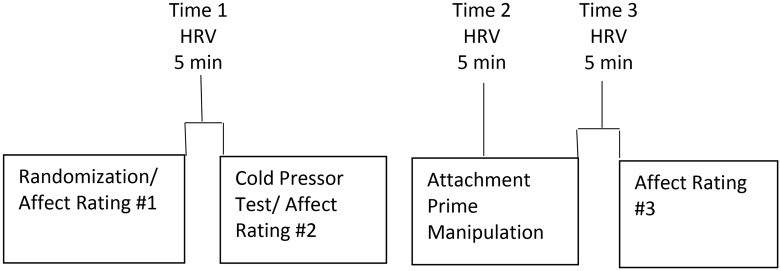
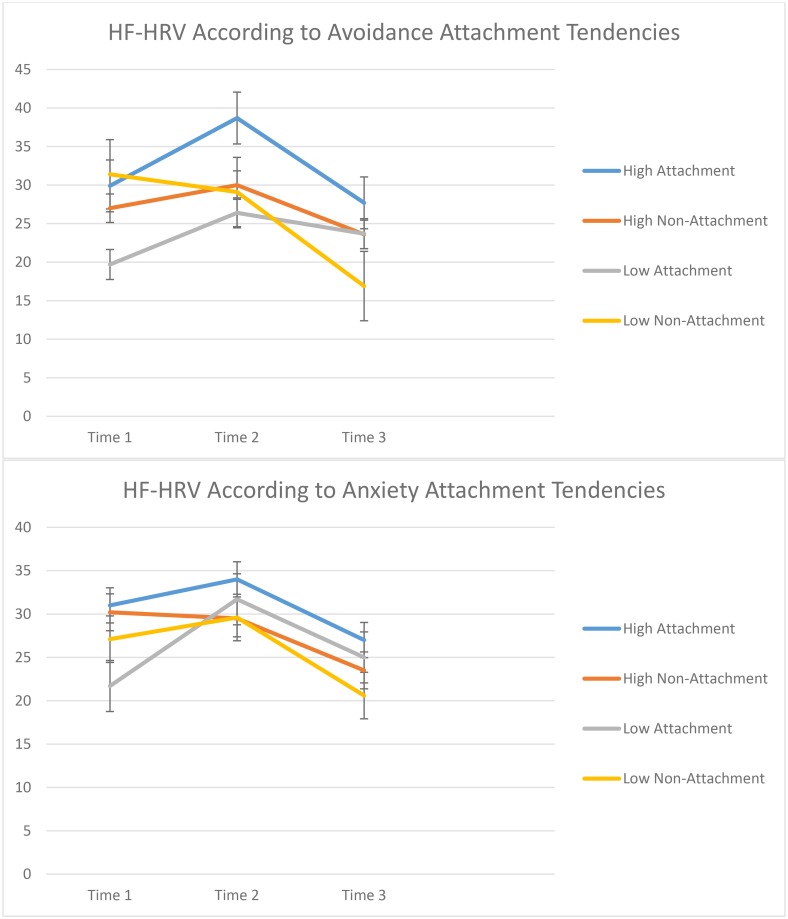
Although activating mental representations of attachment figures is beneficial for psychological health, there is a paucity of knowledge of the underlying mechanisms. We investigated how priming attachment figures may modulate parasympathetic stress response. Participants (N = 62) with varying degrees of attachment security underwent a cold pressor test, and then imagined an attachment or non-attachment figure. Heart rate variability was assessed throughout the study. Participants with low avoidant attachment levels displayed less negative affect and greater heart rate variability following the attachment prime than those who imagined the non-attachment prime. This beneficial effect of attachment priming was not observed in participants with high avoidant attachment levels. These findings highlight that activating attachment representations can enhance the parasympathetic stress response in people with secure attachment styles, and provides one explanation for the psychological benefits of attachment proximity.
尽管激活依恋对象的心理表征对心理健康有益,但对其潜在机制的了解却很少。我们研究了启动依恋对象如何调节副交感神经应激反应。不同依恋安全性程度的参与者(N = 62)接受了冷加压试验,然后想象一个依恋对象或非依恋对象。在整个研究过程中评估心率变异性。与想象非依恋对象的参与者相比,低回避依恋水平的参与者在启动依恋后表现出较少的负面情绪和更大的心率变异性。在高回避依恋水平的参与者中未观察到依恋启动的这种有益效果。这些发现突出表明,激活依恋表征可以增强安全依恋风格个体的副交感神经应激反应,并为依恋亲近带来的心理益处提供了一种解释。