Department of Biomedical, Metabolic and Neural Sciences, University of Modena and Reggio Emilia, Modena, Italy.
Center for Neuroscience and Neurotechnology, University of Modena and Reggio Emilia, Modena, Italy.
PLoS One. 2018 Feb 15;13(2):e0193100. doi: 10.1371/journal.pone.0193100. eCollection 2018.
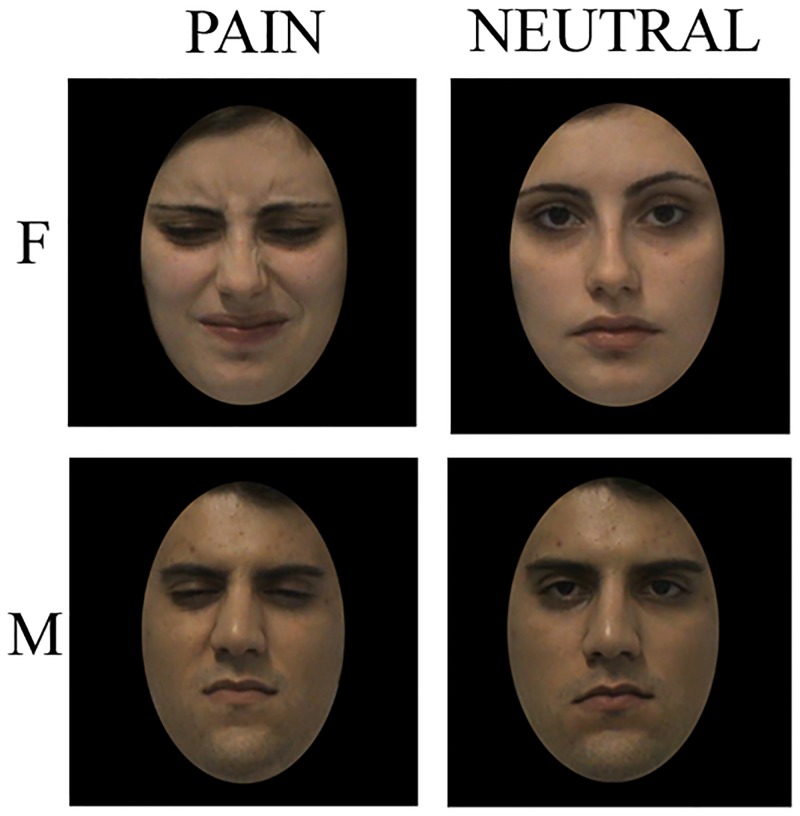
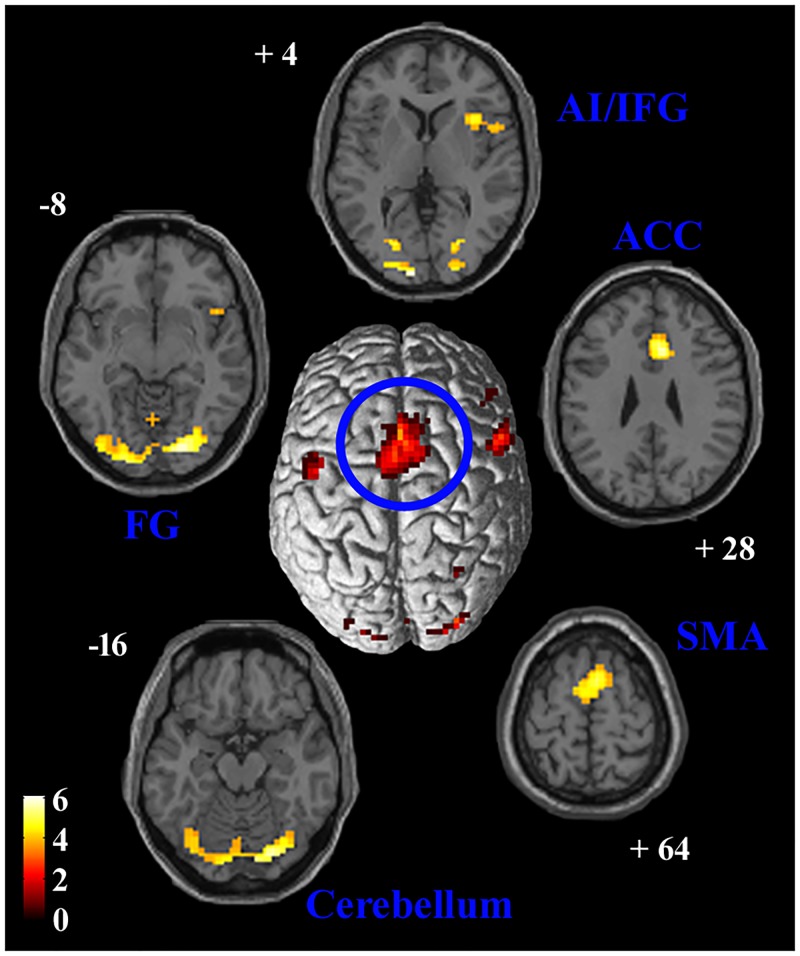
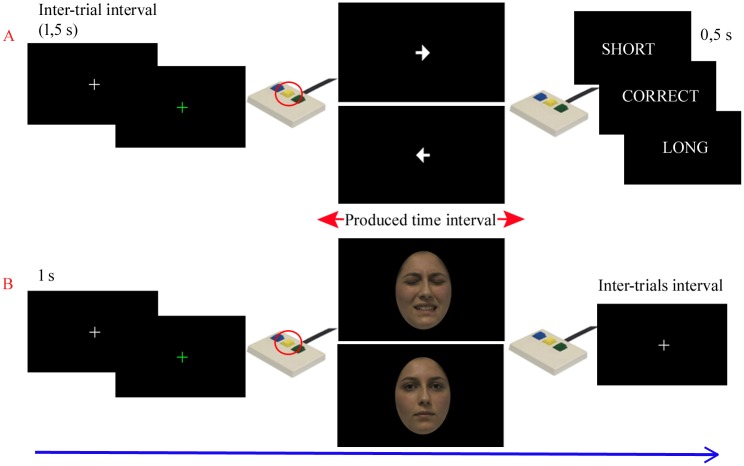
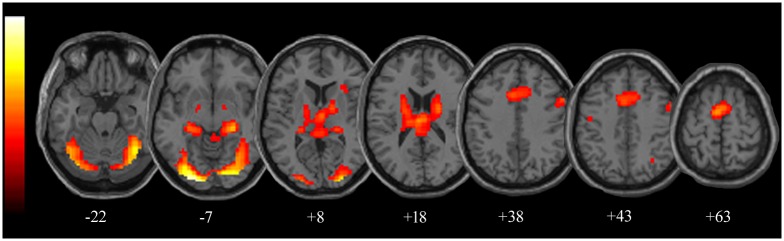
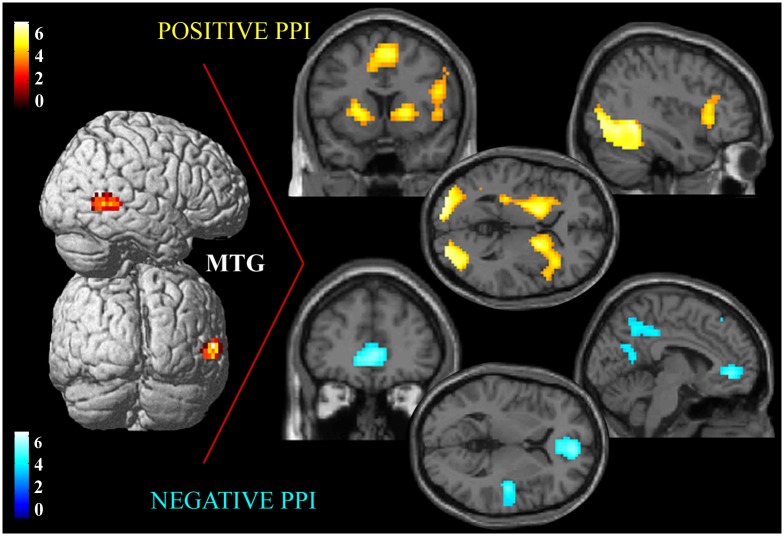
According to the Scalar Expectancy Theory, humans are equipped with a biological internal clock, possibly modulated by attention and arousal. Both emotions and pain are arousing and can absorb attentional resources, thus causing distortions of temporal perception. The aims of the present single-event fMRI study were to investigate: a) whether observation of facial expressions of pain interferes with time production; and b) the neural network subserving this kind of temporal distortions. Thirty healthy volunteers took part in the study. Subjects were asked to perform a temporal production task and a concurrent gender discrimination task, while viewing faces of unknown people with either pain-related or neutral expressions. Behavioural data showed temporal underestimation (i.e., longer produced intervals) during implicit pain expression processing; this was accompanied by increased activity of right middle temporal gyrus, a region known to be active during the perception of emotional and painful faces. Psycho-Physiological Interaction analyses showed that: 1) the activity of middle temporal gyrus was positively related to that of areas previously reported to play a role in timing: left primary motor cortex, middle cingulate cortex, supplementary motor area, right anterior insula, inferior frontal gyrus, bilateral cerebellum and basal ganglia; 2) the functional connectivity of supplementary motor area with several frontal regions, anterior cingulate cortex and right angular gyrus was correlated to the produced interval during painful expression processing. Our data support the hypothesis that observing emotional expressions distorts subjective time perception through the interaction of the neural network subserving processing of facial expressions with the brain network involved in timing. Within this frame, middle temporal gyrus appears to be the key region of the interplay between the two neural systems.
根据标量期望理论,人类配备有生物内部时钟,可能由注意力和唤醒调节。情绪和疼痛都是唤醒的,可以吸收注意力资源,从而导致时间感知的扭曲。本单次事件 fMRI 研究的目的是调查:a)观察疼痛的面部表情是否会干扰时间产生;b)这种时间扭曲的神经网络。30 名健康志愿者参加了这项研究。要求受试者在观看带有疼痛相关或中性表情的未知人脸时执行时间产生任务和同时进行的性别识别任务。行为数据显示,在隐性疼痛表情处理过程中存在时间低估(即产生的间隔较长);这伴随着右中颞叶活动的增加,该区域已知在感知情绪和痛苦面孔时活跃。心理生理交互分析表明:1)中颞叶的活动与先前报道在计时中起作用的区域呈正相关:左初级运动皮层、中扣带皮层、辅助运动区、右前岛叶、下额叶、双侧小脑和基底神经节;2)辅助运动区与几个额叶区域、前扣带皮层和右角回的功能连接与疼痛表情处理过程中的产生间隔相关。我们的数据支持这样的假设,即观察情绪表达通过处理面部表情的神经网络与参与计时的大脑网络之间的相互作用来扭曲主观时间感知。在这个框架内,中颞叶似乎是两个神经网络相互作用的关键区域。