Parry Gareth, Coly Astou, Goldmann Don, Rowe Alexander K, Chattu Vijay, Logiudice Deneil, Rabrenovic Mihajlo, Nambiar Bejoy
Institute for Healthcare Improvement, 53 State Street, 19th Floor, Boston, MA 02109, USA.
Harvard Medical School, 25 Shattuck St, Boston, MA 02115, USA.
Int J Qual Health Care. 2018 Apr 20;30(suppl_1):29-36. doi: 10.1093/intqhc/mzy021.
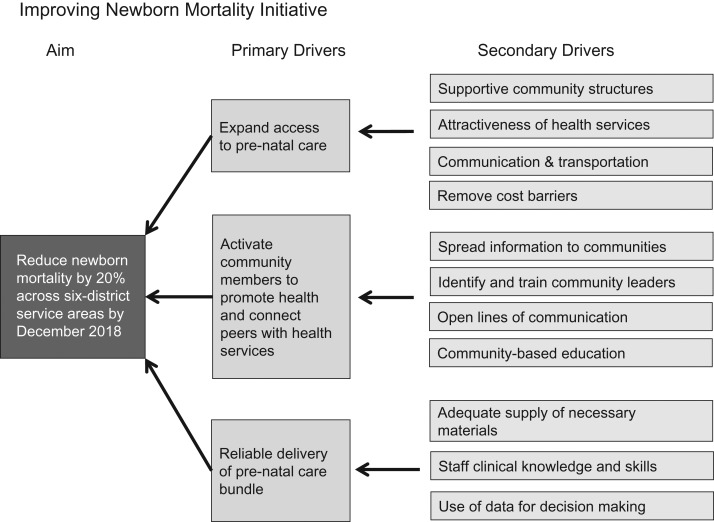
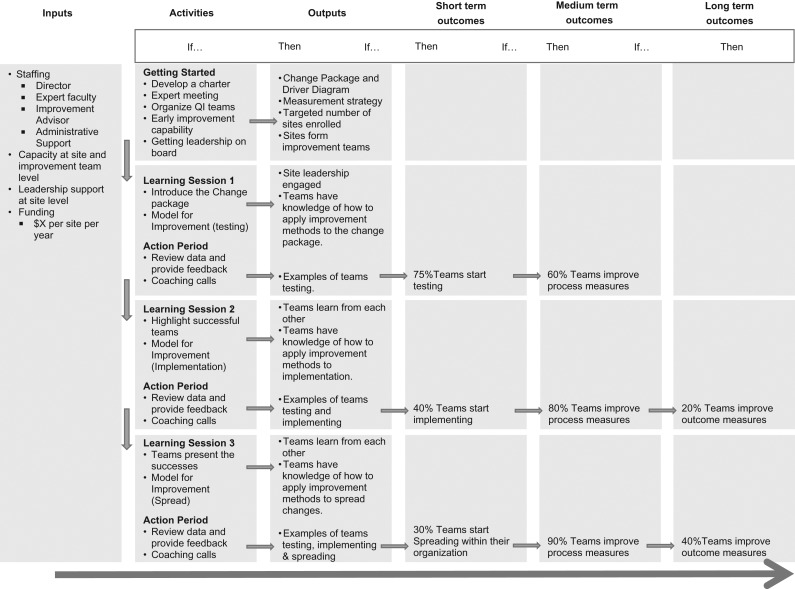
A lack of clear guidance for funders, evaluators and improvers on what to include in evaluation proposals can lead to evaluation designs that do not answer the questions stakeholders want to know. These evaluation designs may not match the iterative nature of improvement and may be imposed onto an initiative in a way that is impractical from the perspective of improvers and the communities with whom they work. Consequently, the results of evaluations are often controversial, and attribution remains poorly understood. Improvement initiatives are iterative, adaptive and context-specific. Evaluation approaches and designs must align with these features, specifically in their ability to consider complexity, to evolve as the initiative adapts over time and to understand the interaction with local context. Improvement initiatives often identify broadly defined change concepts and provide tools for care teams to tailor these in more detail to local conditions. Correspondingly, recommendations for evaluation are best provided as broad guidance, to be tailored to the specifics of the initiative. In this paper, we provide practical guidance and recommendations that funders and evaluators can use when developing an evaluation plan for improvement initiatives that seeks to: identify the questions stakeholders want to address; develop the initial program theory of the initiative; identify high-priority areas to measure progress over time; describe the context the initiative will be applied within; and identify experimental or observational designs that will address attribution.
对于资助者、评估者和改进者而言,在评估提案中应包含哪些内容缺乏明确的指导,这可能导致评估设计无法回答利益相关者想了解的问题。这些评估设计可能与改进的迭代性质不匹配,并且可能以一种从改进者及其合作社区的角度来看不切实际的方式强加于某个项目。因此,评估结果往往存在争议,而归因问题仍未得到很好的理解。改进项目具有迭代性、适应性且因地制宜。评估方法和设计必须与这些特点相契合,特别是在考虑复杂性、随着项目随时间推移而调整时不断演变以及理解与当地背景的相互作用方面的能力。改进项目通常会确定宽泛定义的变革概念,并为护理团队提供工具,以便他们根据当地情况更详细地进行调整。相应地,评估建议最好以宽泛的指导形式提供,以便根据项目的具体情况进行调整。在本文中,我们提供了实用的指导和建议,资助者和评估者在为改进项目制定评估计划时可以使用这些指导和建议,该评估计划旨在:确定利益相关者想要解决的问题;制定项目的初始项目理论;确定随着时间推移衡量进展的高优先级领域;描述项目将应用的背景;以及确定能够解决归因问题的实验性或观察性设计。