Univ. Lyon, Université Claude Bernard Lyon 1, CNRS,UMR 5306, Institut Lumière Matière, F-69622, Villeurbanne, France.
Nat Commun. 2018 Feb 15;9(1):696. doi: 10.1038/s41467-017-02625-7.
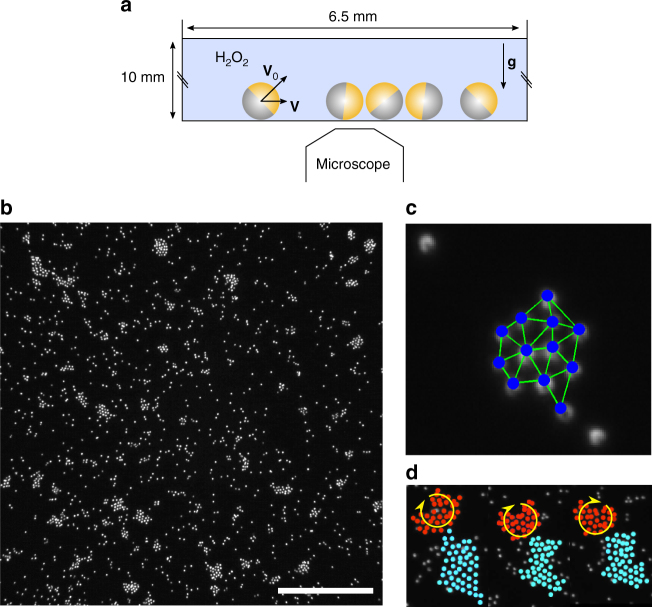
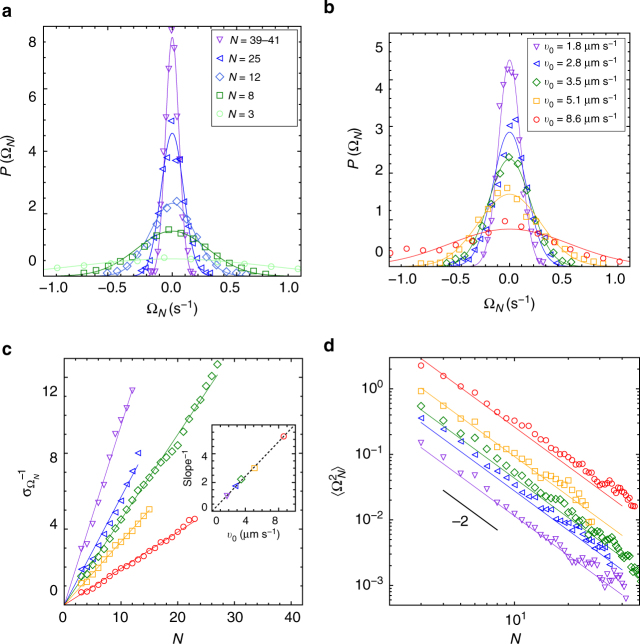
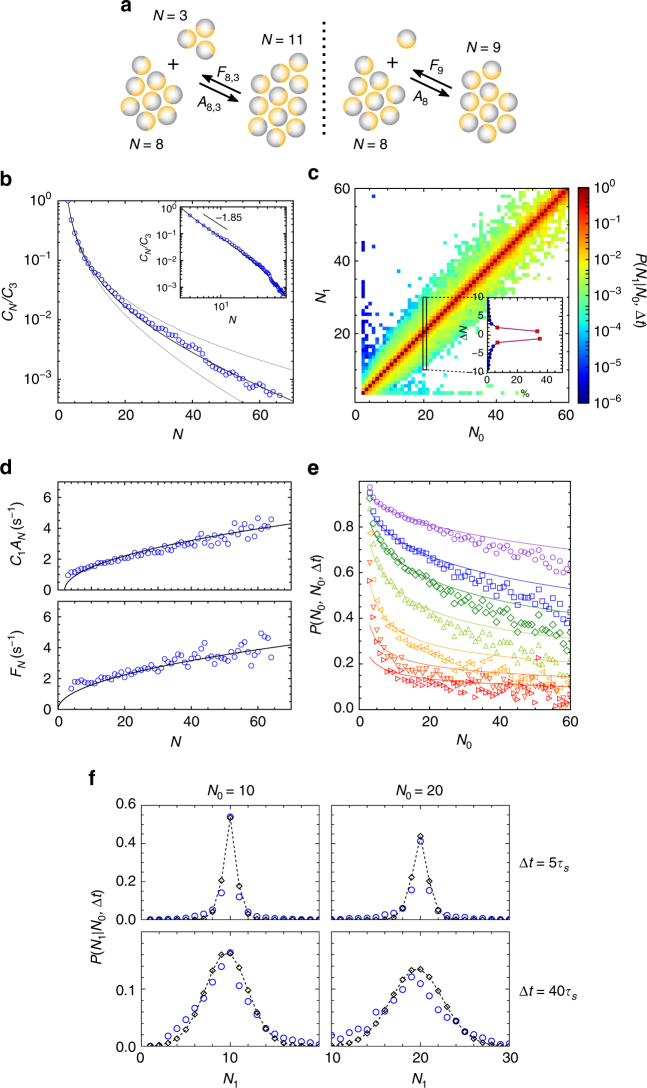
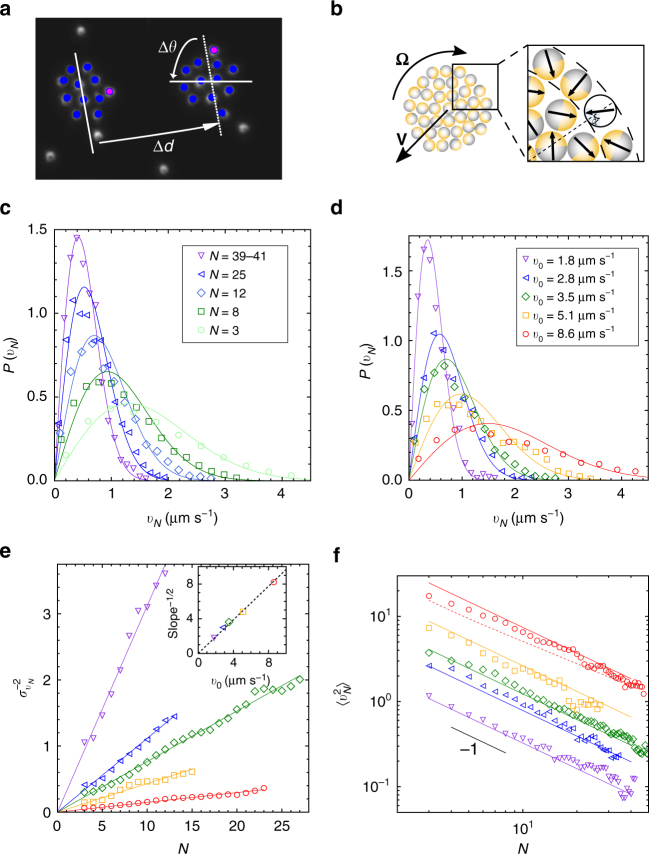
A remarkable feature of active matter is the propensity to self-organize. One striking instance of this ability to generate spatial structures is the cluster phase, where clusters broadly distributed in size constantly move and evolve through particle exchange, breaking or merging. Here we propose an exhaustive description of the cluster dynamics in apolar active matter. Exploiting large statistics gathered on thousands of Janus colloids, we measure the aggregation and fragmentation rates and rationalize the resulting cluster size distribution and fluctuations. We also show that the motion of individual clusters is entirely consistent with a model positing random orientation of colloids. Our findings establish a simple, generic model of cluster phase, and pave the way for a thorough understanding of clustering in active matter.
活性物质的一个显著特征是自我组织的倾向。这种产生空间结构的能力的一个显著例子是团簇相,其中大小广泛分布的团簇通过粒子交换不断移动和演变,打破或合并。在这里,我们提出了对非极性活性物质中团簇动力学的详尽描述。利用从数千个 Janus 胶体中收集的大量统计数据,我们测量了聚集和碎裂的速率,并推导出了由此产生的团簇大小分布和涨落。我们还表明,单个团簇的运动完全符合胶体随机取向的模型。我们的发现建立了一个简单的、通用的团簇相模型,并为深入理解活性物质中的聚类铺平了道路。