Perelman School of Medicine, University of Pennsylvania, Philadelphia, PA, USA.
Department of Genetics, Perelman School of Medicine, University of Pennsylvania, Philadelphia, PA, USA.
Cell Syst. 2018 Feb 28;6(2):171-179.e5. doi: 10.1016/j.cels.2018.01.014. Epub 2018 Feb 14.
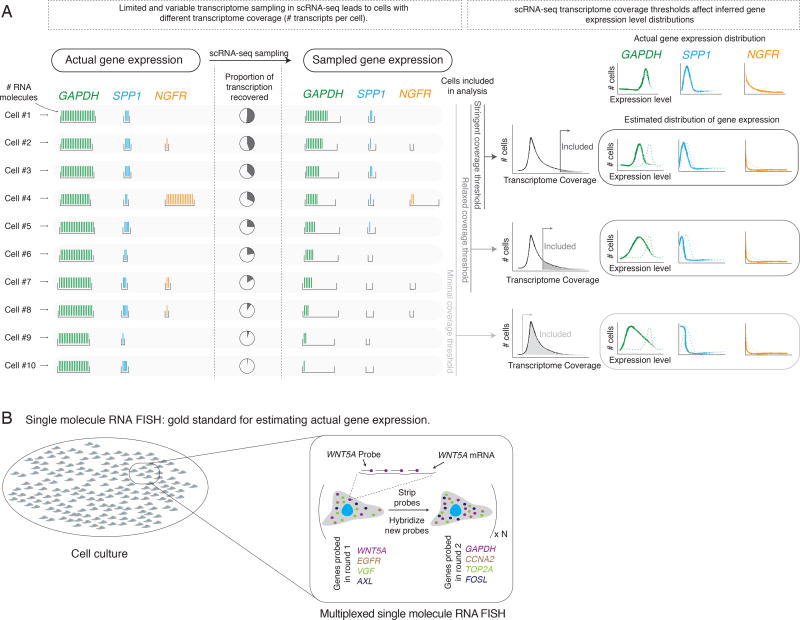
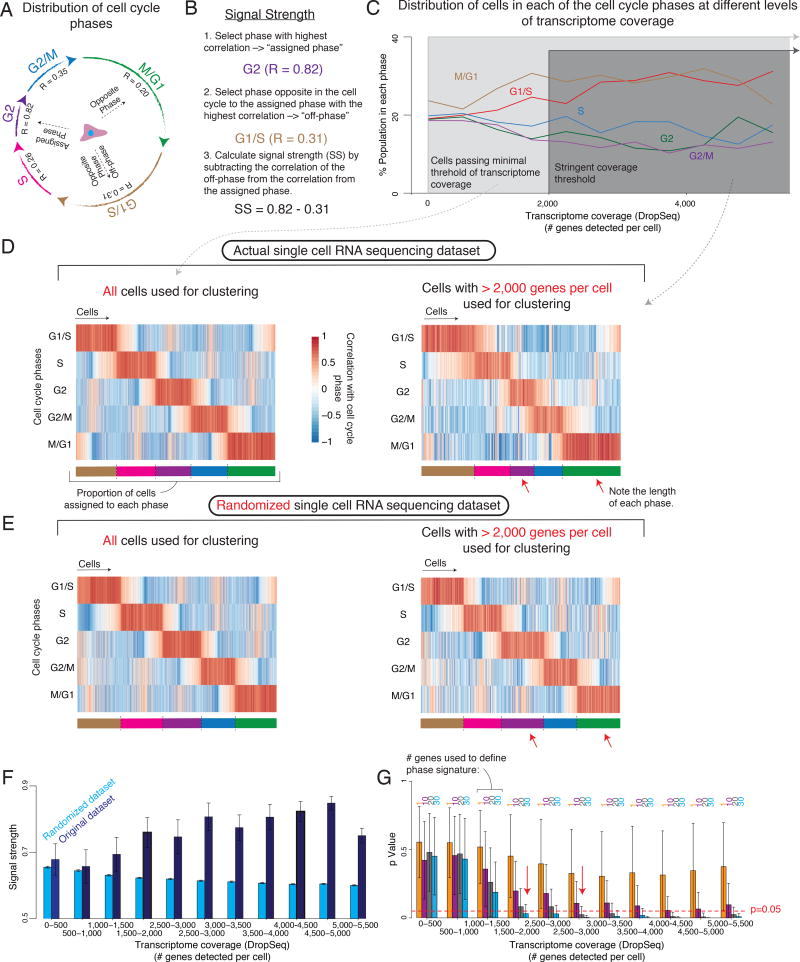
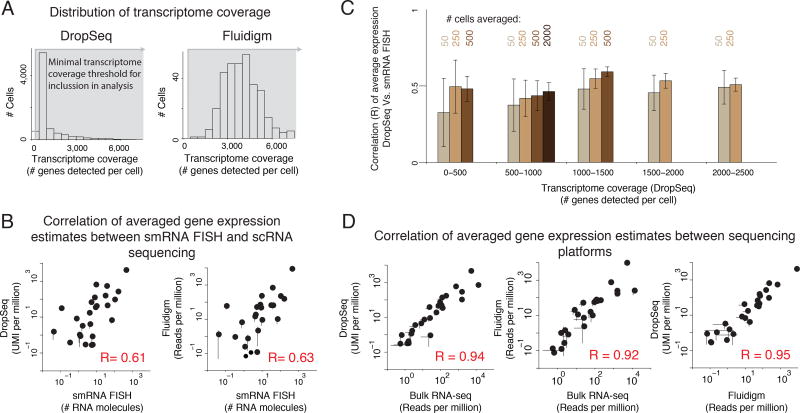
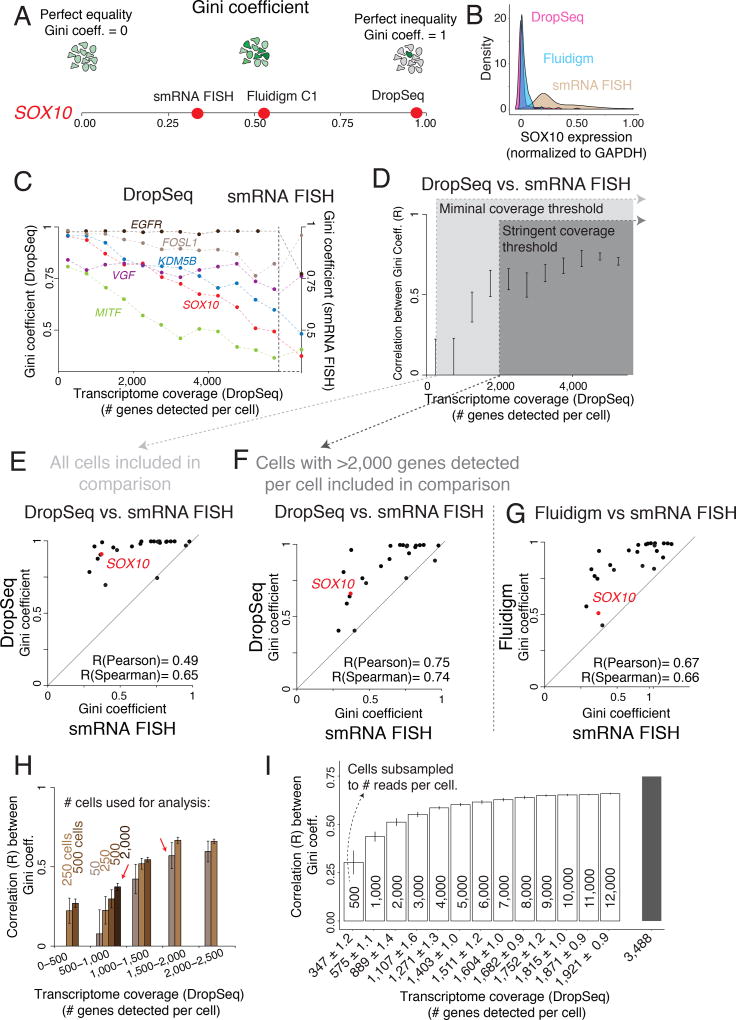
Although single-cell RNA sequencing can reliably detect large-scale transcriptional programs, it is unclear whether it accurately captures the behavior of individual genes, especially those that express only in rare cells. Here, we use single-molecule RNA fluorescence in situ hybridization as a gold standard to assess trade-offs in single-cell RNA-sequencing data for detecting rare cell expression variability. We quantified the gene expression distribution for 26 genes that range from ubiquitous to rarely expressed and found that the correspondence between estimates across platforms improved with both transcriptome coverage and increased number of cells analyzed. Further, by characterizing the trade-off between transcriptome coverage and number of cells analyzed, we show that when the number of genes required to answer a given biological question is small, then greater transcriptome coverage is more important than analyzing large numbers of cells. More generally, our report provides guidelines for selecting quality thresholds for single-cell RNA-sequencing experiments aimed at rare cell analyses.
虽然单细胞 RNA 测序可以可靠地检测大规模转录程序,但尚不清楚它是否能准确捕捉单个基因的行为,尤其是那些仅在稀有细胞中表达的基因。在这里,我们使用单分子 RNA 荧光原位杂交作为金标准,来评估单细胞 RNA 测序数据在检测稀有细胞表达变异性方面的权衡取舍。我们对 26 个基因的基因表达分布进行了量化,这些基因的表达范围从普遍表达到很少表达,结果发现,不同平台之间的估计值的一致性随着转录组覆盖率的增加和分析的细胞数量的增加而提高。此外,通过对转录组覆盖率和分析细胞数量之间的权衡关系进行特征化,我们表明,当回答给定生物学问题所需的基因数量较小时,那么增加转录组覆盖率比分析大量细胞更为重要。更一般地说,我们的报告为旨在进行稀有细胞分析的单细胞 RNA 测序实验选择质量阈值提供了指导。