School of Automation, Hangzhou Dianzi University, Hangzhou 310018, China.
Sensors (Basel). 2018 Feb 17;18(2):614. doi: 10.3390/s18020614.
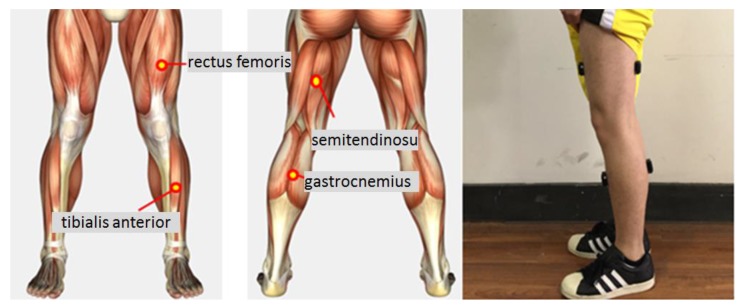
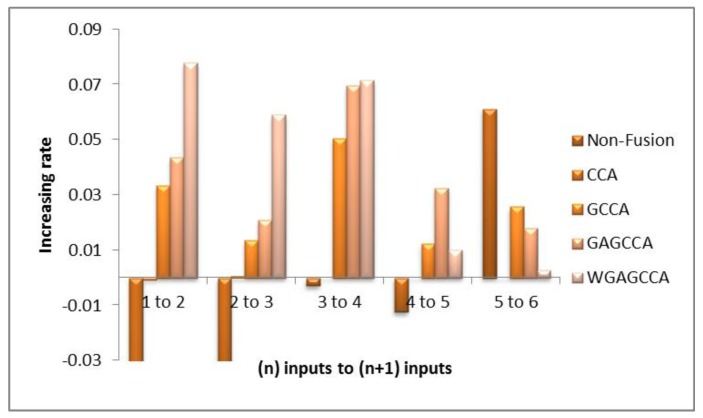
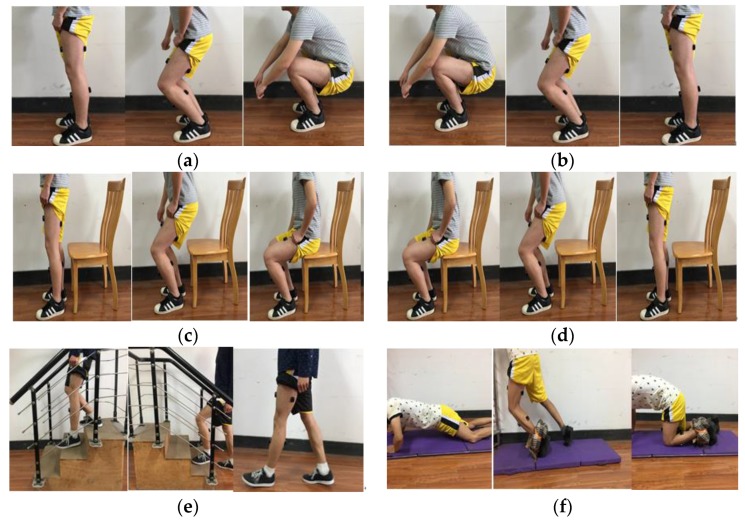
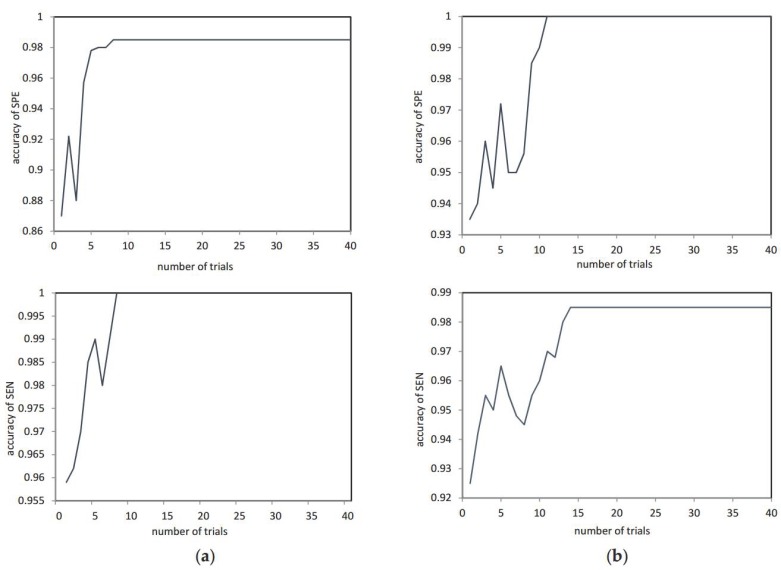
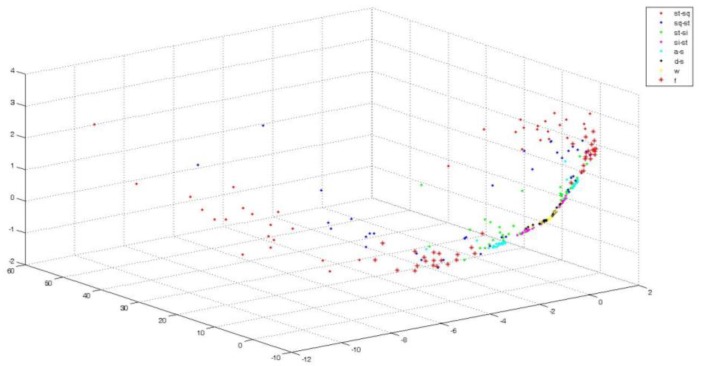
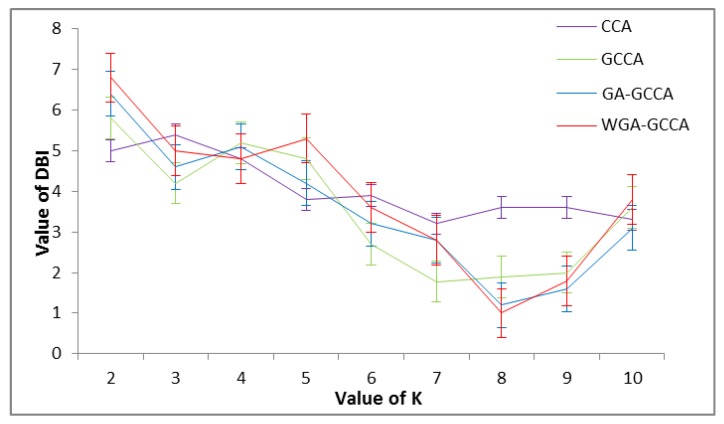
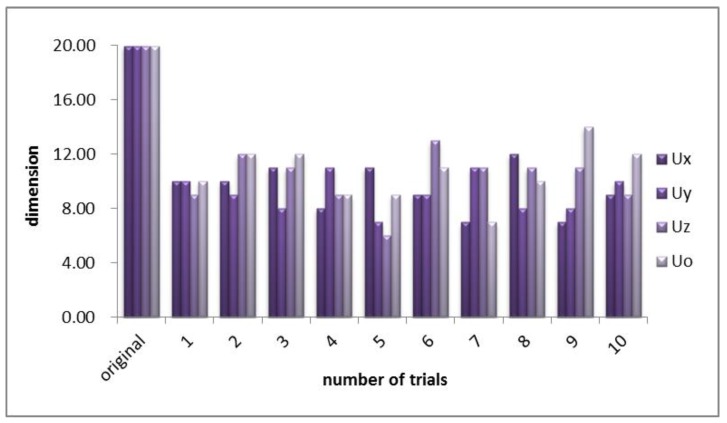
Surface electromyography (sEMG) signals are commonly used in activity monitoring and rehabilitation applications as they reflect effectively the motor intentions of users. However, real-time sEMG signals are non-stationary and vary to a large extent within the time frame of signals. Although previous studies have focused on the issues, their results have not been satisfactory. Therefore, we present a new method of conducting feature-level fusion to obtain a new feature space for sEMG signals. Eight activities of daily life (ADLs), including falls, were performed to obtain raw data from EMG signals from the lower limb. A feature set combining the time domain, time-frequency domain, and entropy domain was applied to the raw data to establish an initial feature space. A new projection method, the weighting genetic algorithm for GCCA (WGA-GCCA), was introduced to obtain the final feature space. Different tests were carried out to evaluate the performance of the new feature space. The new feature space created with the WGA-GCCA effectively reduced the dimensions and selected the best feature vectors dynamically while improving monotonicity. The Davies-Bouldin index (DBI) based on fuzzy c-means algorithms of the space obtained the lowest value compared with several fusion methods. It also achieved the highest accuracy when applied to support vector machine classifier.
表面肌电图(sEMG)信号常用于活动监测和康复应用中,因为它们能有效地反映用户的运动意图。然而,实时 sEMG 信号是非平稳的,在信号的时间范围内会有很大的变化。尽管之前的研究已经关注到了这些问题,但他们的结果并不令人满意。因此,我们提出了一种新的特征级融合方法,以获得 sEMG 信号的新特征空间。进行了八项日常生活活动(ADLs),包括跌倒,以从下肢的肌电图信号中获取原始数据。应用了一个组合时域、时频域和熵域的特征集对原始数据进行处理,建立初始特征空间。引入了一种新的投影方法,即用于 GCCA 的加权遗传算法(WGA-GCCA),以获得最终的特征空间。进行了不同的测试来评估新特征空间的性能。使用 WGA-GCCA 创建的新特征空间有效地降低了维度,并在提高单调性的同时动态选择最佳特征向量。基于模糊 c-均值算法的 Davies-Bouldin 指数(DBI)在与几种融合方法相比时,该空间获得了最低的值。当应用于支持向量机分类器时,它也实现了最高的准确性。