Shin Chang Yell, Kim Hae-Sun, Cha Kwang-Ho, Won Dong Han, Lee Ji-Yun, Jang Sun Woo, Sohn Uy Dong
Research Institute of Dong-A ST Co., Ltd., Yongin 17073, Republic of Korea.
College of Pharmacy, Chung-Ang University, Seoul 06974, Republic of Korea.
Biomol Ther (Seoul). 2018 May 1;26(3):274-281. doi: 10.4062/biomolther.2017.189.
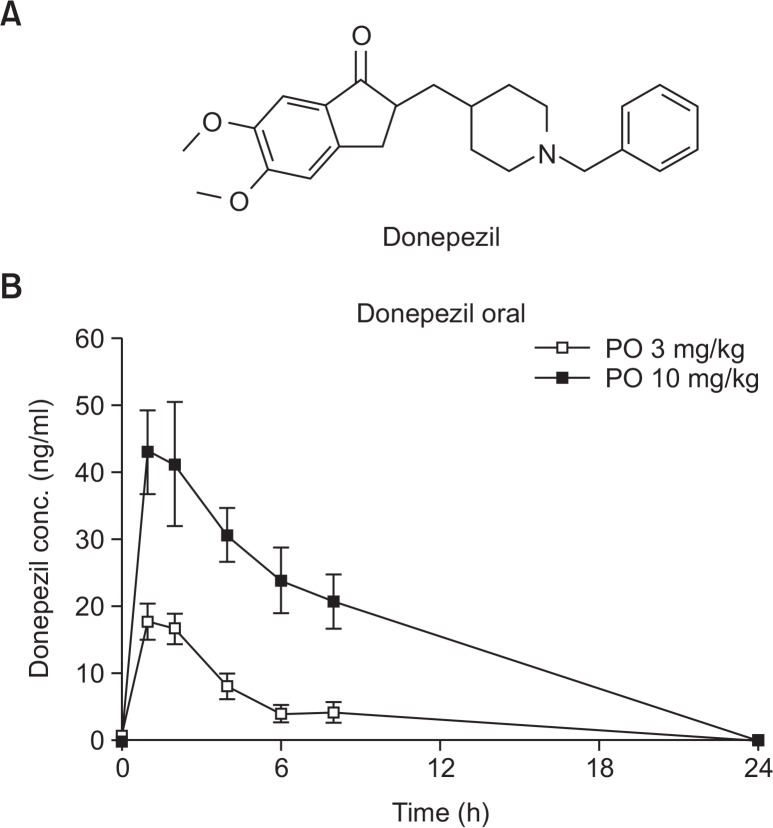
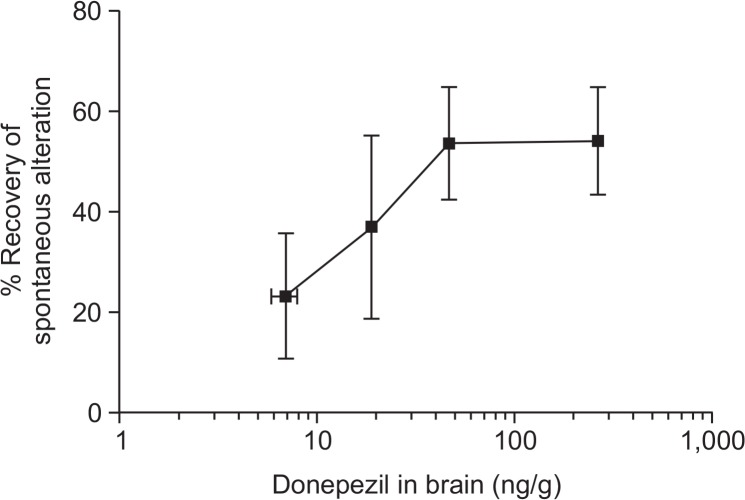
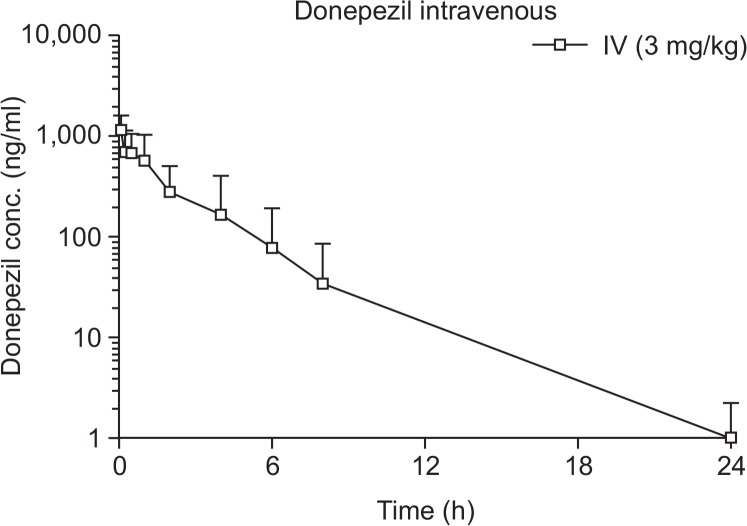
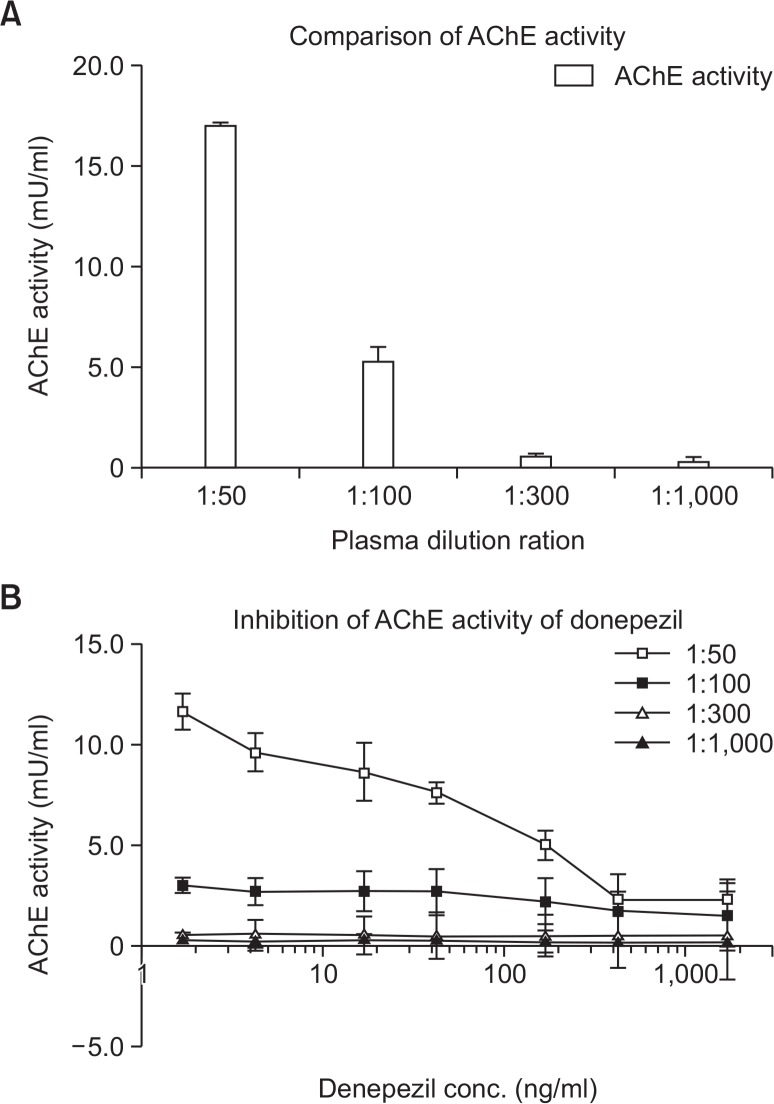
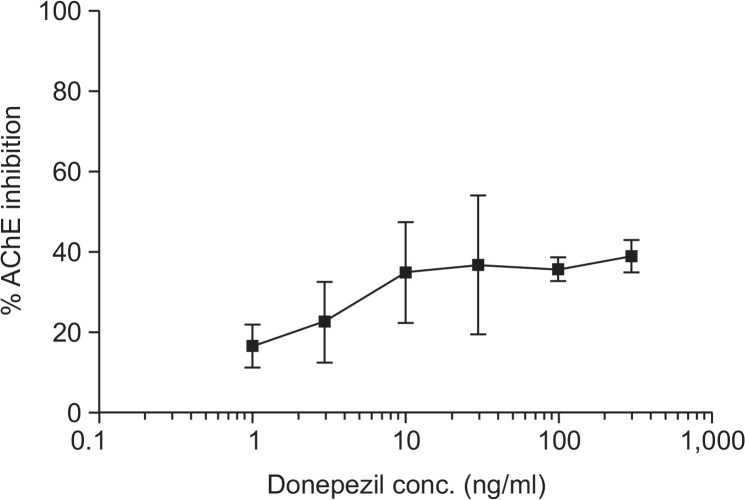
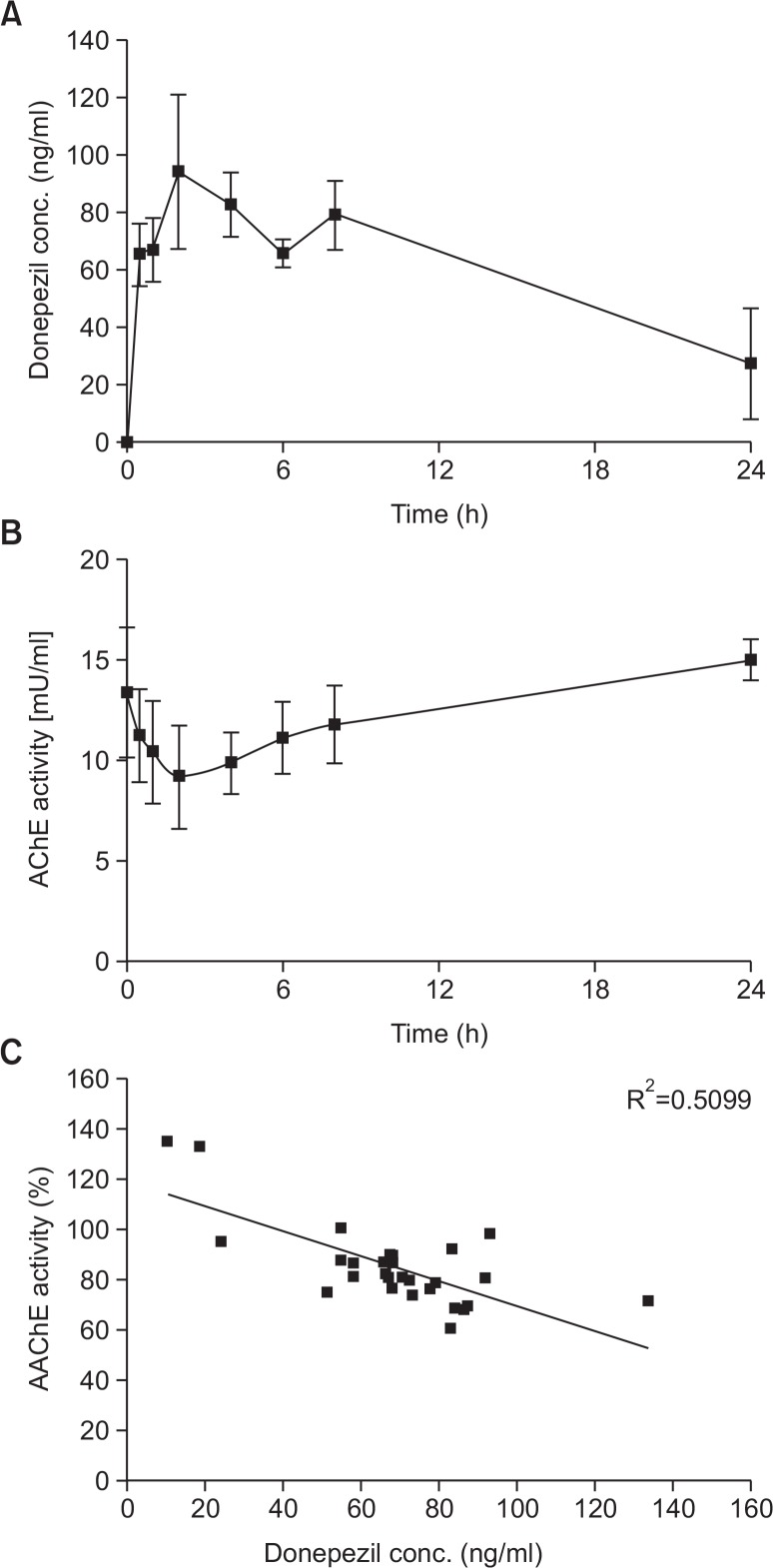
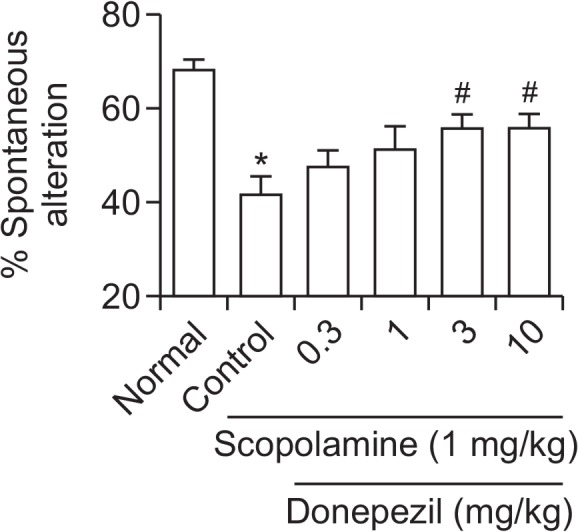
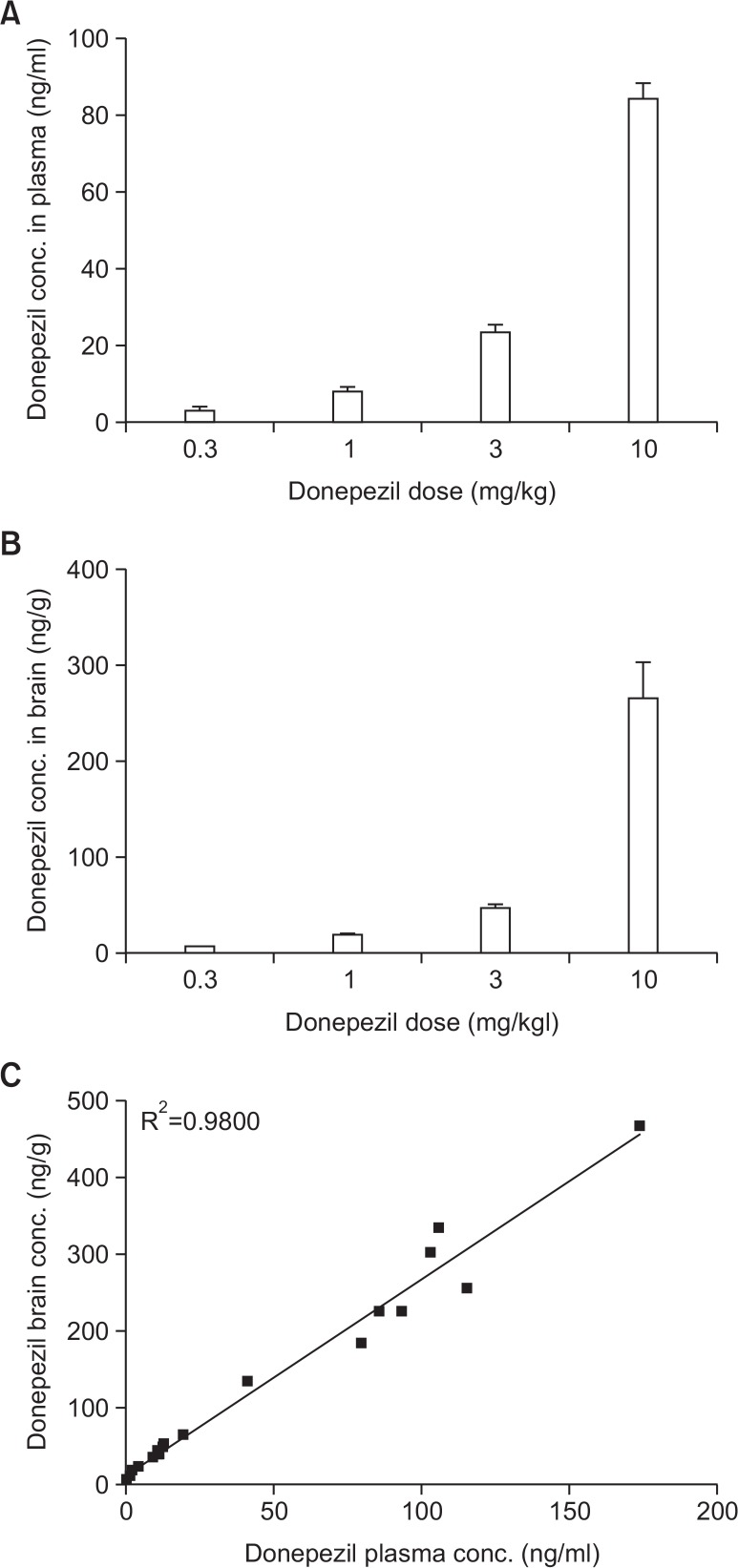
A previous study in humans demonstrated the sustained inhibitory effects of donepezil on acetylcholinesterase (AChE) activity; however, the effective concentration of donepezil in humans and animals is unclear. This study aimed to characterize the effective concentration of donepezil on AChE inhibition and impaired learning and memory in rodents. A pharmacokinetic study of donepezil showed a mean peak plasma concentration of donepezil after oral treatment (3 and 10 mg/kg) of approximately 1.2 ± 0.4 h and 1.4 ± 0.5 h, respectively; absolute bioavailability was calculated as 3.6%. Further, AChE activity was inhibited by increasing plasma concentrations of donepezil, and a maximum inhibition of 31.5 ± 5.7% was observed after donepezil treatment in hairless rats. Plasma AChE activity was negatively correlated with plasma donepezil concentration. The pharmacological effects of donepezil are dependent upon its concentration and AChE activity; therefore, we assessed the effects of donepezil on learning and memory using a Y-maze in mice. Donepezil treatment (3 mg/kg) significantly prevented the progression of scopolamine-induced memory impairment in mice. As the concentration of donepezil in the brain increased, the recovery of spontaneous alternations also improved; maximal improvement was observed at 46.5 ± 3.5 ng/g in the brain. In conclusion, our findings suggest that the AChE inhibitory activity and pharmacological effects of donepezil can be predicted by the concentration of donepezil. Further, 46.5 ± 3.5 ng/g donepezil is an efficacious target concentration in the brain for treating learning and memory impairment in rodents.
此前一项针对人类的研究证实了多奈哌齐对乙酰胆碱酯酶(AChE)活性具有持续抑制作用;然而,多奈哌齐在人和动物体内的有效浓度尚不清楚。本研究旨在明确多奈哌齐抑制AChE以及改善啮齿动物学习记忆障碍的有效浓度。多奈哌齐的药代动力学研究表明,口服给药(3和10 mg/kg)后,多奈哌齐的平均血浆峰浓度分别约为1.2±0.4小时和1.4±0.5小时;绝对生物利用度经计算为3.6%。此外,随着多奈哌齐血浆浓度升高,AChE活性受到抑制,在无毛大鼠接受多奈哌齐治疗后,观察到最大抑制率为31.5±5.7%。血浆AChE活性与血浆多奈哌齐浓度呈负相关。多奈哌齐的药理作用取决于其浓度和AChE活性;因此,我们使用Y迷宫评估了多奈哌齐对小鼠学习记忆的影响。多奈哌齐治疗(3 mg/kg)显著预防了东莨菪碱诱导的小鼠记忆障碍进展。随着大脑中多奈哌齐浓度增加,自发交替活动的恢复也得到改善;大脑中浓度为46.5±3.5 ng/g时观察到最大改善。总之,我们的研究结果表明,多奈哌齐的AChE抑制活性和药理作用可通过多奈哌齐浓度来预测。此外,46.5±3.5 ng/g的多奈哌齐是治疗啮齿动物学习记忆障碍的有效脑内靶浓度。