Departamento de Medicina Intensiva, Facultad de Medicina, Pontificia Universidad Catolica de Chile, Diagonal Paraguay #362, Santiago Centro, RM, 8330077, Chile.
Unidad de Paciente Critico Adultos, Hospital Clinico UC-CHRISTUS, Marcoleta #367, Santiago Centro, RM, 8330077, Chile.
Crit Care. 2018 Feb 21;22(1):39. doi: 10.1186/s13054-018-1956-6.
Intensive care medicine is a relatively young discipline that has rapidly grown into a full-fledged medical subspecialty. Intensivists are responsible for managing an ever-increasing number of patients with complex, life-threatening diseases. Several factors may influence their performance, including age, training, experience, workload, and socioeconomic context. The aim of this study was to examine individual- and work-related aspects of the Latin American intensivist workforce, mainly with academic appointments, which might influence the quality of care provided. In consequence, we conducted a cross-sectional study of intensivists at public and private academic and nonacademic Latin American intensive care units (ICUs) through a web-based electronic survey submitted by email. Questions about personal aspects, work-related topics, and general clinical workflow were incorporated.
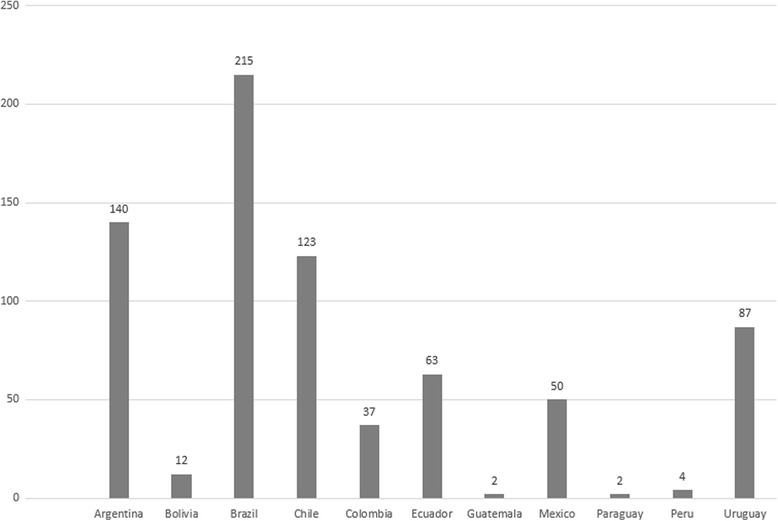
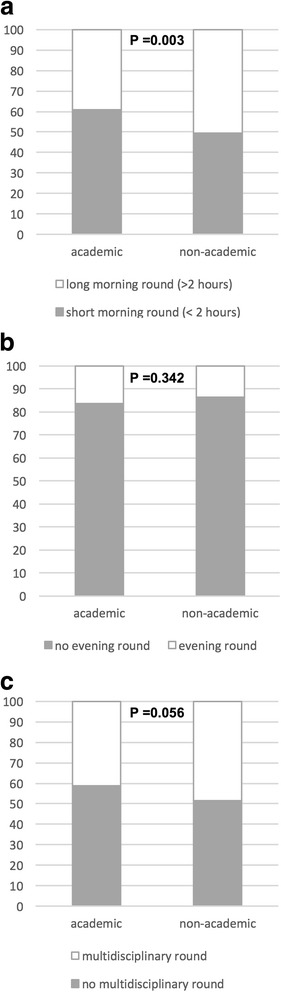
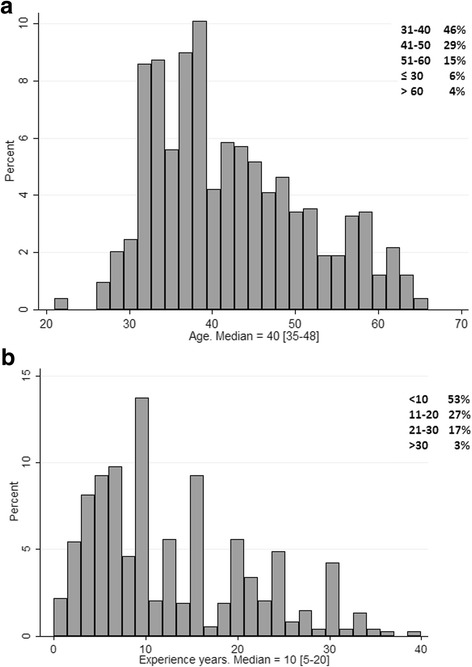
Our study comprised 735 survey respondents (53% return rate) with the following country-specific breakdown: Brazil (29%); Argentina (19%); Chile (17%); Uruguay (12%); Ecuador (9%); Mexico (7%); Colombia (5%); and Bolivia, Peru, Guatemala, and Paraguay combined (2%). Latin American intensivists were predominantly male (68%) young adults (median age, 40 [IQR, 35-48] years) with a median clinical ICU experience of 10 (IQR, 5-20) years. The median weekly workload was 60 (IQR, 47-70) h. ICU formal training was between 2 and 4 years. Only 63% of academic ICUs performed multidisciplinary rounds. Most intensivists (85%) reported adequate conditions to manage patients with septic shock in their units. Unsatisfactory conditions were attributed to insufficient technology (11%), laboratory support (5%), imaging resources (5%), and drug shortages (5%). Seventy percent of intensivists participated in research, and 54% read scientific studies regularly, whereas 32% read no more than one scientific study per month. Research grants and pharmaceutical sponsorship are unusual funding sources in Latin America. Although Latin American intensivists are mostly unsatisfied with their income (81%), only a minority (27%) considered changing to another specialty before retirement.
Latin American intensivists constitute a predominantly young adult workforce, mostly formally trained, have a high workload, and most are interested in research. They are under important limitations owing to resource constraints and overt dissatisfaction. Latin America may be representative of other world areas with similar challenges for intensivists. Specific initiatives aimed at addressing these situations need to be devised to improve the quality of critical care delivery in Latin America.
重症监护医学是一个相对年轻的学科,已经迅速发展成为一门成熟的医学亚专科。重症监护医师负责管理越来越多患有复杂、危及生命疾病的患者。有几个因素可能会影响他们的表现,包括年龄、培训、经验、工作量和社会经济背景。本研究的目的是研究拉丁美洲重症监护医师的个体和与工作相关的方面,主要是具有学术任命的重症监护医师,这可能会影响提供的护理质量。因此,我们通过电子邮件提交的网络电子调查,对来自拉丁美洲公立和私立学术和非学术重症监护病房(ICU)的重症监护医师进行了横断面研究。调查中包含了个人方面、与工作相关的主题以及一般临床工作流程的问题。
我们的研究包括 735 名调查对象(53%的回复率),具体国家分布如下:巴西(29%)、阿根廷(19%)、智利(17%)、乌拉圭(12%)、厄瓜多尔(9%)、墨西哥(7%)、哥伦比亚(5%),以及玻利维亚、秘鲁、危地马拉和巴拉圭(2%)。拉丁美洲的重症监护医师主要是男性(68%),是年轻人(中位数年龄为 40 岁[四分位数间距(IQR),35-48]岁),中位 ICU 临床经验为 10 年(IQR,5-20 年)。中位每周工作量为 60 小时(IQR,47-70 小时)。ICU 正式培训时间为 2-4 年。只有 63%的学术 ICU 进行多学科查房。大多数重症监护医师(85%)报告说,他们的单位有足够的条件来治疗感染性休克患者。不满意的情况归因于技术不足(11%)、实验室支持不足(5%)、影像学资源不足(5%)和药物短缺(5%)。70%的重症监护医师参与研究,54%的重症监护医师定期阅读科学研究,而 32%的重症监护医师每月阅读的科学研究不超过一篇。研究资助和制药赞助在拉丁美洲是不常见的资金来源。尽管拉丁美洲的重症监护医师对自己的收入大多不满意(81%),但只有少数人(27%)在退休前考虑换其他专业。
拉丁美洲的重症监护医师主要是年轻的成年人,大多数都经过正式培训,工作量大,对研究很感兴趣。由于资源限制和明显的不满,他们受到了很大的限制。拉丁美洲可能代表了其他面临类似重症监护医师挑战的世界地区。需要制定具体的举措来解决这些情况,以提高拉丁美洲重症监护的护理质量。