Galiano Robert D, Hudson Donald, Shin Joseph, van der Hulst René, Tanaydin Volkan, Djohan Risal, Duteille Franck, Cockwill John, Megginson Sarah, Huddleston Elizabeth
Feinberg School of Medicine, Chicago, Ill.; University of Cape Town, Cape Town, South Africa; Montefiore Medical Center, New York, N.Y.; Maastricht University Medical Centre, Maastricht, The Netherlands; Cleveland Clinic, Cleveland, Ohio; University of Nantes, Nantes, France; Smith & Nephew Wound Management, Inc., Fort Worth, Tex.; and Smith & Nephew Wound Management Ltd, Hull, United Kingdom.
Plast Reconstr Surg Glob Open. 2018 Jan 12;6(1):e1560. doi: 10.1097/GOX.0000000000001560. eCollection 2018 Jan.
It has been proposed that negative pressure wound therapy (NPWT) applied prophylactically to a closed incision may decrease the incidence of wound complications. Patients undergoing reduction mammaplasty are at risk of wound complications such as delayed healing, infection, and dehiscence, and the bilateral nature of the surgery allows for a within-patient randomized study to evaluate incisional NPWT's effect in reducing healing complications.
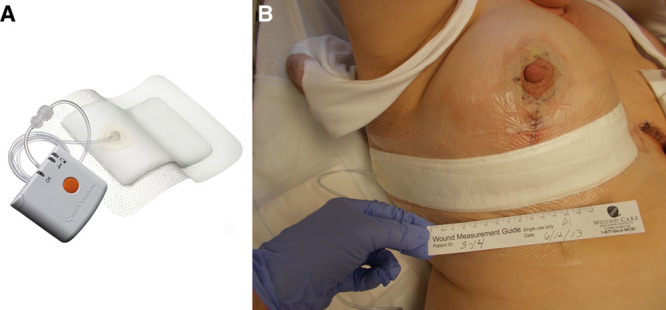
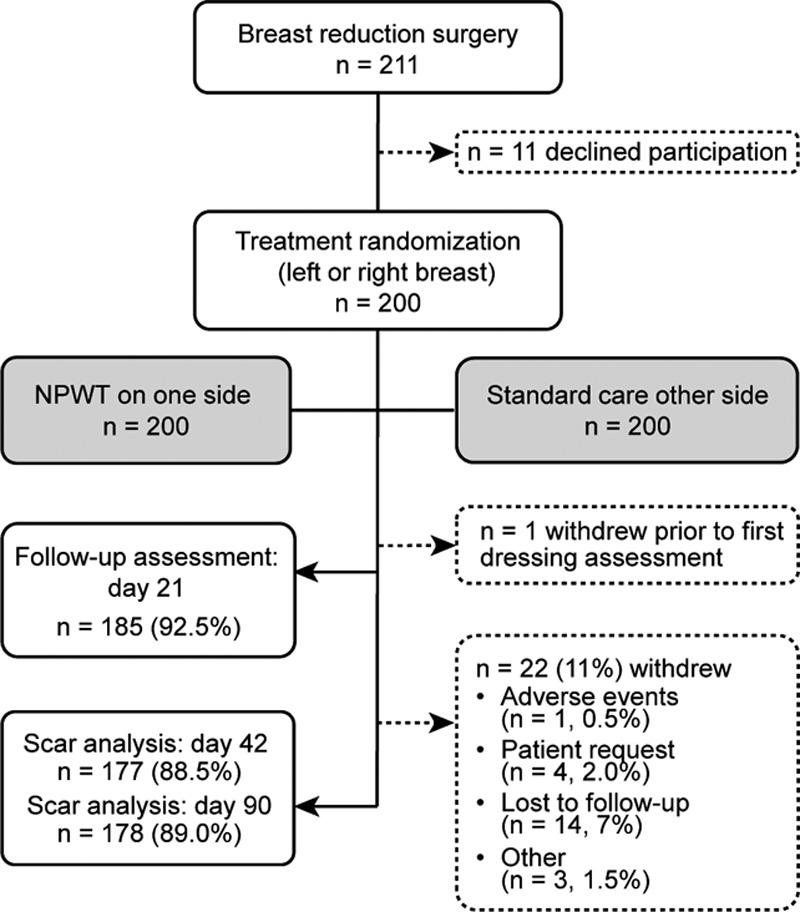
In this multicenter trial, 200 patients undergoing bilateral reduction mammaplasty were treated with PICO Single-Use NPWT System or standard wound-care dressings randomized to right or left breast for up to 14 days to enable within-patient comparison. Follow-up assessments were conducted to evaluate the difference in incision healing complications up to 21 days postsurgery. Healing complications (for the primary endpoint) were defined as delayed healing (incision not 100% closed by 7 days) and occurrence of dehiscence or infection within 21 days. Individual healing complications were assessed separately as secondary endpoints.
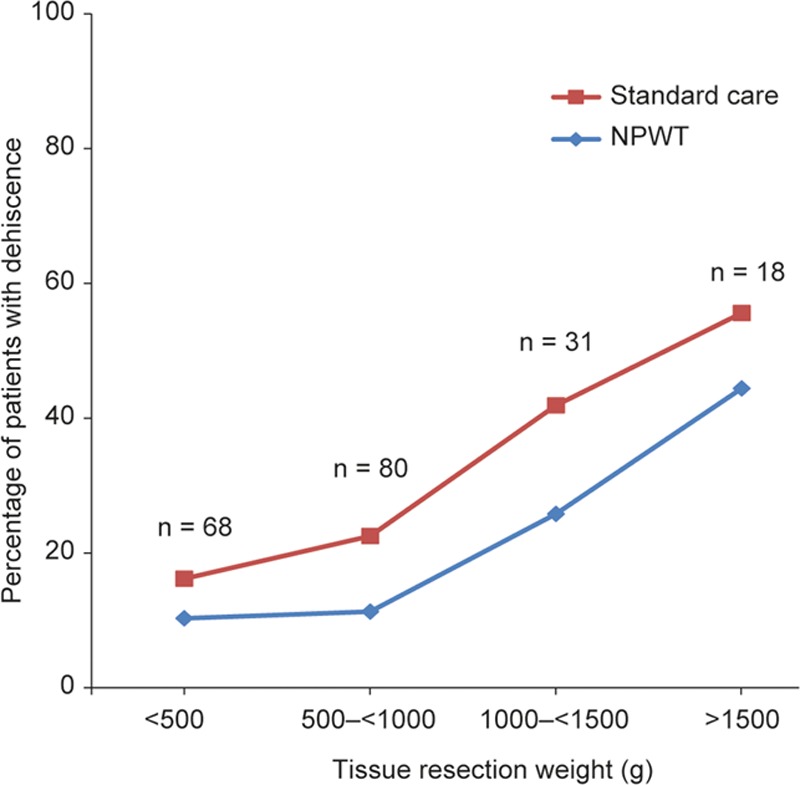
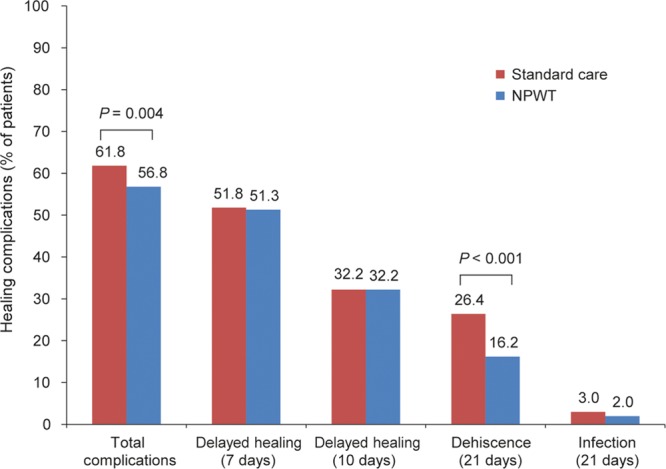
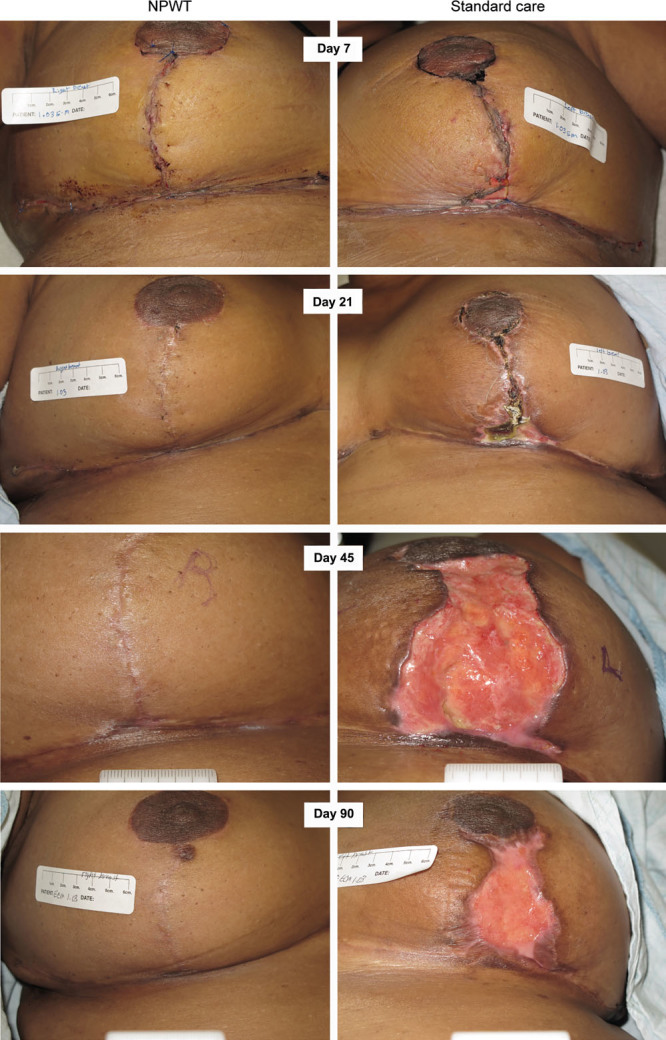
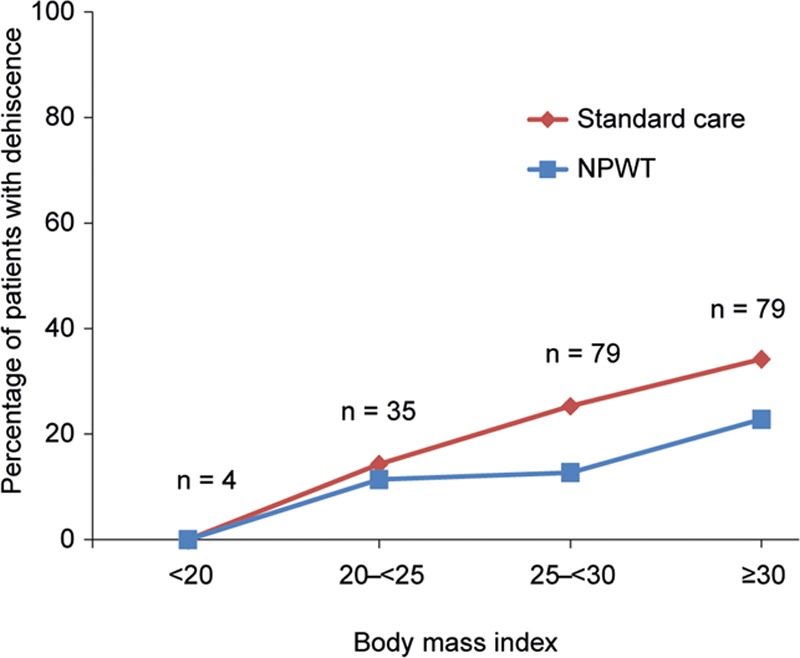
Significantly fewer healing complications (primary endpoint) were noted in NPWT-treated breasts [113 (56.8%)] versus standard care [123 (61.8%)]. The difference of 10 (5.0%) patients with fewer healing complications using NPWT was statistically significant ( = 0.004). NPWT also resulted in a significantly lower incidence of dehiscence (secondary endpoint) compared with standard care [32 patients (16.2%) versus 52 patients (26.4%)] by day 21, a relative reduction of 38% ( < 0.001).
This is the first major prospective, within-patient, randomized, controlled, multicenter study to provide evidence for an incisional NPWT strategy to reduce healing complications.
有人提出,预防性地对闭合切口应用负压伤口治疗(NPWT)可能会降低伤口并发症的发生率。接受乳房缩小整形术的患者有发生伤口并发症的风险,如愈合延迟、感染和裂开,而且该手术的双侧性使得可以进行患者内随机研究,以评估切口NPWT在减少愈合并发症方面的效果。
在这项多中心试验中,200例接受双侧乳房缩小整形术的患者使用PICO一次性NPWT系统或标准伤口护理敷料进行治疗,随机分配至右侧或左侧乳房,治疗时间长达14天,以便进行患者内比较。进行随访评估,以评估术后21天内切口愈合并发症的差异。愈合并发症(作为主要终点)定义为愈合延迟(7天内切口未完全闭合)以及21天内发生裂开或感染。将个体愈合并发症分别作为次要终点进行评估。
与标准护理组[123例(61.8%)]相比,NPWT治疗的乳房出现愈合并发症(主要终点)的患者明显更少[113例(56.8%)]。使用NPWT使愈合并发症减少10例(5.0%),这一差异具有统计学意义(P = 0.004)。与标准护理相比,到第21天,NPWT导致的裂开发生率(次要终点)也显著更低[32例患者(16.2%)对52例患者(26.4%)],相对降低了38%(P < 0.001)。
这是第一项主要的前瞻性、患者内、随机、对照、多中心研究,为切口NPWT策略减少愈合并发症提供了证据。