Hinson Shannon R, Lopez-Chiriboga A Sebastian, Bower James H, Matsumoto Joseph Y, Hassan Anhar, Basal Eati, Lennon Vanda A, Pittock Sean J, McKeon Andrew
Department of Laboratory Medicine and Pathology (S.R.H., E.B., V.A.L., S.J.P., A.M.), Department of Neurology (A.S.L.-C., J.H.B., J.Y.M., A.H., V.A.L., S.J.P., A.M.), and Department of Immunology (V.A.L.), Mayo Clinic, Rochester, MN.
Neurol Neuroimmunol Neuroinflamm. 2018 Jan 23;5(2):e438. doi: 10.1212/NXI.0000000000000438. eCollection 2018 Mar.
Glycine receptor alpha-1 subunit (GlyRα1)-immunoglobulin G (IgG) is diagnostic of stiff-person syndrome (SPS) spectrum but has been reported detectable in other neurologic diseases for which significance is less certain.
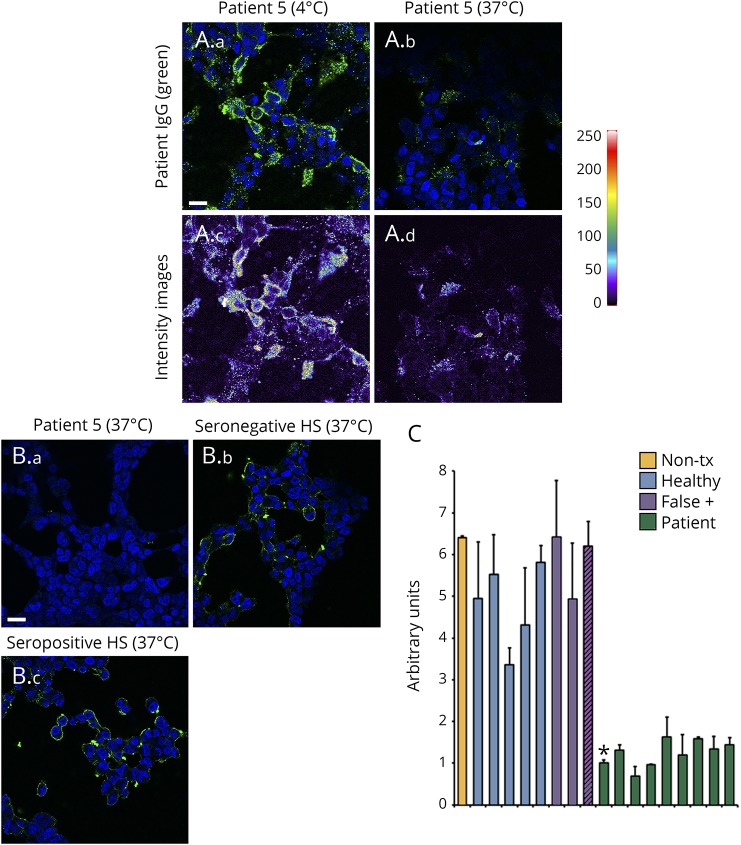
To assess GlyRα1-IgGs as biomarkers of SPS spectrum among patients and controls, specimens were tested using cell-based assays (binding [4°C] and modulating [antigen endocytosing, 37°C]). Medical records of seropositive patients were reviewed.
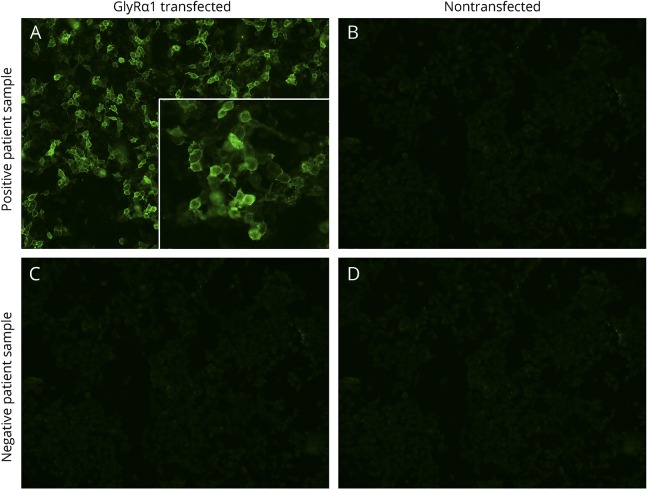
GlyRα1-IgG (binding antibody) was detected in 21 of 247 patients with suspected SPS spectrum (8.5%) and in 8 of 190 healthy subject sera (4%) but not CSF. Among 21 seropositive patients, 20 had confirmed SPS spectrum clinically, but 1 was later determined to have a functional neurologic disorder. Sera from 9 patients with SPS spectrum , but not 7 controls, nor the functional patient, caused GlyRα1 modulation (100% specificity). SPS spectrum phenotypes included progressive encephalomyelitis with rigidity and myoclonus (PERM) (8), classic SPS (5), stiff limb (5), stiff trunk (1), and isolated exaggerated startle (hyperekplexia, 1). Neuropsychiatric symptoms present in 12 patients (60%) were anxiety (11), depression (6), and delirium (3). Anxiety was particularly severe in 3 patients with PERM. Objective improvements in SPS neurologic symptoms were recorded in 16 of 18 patients who received first-line immunotherapy (89%, 9/10 treated with corticosteroids, 8/10 treated with IVIg, 3/4 treated with plasma exchange, and 1 treated with rituximab). Treatment-sparing maintenance strategies were successful in 4 of 7 patients (rituximab [2/3], azathioprine [1/1], and mycophenolate [1/3]).
GlyRα1-modulating antibody improves diagnostic specificity for immunologically treatable SPS spectrum disorders.
This study provides Class IV evidence that GlyRα1-modulating antibody accurately identifies patients with treatable SPS spectrum disorders.
甘氨酸受体α-1亚基(GlyRα1)-免疫球蛋白G(IgG)是僵人综合征(SPS)谱系的诊断指标,但有报道称在其他神经系统疾病中也可检测到,其意义尚不确定。
为了评估GlyRα1-IgG作为SPS谱系患者和对照生物标志物的情况,使用基于细胞的检测方法(结合[4°C]和调节[抗原内吞,37°C])对标本进行检测。对血清阳性患者的病历进行了回顾。
在247例疑似SPS谱系患者中的21例(8.5%)和190例健康受试者血清中的8例(4%)检测到GlyRα1-IgG(结合抗体),但脑脊液中未检测到。在21例血清阳性患者中,20例临床确诊为SPS谱系,但1例后来被确定患有功能性神经系统疾病。9例SPS谱系患者的血清可引起GlyRα1调节(特异性100%),而7例对照和该功能性患者的血清则不能。SPS谱系表型包括进行性脑脊髓炎伴僵硬和肌阵挛(PERM)(8例)、经典SPS(5例)、肢体僵硬(5例)、躯干僵硬(1例)和孤立性夸张惊吓反应(惊跳症,1例)。12例患者(60%)出现神经精神症状,包括焦虑(11例)、抑郁(6例)和谵妄(3例)。3例PERM患者的焦虑尤为严重。18例接受一线免疫治疗的患者中有16例(89%)SPS神经症状有客观改善(9例接受皮质类固醇治疗,8例接受静脉注射免疫球蛋白治疗,4例中的3例接受血浆置换治疗,1例接受利妥昔单抗治疗)。7例患者中有4例(利妥昔单抗[3例中的2例]、硫唑嘌呤[1例中的1例]和霉酚酸酯[3例中的1例])的治疗维持策略成功。
GlyRα1调节抗体提高了对可免疫治疗的SPS谱系疾病的诊断特异性。
本研究提供了IV级证据,表明GlyRα1调节抗体可准确识别可治疗的SPS谱系疾病患者。