Ahmadi Farzaneh, Noorian Farzad, Novakovic Daniel, van Schaik André
The MARCS Institute for Brain Behaviour and Development, Western Sydney University, Sydney, New South Wales, Australia.
School of Electrical and Information Engineering, The University of Sydney, Sydney, New South Wales, Australia.
PLoS One. 2018 Feb 21;13(2):e0192257. doi: 10.1371/journal.pone.0192257. eCollection 2018.
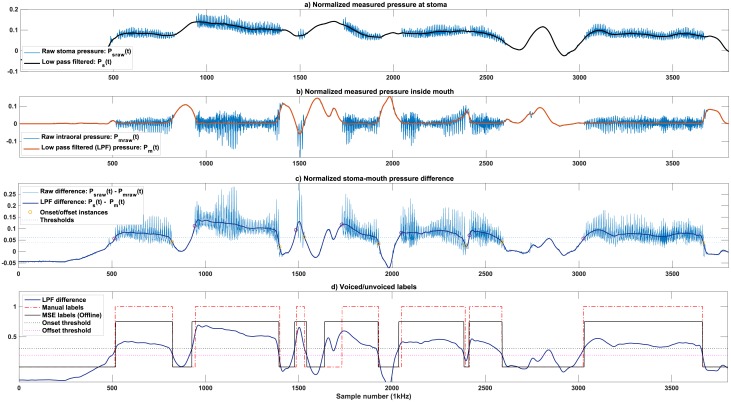
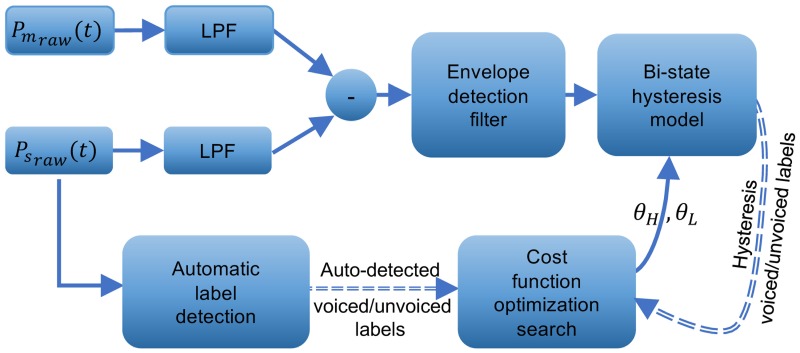
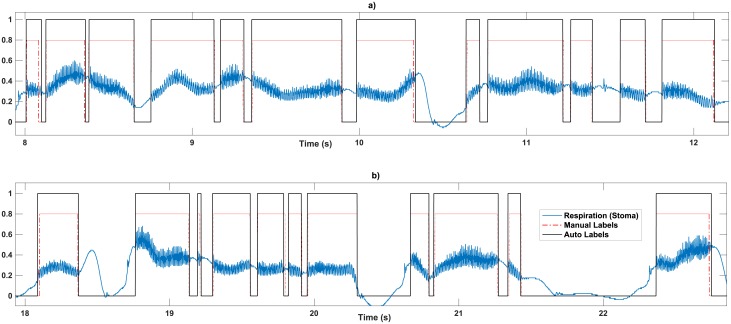
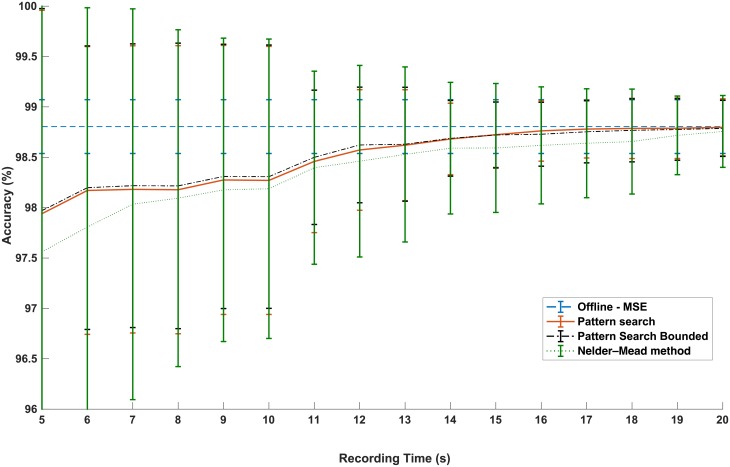
Despite emergent progress in many fields of bionics, a functional Bionic Voice prosthesis for laryngectomy patients (larynx amputees) has not yet been achieved, leading to a lifetime of vocal disability for these patients. This study introduces a novel framework of Pneumatic Bionic Voice Prostheses as an electronic adaptation of the Pneumatic Artificial Larynx (PAL) device. The PAL is a non-invasive mechanical voice source, driven exclusively by respiration with an exceptionally high voice quality, comparable to the existing gold standard of Tracheoesophageal (TE) voice prosthesis. Following PAL design closely as the reference, Pneumatic Bionic Voice Prostheses seem to have a strong potential to substitute the existing gold standard by generating a similar voice quality while remaining non-invasive and non-surgical. This paper designs the first Pneumatic Bionic Voice prosthesis and evaluates its onset and offset control against the PAL device through pre-clinical trials on one laryngectomy patient. The evaluation on a database of more than five hours of continuous/isolated speech recordings shows a close match between the onset/offset control of the Pneumatic Bionic Voice and the PAL with an accuracy of 98.45 ±0.54%. When implemented in real-time, the Pneumatic Bionic Voice prosthesis controller has an average onset/offset delay of 10 milliseconds compared to the PAL. Hence it addresses a major disadvantage of previous electronic voice prostheses, including myoelectric Bionic Voice, in meeting the short time-frames of controlling the onset/offset of the voice in continuous speech.
尽管仿生学的许多领域都取得了显著进展,但用于喉切除患者(喉部截肢者)的功能性仿生语音假体尚未实现,这导致这些患者终身存在语音残疾问题。本研究引入了一种新型的气动仿生语音假体框架,作为对气动人工喉(PAL)装置的电子改进。PAL是一种非侵入性的机械语音源,仅由呼吸驱动,语音质量极高,可与现有的气管食管(TE)语音假体的黄金标准相媲美。紧密参照PAL的设计,气动仿生语音假体似乎具有很强的潜力,能够在保持非侵入性和非手术性的同时,通过产生相似的语音质量来替代现有的黄金标准。本文设计了首个气动仿生语音假体,并通过对一名喉切除患者进行临床前试验,评估其相对于PAL装置的起始和结束控制。对超过五小时的连续/孤立语音记录数据库进行的评估表明,气动仿生语音的起始/结束控制与PAL之间的匹配度很高,准确率为98.45±0.54%。在实时实施时,与PAL相比,气动仿生语音假体控制器的平均起始/结束延迟为10毫秒。因此,它解决了以前的电子语音假体(包括肌电仿生语音)在满足连续语音中控制语音起始/结束的短时间框架方面的一个主要缺点。