Oberdick Samuel D, Abdelgawad Ahmed, Moya Carlos, Mesbahi-Vasey Samaneh, Kepaptsoglou Demie, Lazarov Vlado K, Evans Richard F L, Meilak Daniel, Skoropata Elizabeth, van Lierop Johan, Hunt-Isaak Ian, Pan Hillary, Ijiri Yumi, Krycka Kathryn L, Borchers Julie A, Majetich Sara A
Physics Department, Carnegie Mellon University, Pittsburgh, PA, 15213, USA.
Applied Physics Division, Physical Measurement Laboratory, NIST, Boulder, CO, 80305, USA.
Sci Rep. 2018 Feb 21;8(1):3425. doi: 10.1038/s41598-018-21626-0.
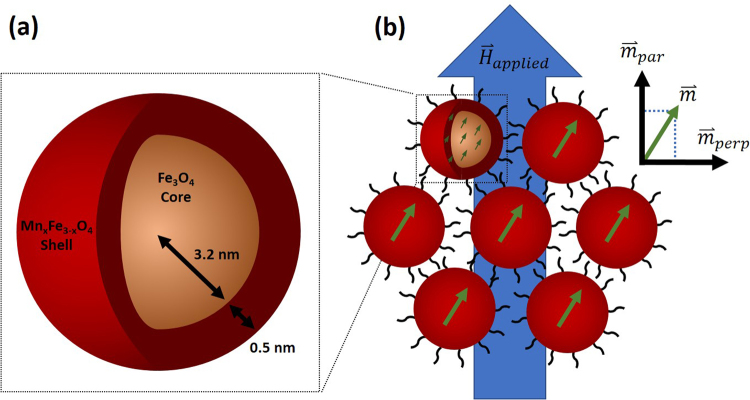
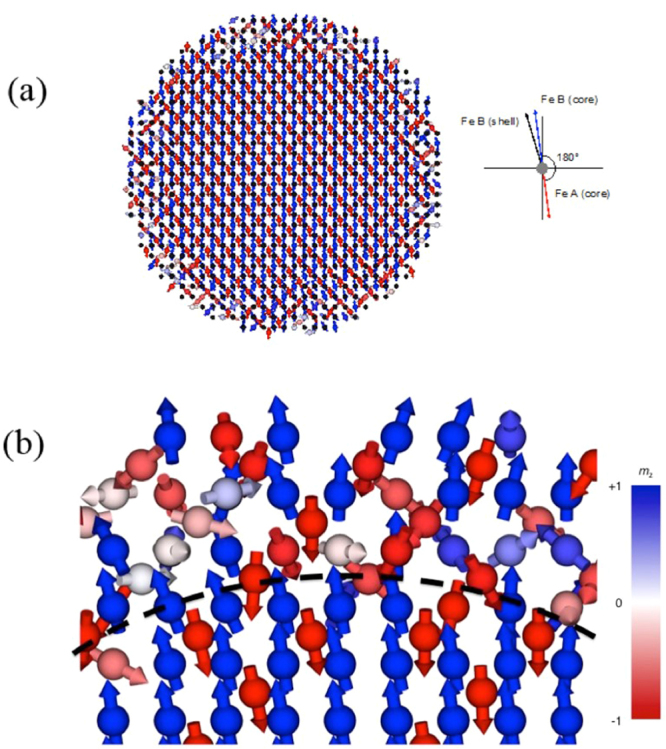
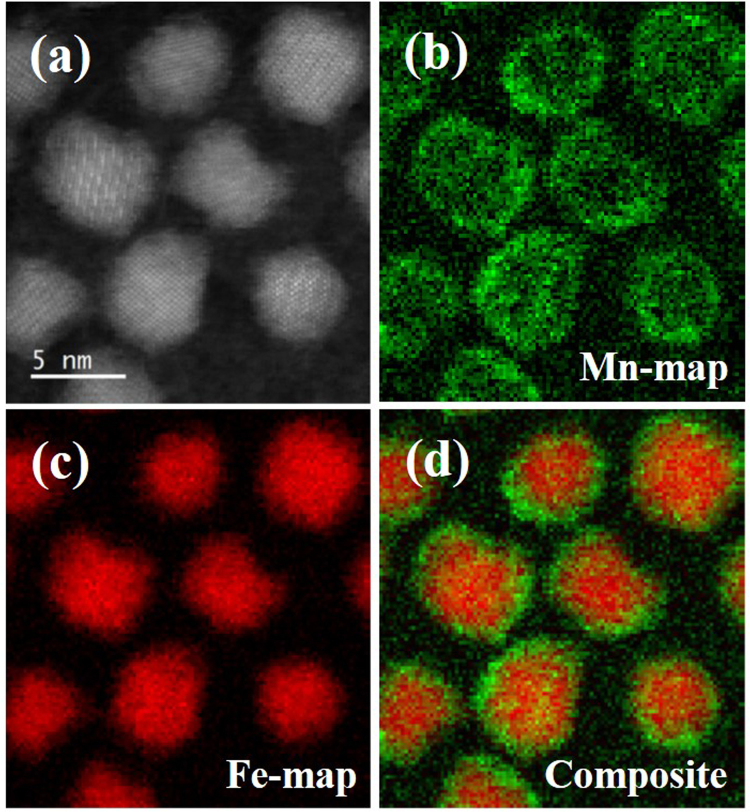
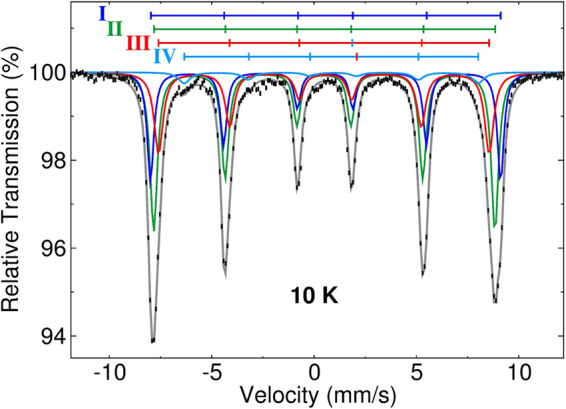
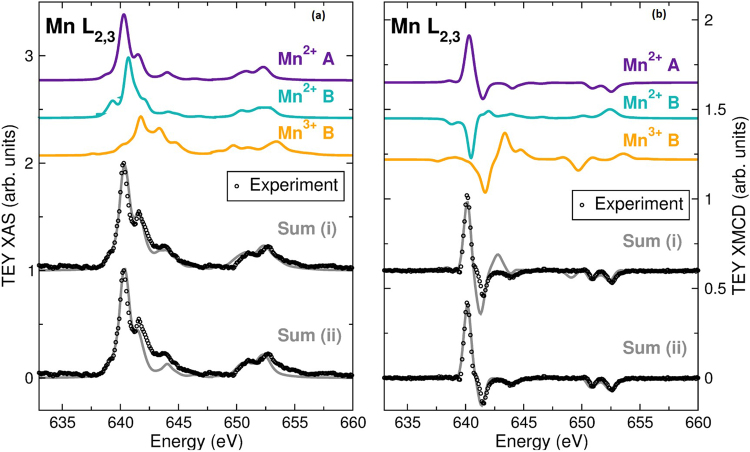
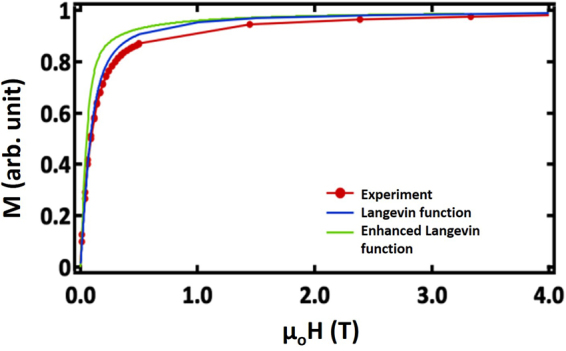
Magnetic nanoparticles (MNPs) have become increasingly important in biomedical applications like magnetic imaging and hyperthermia based cancer treatment. Understanding their magnetic spin configurations is important for optimizing these applications. The measured magnetization of MNPs can be significantly lower than bulk counterparts, often due to canted spins. This has previously been presumed to be a surface effect, where reduced exchange allows spins closest to the nanoparticle surface to deviate locally from collinear structures. We demonstrate that intraparticle effects can induce spin canting throughout a MNP via the Dzyaloshinskii-Moriya interaction (DMI). We study ~7.4 nm diameter, core/shell FeO/MnFeO MNPs with a 0.5 nm Mn-ferrite shell. Mössbauer spectroscopy, x-ray absorption spectroscopy and x-ray magnetic circular dichroism are used to determine chemical structure of core and shell. Polarized small angle neutron scattering shows parallel and perpendicular magnetic correlations, suggesting multiparticle coherent spin canting in an applied field. Atomistic simulations reveal the underlying mechanism of the observed spin canting. These show that strong DMI can lead to magnetic frustration within the shell and cause canting of the net particle moment. These results illuminate how core/shell nanoparticle systems can be engineered for spin canting across the whole of the particle, rather than solely at the surface.
磁性纳米颗粒(MNPs)在诸如磁成像和基于热疗的癌症治疗等生物医学应用中变得越来越重要。了解它们的磁自旋构型对于优化这些应用非常重要。MNPs的测量磁化强度通常可能明显低于块状对应物,这通常是由于自旋倾斜所致。此前人们一直认为这是一种表面效应,即减少的交换作用使得最靠近纳米颗粒表面的自旋局部偏离共线结构。我们证明,颗粒内效应可通过Dzyaloshinskii-Moriya相互作用(DMI)在整个MNP中诱导自旋倾斜。我们研究了直径约7.4纳米、具有0.5纳米锰铁氧体壳层的核/壳FeO/MnFeO MNPs。利用穆斯堡尔光谱、X射线吸收光谱和X射线磁圆二色性来确定核和壳层的化学结构。极化小角中子散射显示出平行和垂直的磁相关性,表明在施加磁场时存在多粒子相干自旋倾斜。原子模拟揭示了观察到的自旋倾斜的潜在机制。这些结果表明,强DMI可导致壳层内的磁阻挫,并导致净粒子磁矩的倾斜。这些结果阐明了如何设计核/壳纳米颗粒系统,以使整个颗粒而非仅在表面发生自旋倾斜。