Clarkson Benjamin D S, Patel Misha S, LaFrance-Corey Reghann G, Howe Charles L
Department of Neurology Mayo Clinic Rochester Minnesota.
Department of Neuroscience Mayo Clinic Rochester Minnesota.
Ann Clin Transl Neurol. 2017 Dec 21;5(2):172-185. doi: 10.1002/acn3.516. eCollection 2018 Feb.
Injury-associated axon-intrinsic signals are thought to underlie pathogenesis and progression in many neuroinflammatory and neurodegenerative diseases, including multiple sclerosis (MS). Retrograde interferon gamma (IFN ) signals are known to induce expression of major histocompatibility class I (MHC I) genes in murine axons, thereby increasing the susceptibility of these axons to attack by antigen-specific CD8 T cells. We sought to determine whether the same is true in human neurons.
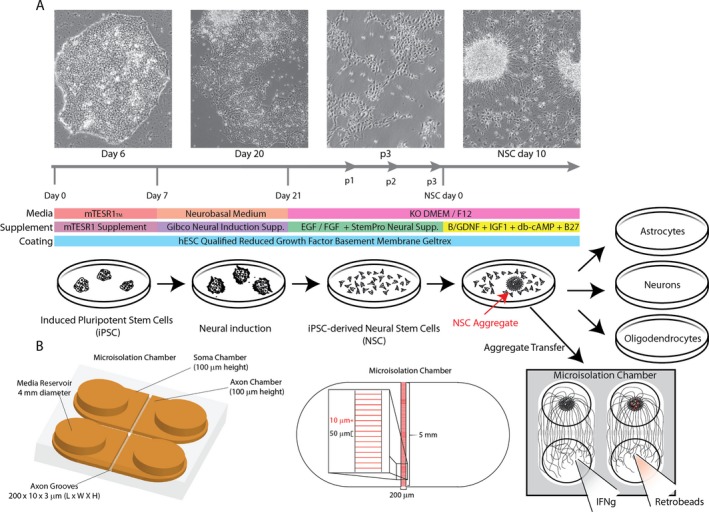
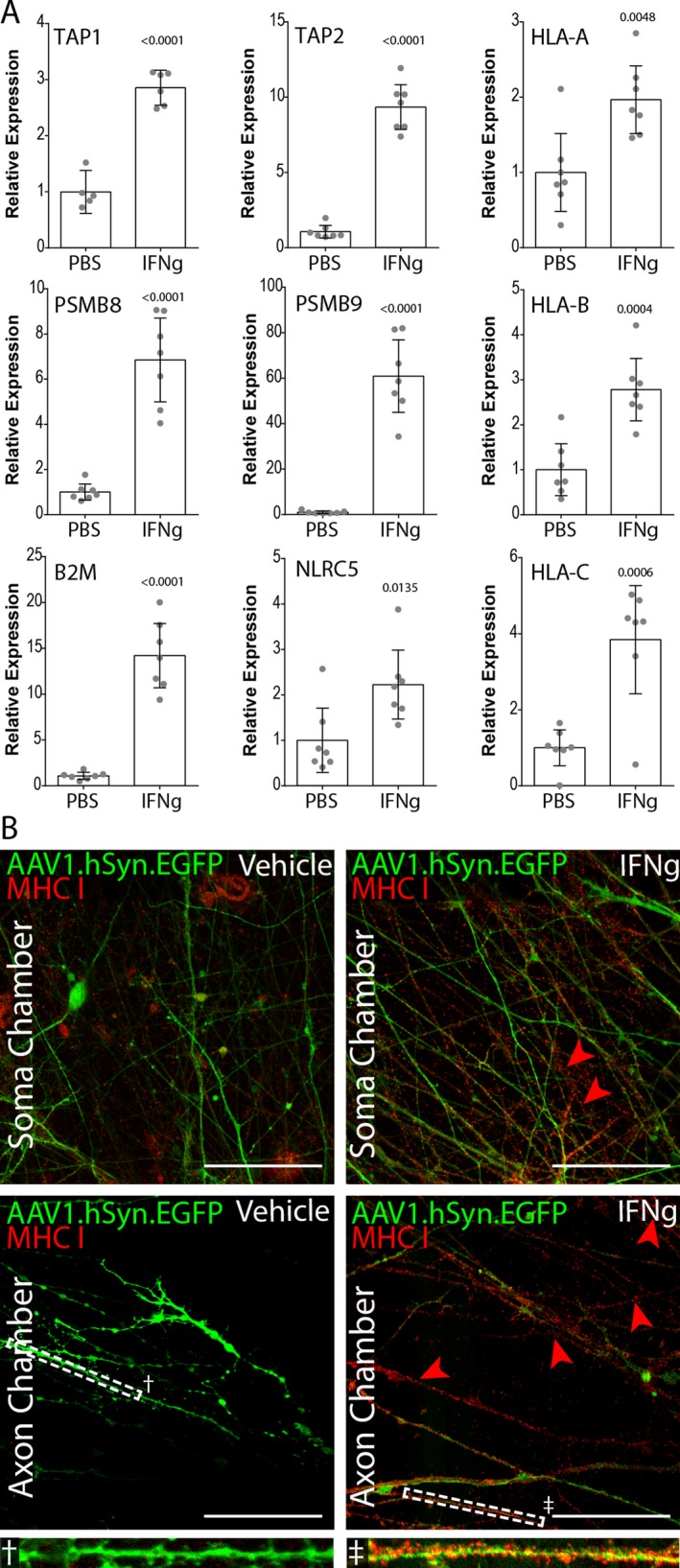
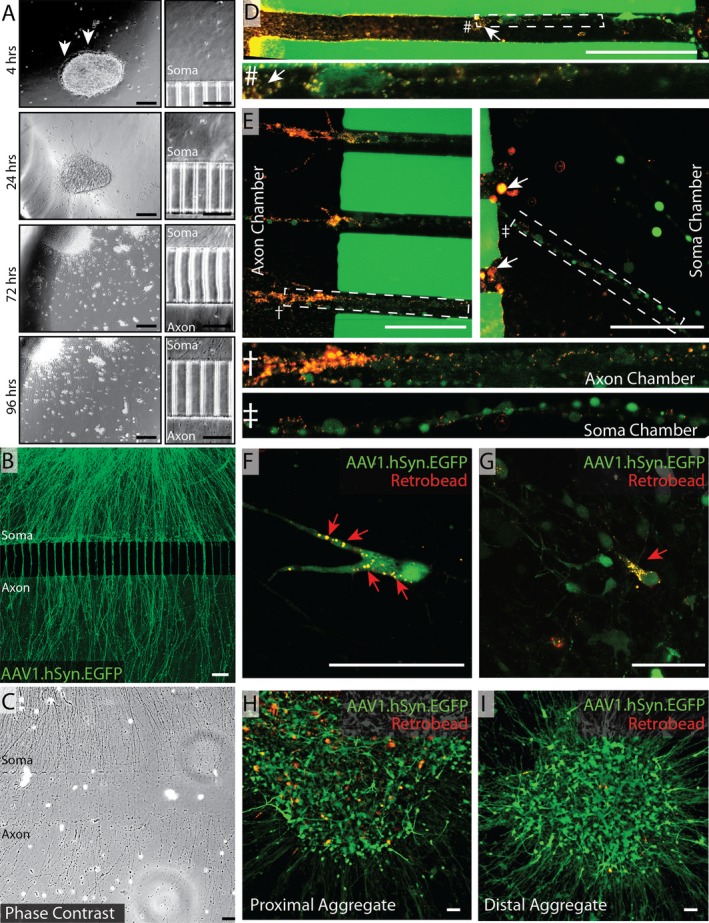
A novel microisolation chamber design was used to physically isolate and manipulate axons from human skin fibroblast-derived induced pluripotent stem cell (iPSC)-derived neuron-enriched neural aggregates. Fluorescent retrobeads were used to assess the fraction of neurons with projections to the distal chamber. Axons were treated with IFN for 72 h and expression of MHC class I and antigen presentation genes were evaluated by RT-PCR and immunofluorescence.
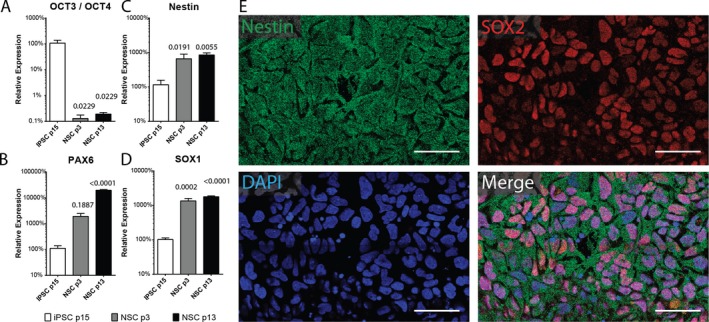
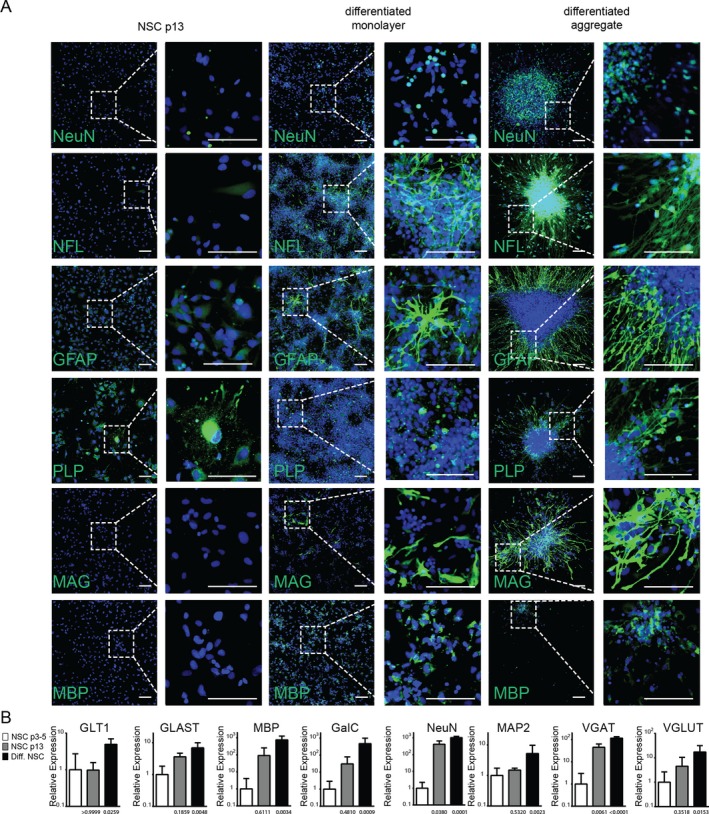
Human iPSC-derived neural stem cells maintained as 3D aggregate cultures in the cell body chamber of polymer microisolation chambers extended dense axonal projections into the fluidically isolated distal chamber. Treatment of these axons with IFN resulted in upregulation of MHC class I and antigen processing genes in the neuron cell bodies. IFN -induced MHC class I molecules were also anterogradely transported into the distal axon.
These results provide conclusive evidence that human axons are competent to express MHC class I molecules, suggesting that inflammatory factors enriched in demyelinated lesions may render axons vulnerable to attack by autoreactive CD8 T cells in patients with MS. Future work will be aimed at identifying pathogenic anti-axonal T cells in these patients.
损伤相关的轴突内在信号被认为是包括多发性硬化症(MS)在内的许多神经炎症和神经退行性疾病发病机制和病情进展的基础。已知逆行干扰素γ(IFN )信号可诱导小鼠轴突中主要组织相容性复合体I类(MHC I)基因的表达,从而增加这些轴突被抗原特异性CD8 T细胞攻击的易感性。我们试图确定在人类神经元中是否也是如此。
采用一种新型的微隔离室设计,从人皮肤成纤维细胞衍生的诱导多能干细胞(iPSC)来源的富含神经元的神经聚集体中物理分离和操纵轴突。使用荧光逆行珠评估有投射到远端室的神经元比例。轴突用IFN 处理72小时,并通过逆转录聚合酶链反应(RT-PCR)和免疫荧光评估MHC I类和抗原呈递基因的表达。
在聚合物微隔离室的细胞体室中维持为三维聚集体培养的人iPSC衍生的神经干细胞向流体隔离的远端室延伸出密集的轴突投射。用IFN 处理这些轴突导致神经元细胞体中MHC I类和抗原加工基因的上调。IFN 诱导的MHC I类分子也被顺行运输到远端轴突。
这些结果提供了确凿的证据,表明人类轴突能够表达MHC I类分子,这表明脱髓鞘病变中富集的炎症因子可能使轴突在MS患者中易受自身反应性CD8 T细胞的攻击。未来的工作将旨在鉴定这些患者中的致病性抗轴突T细胞。