Laurenti Marco, Cauda Valentina
Department of Applied Science and Technology, Politecnico di Torino, C.so Duca degli Abruzzi 24, 10129 Turin, Italy.
Materials (Basel). 2018 Feb 22;11(2):314. doi: 10.3390/ma11020314.
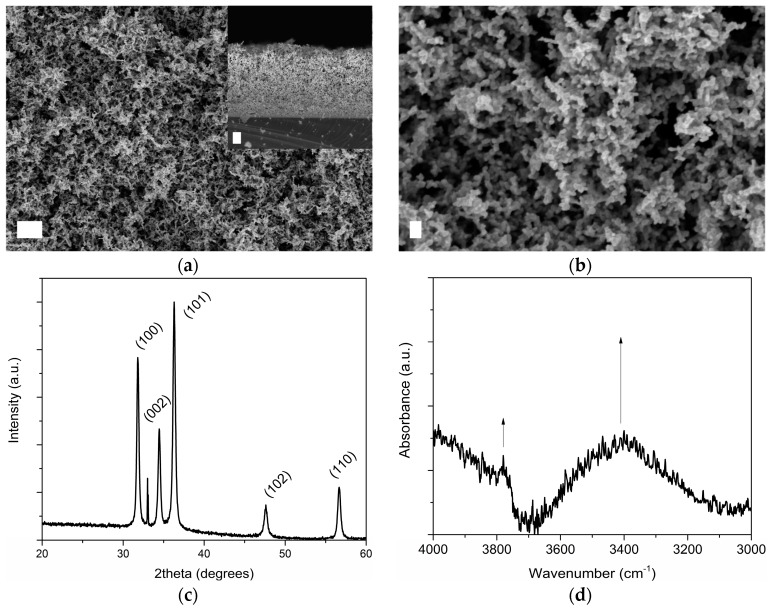
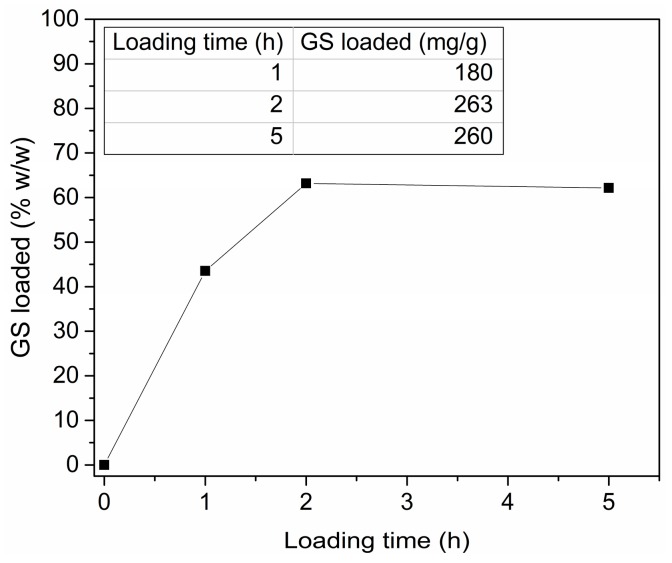
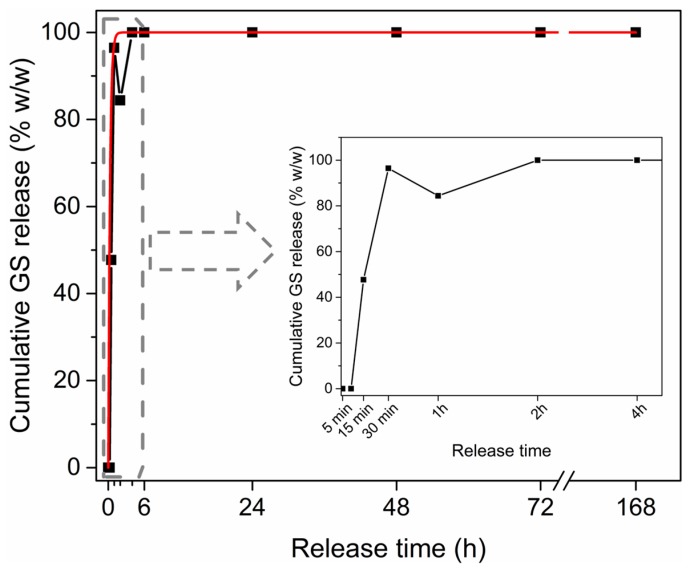
Among metal oxides, zinc oxide (ZnO) is one of the most attractive materials thanks to its biocompatible and biodegradable properties along with the existence of various morphologies featuring piezoelectric, semiconducting and photocatalytic activities. All of these structures were successfully prepared and tested for numerous applications, including optoelectronics, sensors and biomedical ones. In the last case, biocompatible ZnO nanomaterials positively influenced cells growth and tissue regeneration as well, promoting wound healing and new bone formation. Despite showing high surface areas, ZnO morphologies generally lack an intrinsic mesoporous structure, strongly limiting the investigation of the corresponding drug loading and release properties. Within this scope, this study focuses on the adsorption and release properties of high surface area, mesoporous ZnO structures using gentamicin sulfate (GS), a well known antibiotic against bacterial infections especially in orthopedics. The particular ZnO morphology was achieved starting from sputtered porous zinc layers, finally converted into ZnO by thermal oxidation. By taking advantage of this mesoporous framework, GS was successfully adsorbed within the ZnO matrix and the kinetic release profile evaluated for up to seven days. The adsorption of GS was successfully demonstrated, with a maximum amount of 263 mg effectively loaded per gram of active material. Then, fast kinetic release was obtained in vitro by simple diffusion mechanism, thus opening further possibilities of smart pore and surface engineering to improve the controlled delivery.
在金属氧化物中,氧化锌(ZnO)是最具吸引力的材料之一,这得益于其生物相容性和可生物降解性,以及存在具有压电、半导体和光催化活性的各种形态。所有这些结构都已成功制备并在众多应用中进行了测试,包括光电子学、传感器和生物医学应用。在后一种情况下,生物相容性的ZnO纳米材料对细胞生长和组织再生也有积极影响,促进伤口愈合和新骨形成。尽管ZnO形态具有高比表面积,但通常缺乏固有的介孔结构,这严重限制了对相应药物负载和释放性能的研究。在此范围内,本研究聚焦于使用硫酸庆大霉素(GS,一种尤其在骨科领域用于对抗细菌感染的知名抗生素)的高比表面积介孔ZnO结构的吸附和释放性能。特定的ZnO形态是从溅射的多孔锌层开始获得的,最终通过热氧化转化为ZnO。利用这种介孔框架,GS成功吸附在ZnO基质中,并对长达七天的动力学释放曲线进行了评估。GS的吸附得到了成功证明,每克活性材料有效负载量最大可达263毫克。然后,通过简单扩散机制在体外获得了快速动力学释放,从而为智能孔和表面工程改善控释开辟了更多可能性。