Laurenti Marco, Cauda Valentina
Department of Applied Science and Technology, Politecnico di Torino, C.so Duca degli Abruzzi 24, 10129 Turin, Italy.
Nanomaterials (Basel). 2017 Nov 6;7(11):374. doi: 10.3390/nano7110374.
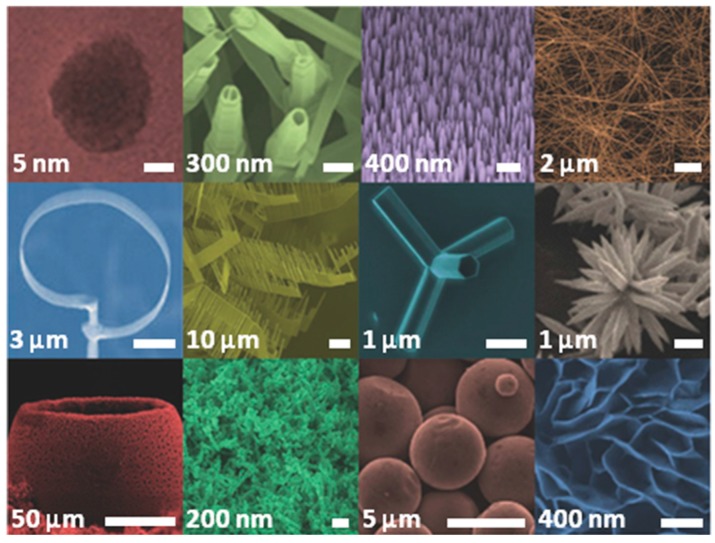
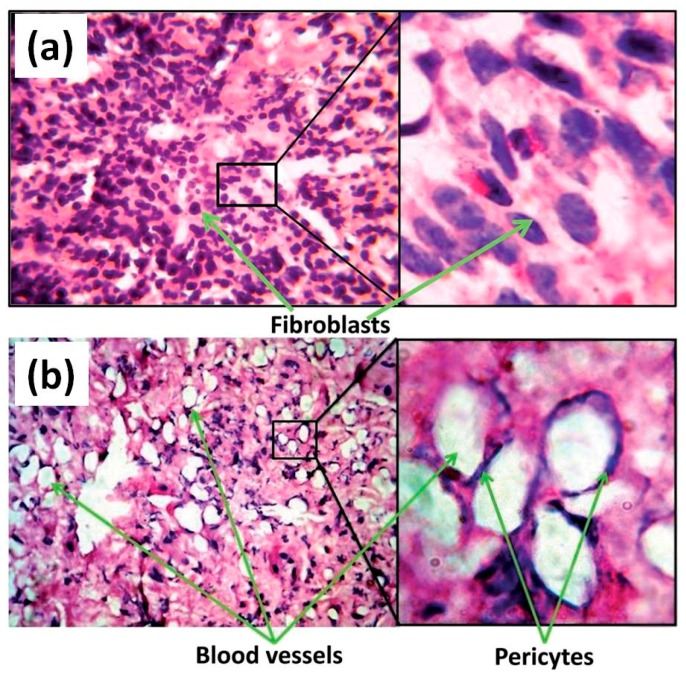
This review focuses on the most recent applications of zinc oxide (ZnO) nanostructures for tissue engineering. ZnO is one of the most investigated metal oxides, thanks to its multifunctional properties coupled with the ease of preparing various morphologies, such as nanowires, nanorods, and nanoparticles. Most ZnO applications are based on its semiconducting, catalytic and piezoelectric properties. However, several works have highlighted that ZnO nanostructures may successfully promote the growth, proliferation and differentiation of several cell lines, in combination with the rise of promising antibacterial activities. In particular, osteogenesis and angiogenesis have been effectively demonstrated in numerous cases. Such peculiarities have been observed both for pure nanostructured ZnO scaffolds as well as for three-dimensional ZnO-based hybrid composite scaffolds, fabricated by additive manufacturing technologies. Therefore, all these findings suggest that ZnO nanostructures represent a powerful tool in promoting the acceleration of diverse biological processes, finally leading to the formation of new living tissue useful for organ repair.
本综述聚焦于氧化锌(ZnO)纳米结构在组织工程中的最新应用。由于其多功能特性以及易于制备各种形态(如纳米线、纳米棒和纳米颗粒),ZnO是研究最多的金属氧化物之一。大多数ZnO应用基于其半导体、催化和压电特性。然而,多项研究表明,ZnO纳米结构与有前景的抗菌活性增强相结合,可能成功促进多种细胞系的生长、增殖和分化。特别是,在许多情况下已有效证明其具有成骨和血管生成作用。无论是纯纳米结构的ZnO支架,还是通过增材制造技术制造的三维ZnO基混合复合支架,都观察到了这些特性。因此,所有这些发现表明,ZnO纳米结构是促进各种生物过程加速的有力工具,最终导致形成可用于器官修复的新活组织。