Zeng Fanxing, Zhao Hua, Liao Jingwen
Department of Exercise Physiology, Beijing Sport University, Beijing 100000, China.
Department of Physical Education, Central China Normal University, Wuhan 430000, China.
Biol Sport. 2017 Dec;34(4):313-321. doi: 10.5114/biolsport.2017.69818. Epub 2017 Sep 20.
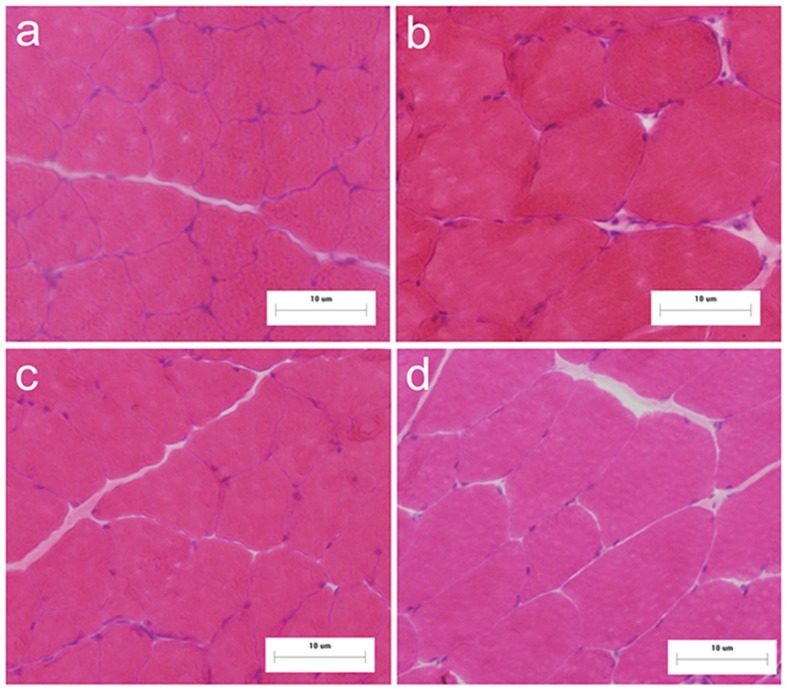
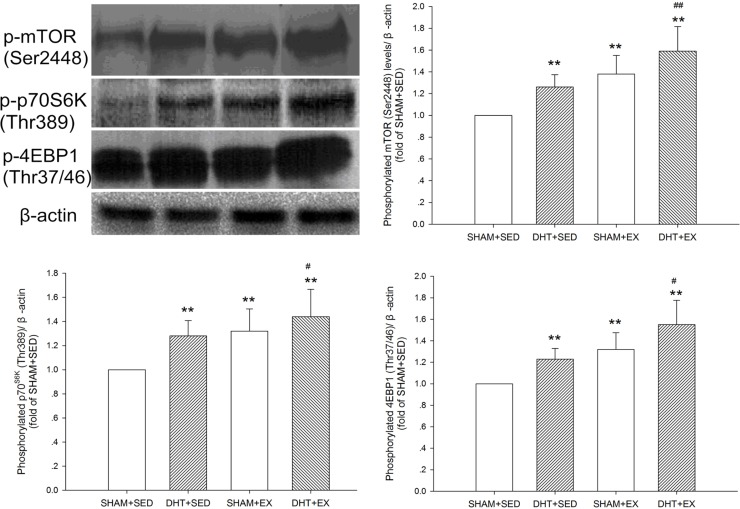
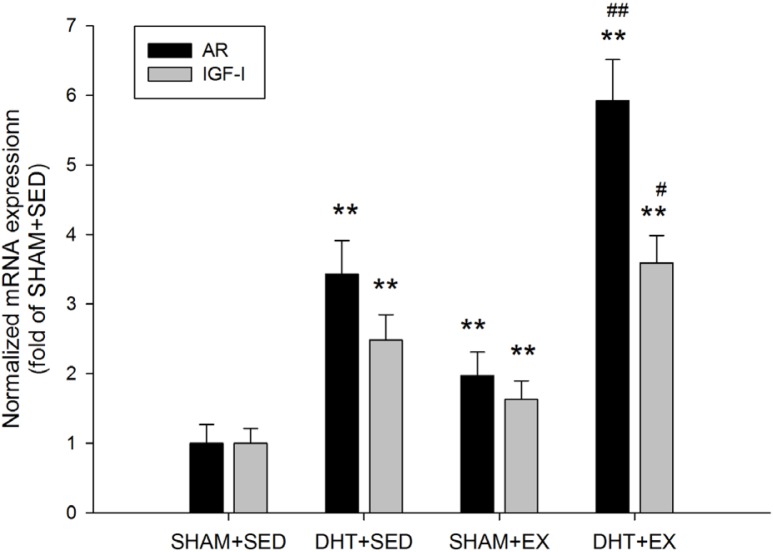
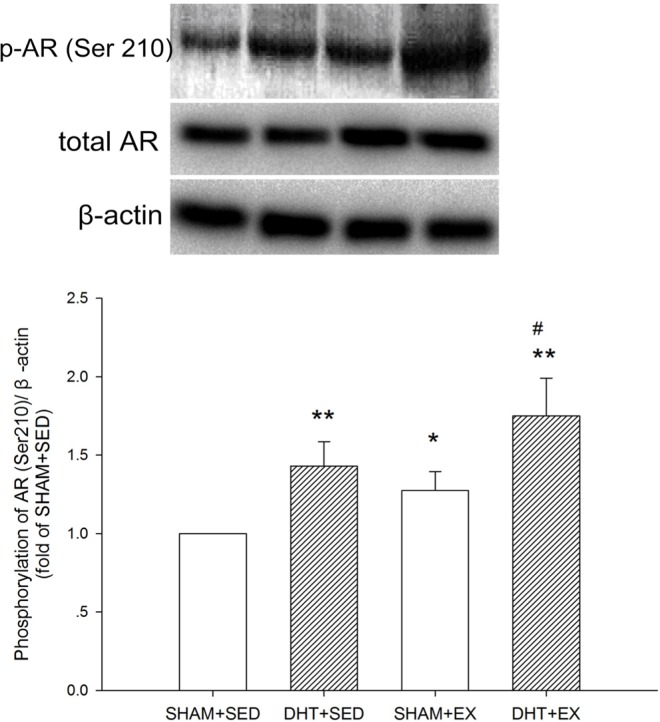
This study was designed to investigate the effects of exogenous androgen and resistance exercise on skeletal muscle hypertrophy and the role of the mammalian target of rapamycin (mTOR) signalling during the process. A total of 24 male Sprague-Dawley rats were randomly assigned to sham operation and dihydrotestosterone (DHT) implantation groups with subgroups subjected to sedentary conditions or resistance exercise (SHAM+SED, SHAM+EX, DHT+SED, and DHT+EX). The experimental procedure lasted for 10 days. The mRNA expression of androgen receptor (AR) and insulin-like growth factor I (IGF-I), the expression of myosin heavy chain (MHC), as well as the phosphorylation statuses of AR, mTOR, p70 ribosomal S6 kinase (p70), and eukaryotic translation initiation factor 4E-binding protein 1 (4EBP1) were determined in the white gastrocnemius muscle. The cross sectional area and wet mass of the muscle were also measured. The cross sectional area and MHC expression were significantly higher in SHAM+EX, DHT+SED, and DHT+EX than in SHAM+SED. There was no significant difference among groups in muscle mass. The mRNA expression of AR and IGF-I and the phosphorylation of mTOR, p70, and 4EBP1 were significantly increased in DHT+SED and SHAM+EX and were significantly enhanced in DHT+EX compared with either DHT or exercise alone. These data show that DHT causes hypertrophy in skeletal muscle and that exercise has a synergistic effect on DHT-induced hypertrophy. Exercise enhances androgen-induced rapid anabolic action, which involves activation of the mTOR pathway.
本研究旨在探讨外源性雄激素和抗阻运动对骨骼肌肥大的影响以及哺乳动物雷帕霉素靶蛋白(mTOR)信号通路在此过程中的作用。总共24只雄性Sprague-Dawley大鼠被随机分为假手术组和二氢睾酮(DHT)植入组,每组再分为久坐组或抗阻运动组(SHAM+SED、SHAM+EX、DHT+SED和DHT+EX)。实验过程持续10天。测定了白腓肠肌中雄激素受体(AR)和胰岛素样生长因子I(IGF-I)的mRNA表达、肌球蛋白重链(MHC)的表达以及AR、mTOR、p70核糖体S6激酶(p70)和真核翻译起始因子4E结合蛋白1(4EBP1)的磷酸化状态。还测量了肌肉的横截面积和湿重。SHAM+EX、DHT+SED和DHT+EX组的横截面积和MHC表达显著高于SHAM+SED组。各组间肌肉质量无显著差异。DHT+SED组和SHAM+EX组中AR和IGF-I的mRNA表达以及mTOR、p70和4EBP1的磷酸化显著增加,与单独使用DHT或运动相比,DHT+EX组中这些指标进一步显著增强。这些数据表明,DHT可导致骨骼肌肥大,运动对DHT诱导的肥大具有协同作用。运动增强了雄激素诱导的快速合成代谢作用,这涉及mTOR信号通路的激活。