Ikeda Akitsu, Miyamoto Jun J, Usui Nobuo, Taira Masato, Moriyama Keiji
Maxillofacial Orthognathics, Division of Maxillofacial and Neck Reconstruction, Graduate School of Medical and Dental Sciences, Tokyo Medical and Dental University, Tokyo, Japan.
Cognitive Neurobiology, Division of Maxillofacial and Neck Reconstruction, Graduate School of Medical and Dental Sciences, Tokyo Medical and Dental University, Tokyo, Japan.
Front Psychol. 2018 Feb 8;9:99. doi: 10.3389/fpsyg.2018.00099. eCollection 2018.
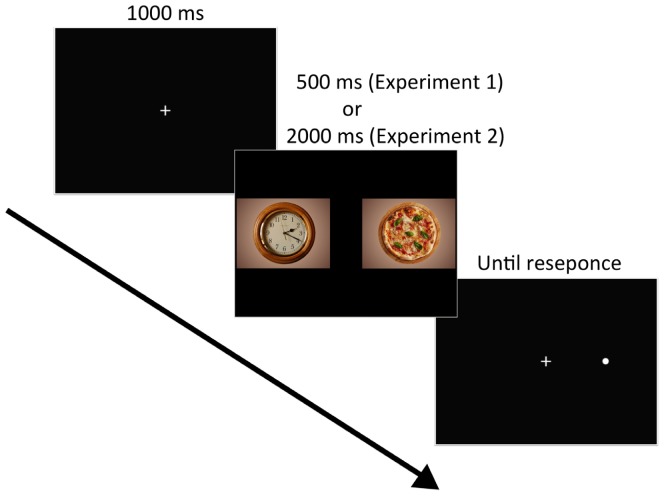
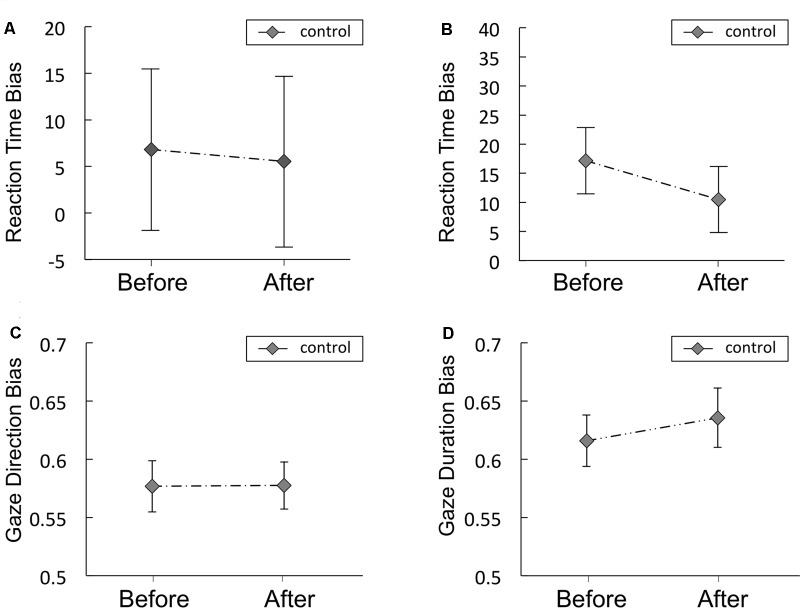
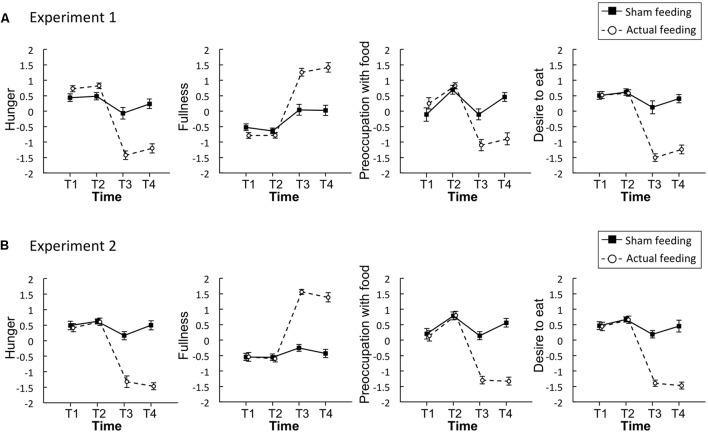
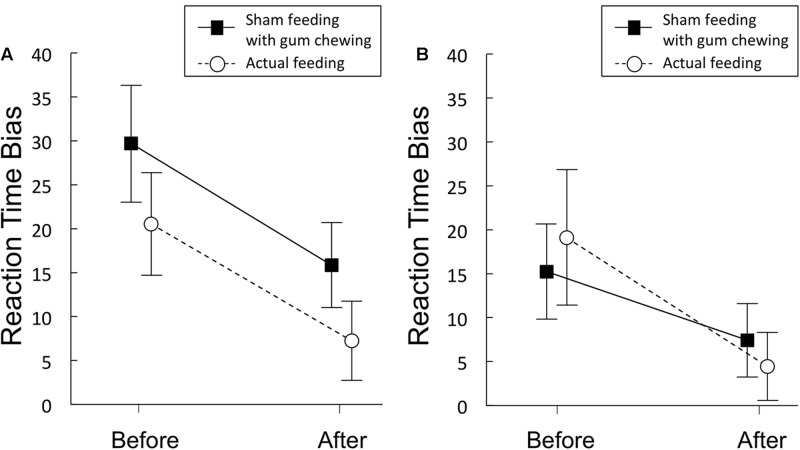
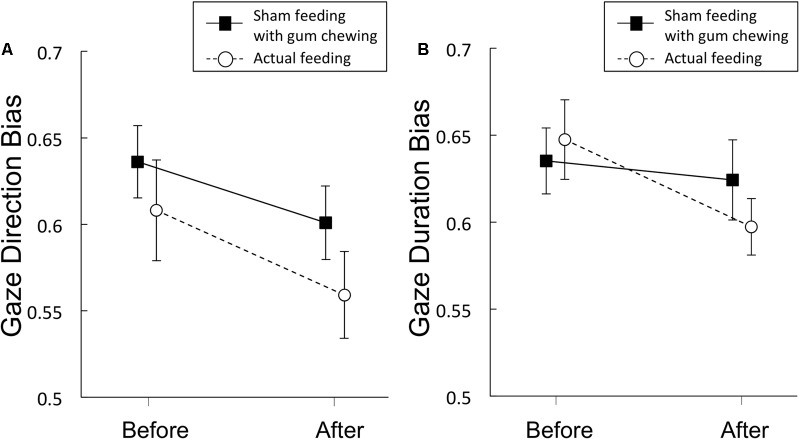
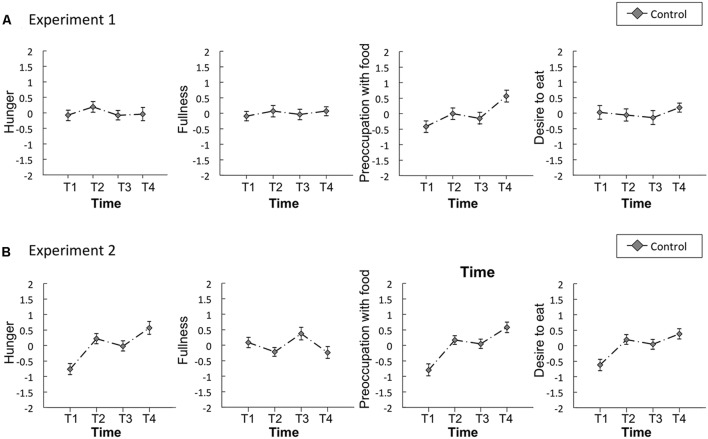
Based on the theory of incentive sensitization, the exposure to food stimuli sensitizes the brain's reward circuits and enhances attentional bias toward food. Therefore, reducing attentional bias to food could possibly be beneficial in preventing impulsive eating. The importance of chewing has been increasingly implicated as one of the methods for reducing appetite, however, no studies to investigate the effect of chewing on attentional bias to food. In this study, we investigated whether chewing stimulation (i.e., chewing tasteless gum) reduces attentional bias to food as well as an actual feeding (i.e., ingesting a standardized meal) does. We measured reaction time, gaze direction and gaze duration to assess attentional bias toward food images in pairs of food and non-food images that were presented in a visual probe task (Experiment 1, = 21) and/or eye-tracking task (Experiment 2, = 20). We also measured appetite ratings using visual analog scale. In addition, we conducted a control study in which the same number of participants performed the identical tasks to Experiments 1 and 2, but the participants did not perform sham feeding with gum-chewing/actual feeding between tasks and they took a rest. Two-way ANOVA revealed that after actual feeding, subjective ratings of hunger, preoccupation with food, and desire to eat significantly decreased, whereas fullness significantly increased. Sham feeding showed the same trends, but to a lesser degree. Results of the visual probe task in Experiment 1 showed that both sham feeding and actual feeding reduced reaction time bias significantly. Eye-tracking data showed that both sham and actual feeding resulted in significant reduction in gaze direction bias, indexing initial attentional orientation. Gaze duration bias was unaffected. In both control experiments, one-way ANOVAs showed no significant differences between immediately before and after the resting state for any of the appetite ratings, reaction time bias, gaze direction bias, or gaze duration bias. In conclusion, chewing stimulation reduced subjective appetite and attentional bias to food, particularly initial attentional orientation to food. These findings suggest that chewing stimulation, even without taste, odor, or ingestion, may affect reward circuits and help prevent impulsive eating.
基于动机敏感化理论,接触食物刺激会使大脑的奖赏回路敏感化,并增强对食物的注意偏向。因此,减少对食物的注意偏向可能有助于预防冲动进食。咀嚼作为一种减少食欲的方法,其重要性越来越受到关注,然而,尚无研究探讨咀嚼对食物注意偏向的影响。在本研究中,我们调查了咀嚼刺激(即咀嚼无味口香糖)是否能像实际进食(即摄入标准化餐食)一样减少对食物的注意偏向。我们测量了反应时间、注视方向和注视持续时间,以评估在视觉探测任务(实验1,n = 21)和/或眼动追踪任务(实验2,n = 20)中呈现的食物和非食物图像对中对食物图像的注意偏向。我们还使用视觉模拟量表测量了食欲评分。此外,我们进行了一项对照研究,相同数量的参与者执行与实验1和2相同的任务,但参与者在任务之间没有进行假进食(咀嚼口香糖/实际进食),而是休息。双向方差分析显示,实际进食后,饥饿、对食物的关注和进食欲望的主观评分显著降低,而饱腹感显著增加。假进食也呈现相同趋势,但程度较轻。实验1中视觉探测任务的结果表明假进食和实际进食均显著降低了反应时间偏差。眼动追踪数据显示,假进食和实际进食均导致注视方向偏差显著降低,表明初始注意定向。注视持续时间偏差未受影响。在两个对照实验中,单因素方差分析显示,在休息状态前后,任何食欲评分、反应时间偏差、注视方向偏差或注视持续时间偏差均无显著差异。总之,咀嚼刺激降低了主观食欲和对食物的注意偏向,尤其是对食物的初始注意定向。这些发现表明,即使没有味道、气味或摄入,咀嚼刺激也可能影响奖赏回路并有助于预防冲动进食。