Couturier Mohea, Lindås Ann-Christin
Department of Molecular Biosciences, The Wenner-Gren Institute, Stockholm University, Stockholm, Sweden.
Front Microbiol. 2018 Feb 8;9:137. doi: 10.3389/fmicb.2018.00137. eCollection 2018.
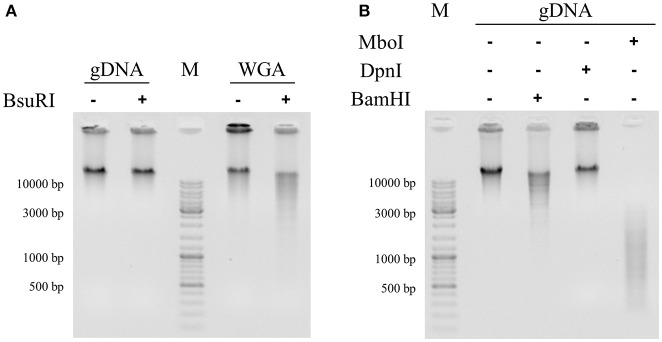
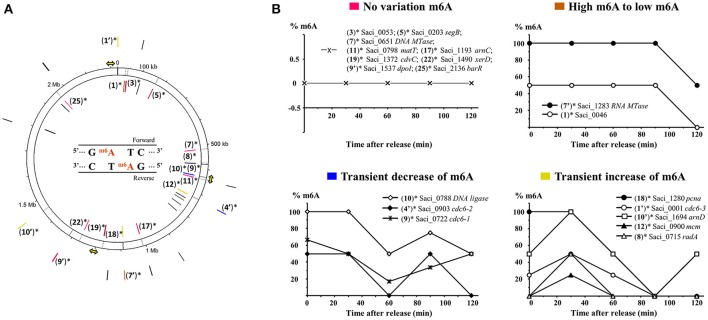
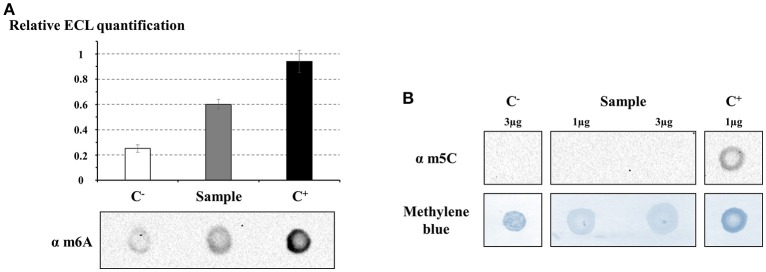
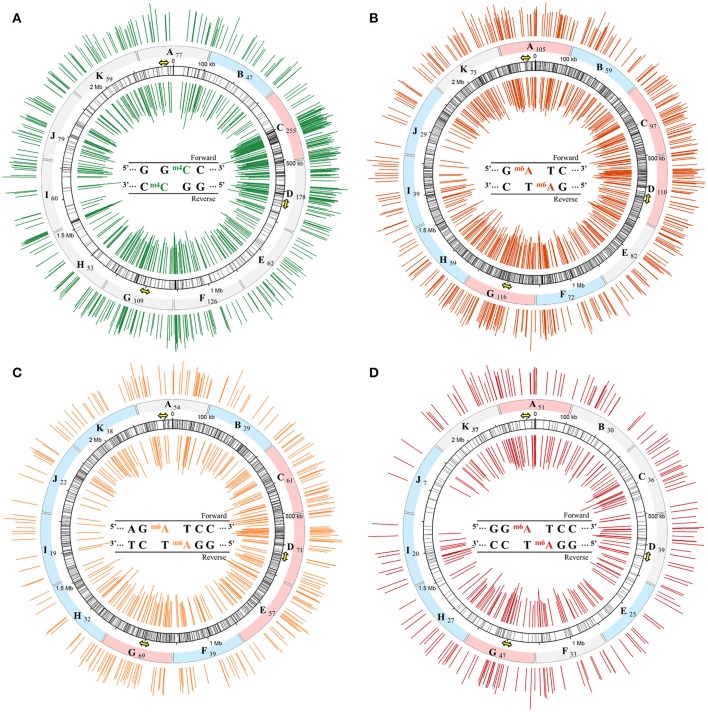
DNA methylation is the most common epigenetic modification observed in the genomic DNA (gDNA) of prokaryotes and eukaryotes. Methylated nucleobases, N-methyl-adenine (m6A), N-methyl-cytosine (m4C), and 5-methyl-cytosine (m5C), detected on gDNA represent the discrimination mark between self and non-self DNA when they are part of restriction-modification systems in prokaryotes (Bacteria and Archaea). In addition, m5C in Eukaryotes and m6A in Bacteria play an important role in the regulation of key cellular processes. Although archaeal genomes present modified bases as in the two other domains of life, the significance of DNA methylations as regulatory mechanisms remains largely uncharacterized in Archaea. Here, we began by investigating the DNA methylome of . The strategy behind this initial study entailed the use of combined digestion assays, dot blots, and genome resequencing, which utilizes specific restriction enzymes, antibodies specifically raised against m6A and m5C and single-molecule real-time (SMRT) sequencing, respectively, to identify DNA methylations occurring in exponentially growing cells. The previously identified restriction-modification system, specific of , was confirmed by digestion assay and SMRT sequencing while, the presence of m6A was revealed by dot blot and identified on the characteristic Dam motif by SMRT sequencing. No m5C was detected by dot blot under the conditions tested. Furthermore, by comparing the distribution of both detected methylations along the genome and, by analyzing DNA methylation profiles in synchronized cells, we investigated in which cellular pathways, in particular the cell cycle, this m6A methylation could be a key player. The analysis of sequencing data rejected a role for m6A methylation in another defense system and also raised new questions about a potential involvement of this modification in the regulation of other biological functions in .
DNA甲基化是在原核生物和真核生物的基因组DNA(gDNA)中观察到的最常见的表观遗传修饰。在gDNA上检测到的甲基化核碱基,即N-甲基腺嘌呤(m6A)、N-甲基胞嘧啶(m4C)和5-甲基胞嘧啶(m5C),当它们作为原核生物(细菌和古细菌)中限制修饰系统的一部分时,代表了自身DNA和非自身DNA之间的识别标记。此外,真核生物中的m5C和细菌中的m6A在关键细胞过程的调控中发挥着重要作用。尽管古细菌基因组与生命的其他两个域一样存在修饰碱基,但DNA甲基化作为调控机制的重要性在古细菌中仍 largely未被表征。在这里,我们首先研究了……的DNA甲基化组。这项初步研究背后的策略包括使用联合消化试验、斑点印迹和基因组重测序,分别利用特定的限制性内切酶、针对m6A和m5C特异性产生的抗体以及单分子实时(SMRT)测序,以鉴定在指数生长细胞中发生的DNA甲基化。先前鉴定的特定于……的限制修饰系统通过消化试验和SMRT测序得到证实,而m6A的存在通过斑点印迹揭示,并通过SMRT测序在特征性的Dam基序上鉴定。在测试条件下,斑点印迹未检测到m5C。此外,通过比较沿基因组检测到的两种甲基化的分布,并通过分析同步细胞中的DNA甲基化谱,我们研究了这种m6A甲基化可能在哪些细胞途径中,特别是在细胞周期中,发挥关键作用。测序数据分析排除了m6A甲基化在另一种防御系统中的作用,也提出了关于这种修饰可能参与……中其他生物学功能调控的新问题。