Mikrobiologisches Institut - Klinische Mikrobiologie, Immunologie und Hygiene, Universitätsklinikum Erlangen, Friedrich-Alexander-Universität (FAU) Erlangen-Nürnberg, Erlangen, Germany.
Laboratory of DC Biology, Department of Dermatology, Universitätsklinikum Erlangen, Friedrich-Alexander-Universität (FAU) Erlangen-Nürnberg, Erlangen, Germany.
Front Immunol. 2018 Jan 24;9:24. doi: 10.3389/fimmu.2018.00024. eCollection 2018.
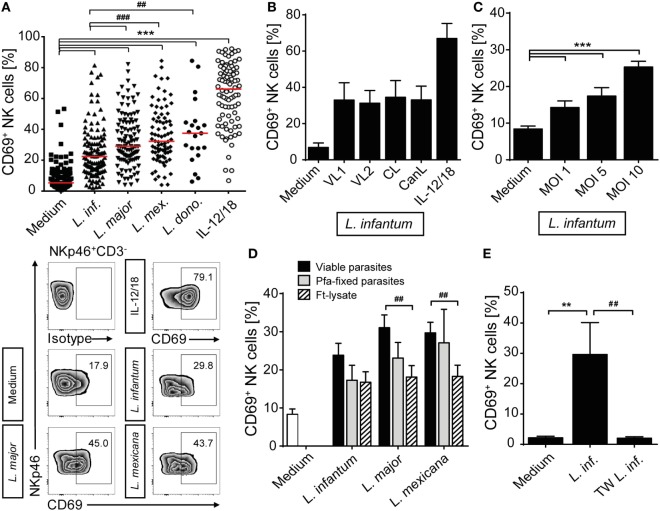
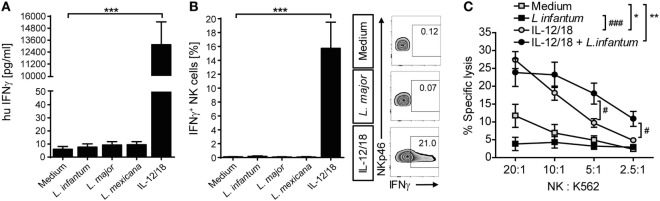
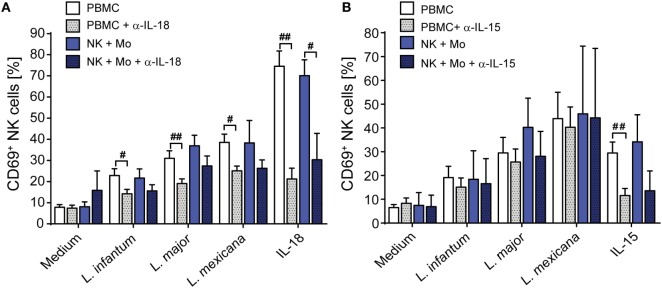
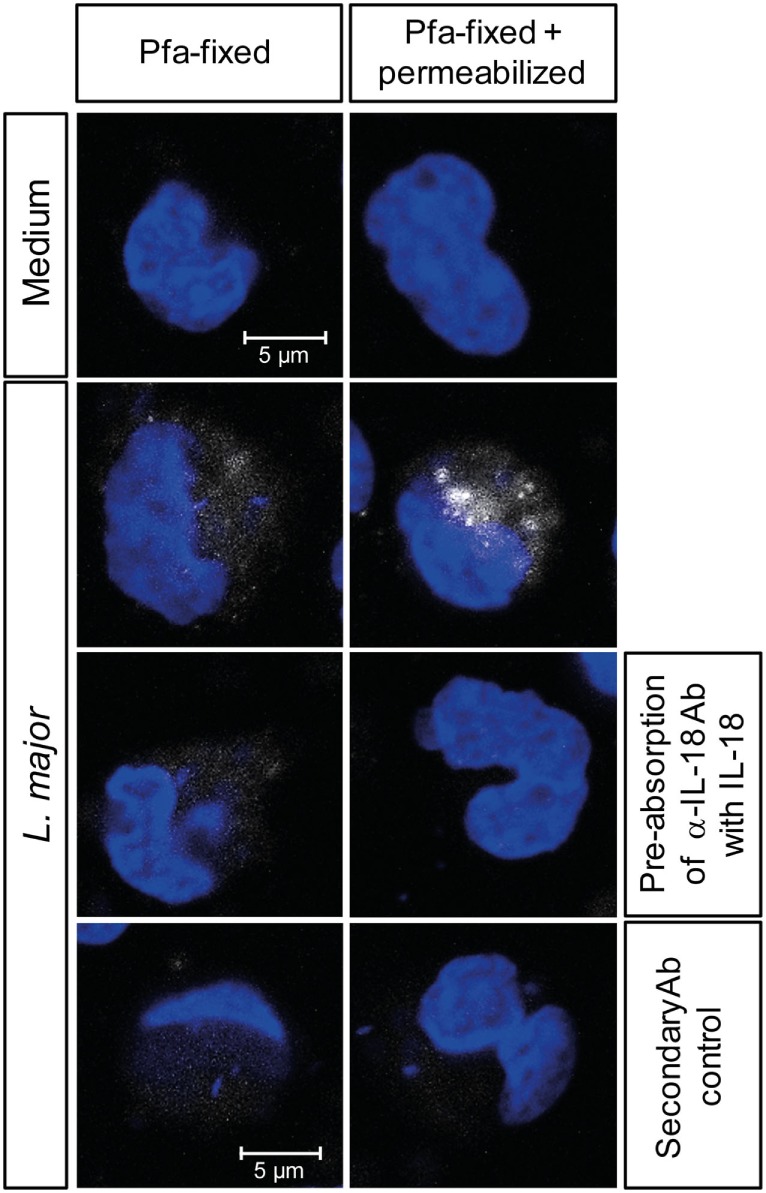
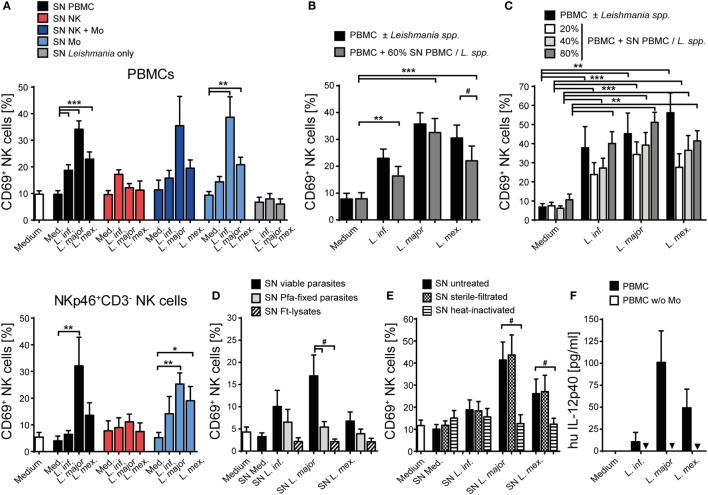
Activated natural killer (NK) cells release interferon (IFN)-γ, which is crucial for the control of intracellular pathogens such as . In contrast to experimental murine leishmaniasis, the human NK cell response to is still poorly characterized. Here, we investigated the interaction of human blood NK cells with promastigotes of different species (, and ). When peripheral blood mononuclear cells or purified NK cells and monocytes (all derived from healthy blood donors from Germany without a history of leishmaniasis) were exposed to promastigotes, NK cells showed increased surface expression of the activation marker CD69. The extent of this effect varied depending on the species; differences between dermotropic and viscerotropic strains were not observed. Upregulation of CD69 required direct contact between monocytes and and was partly inhibitable by anti-interleukin (IL)-18. Unexpectedly, IL-18 was undetectable in most of the supernatants (SNs) of monocyte/parasite cocultures. Confocal fluorescence microscopy of non-permeabilized cells revealed that -infected monocytes trans-presented IL-18 to NK cells. Native, but not heat-treated SNs of monocyte/ cocultures also induced CD69 on NK cells, indicating the involvement of a soluble heat-labile factor other than IL-18. A role for the NK cell-activating cytokines IL-1β, IL-2, IL-12, IL-15, IL-21, and IFN-α/β was excluded. The increase of CD69 was not paralleled by NK cell IFN-γ production or enhanced cytotoxicity. However, prior exposure of NK cells to parasites synergistically increased their IFN-γ release in response to IL-12, which was dependent on endogenous IL-18. CD1c dendritic cells were identified as possible source of -induced IL-12. Finally, we observed that direct contact between and NK cells reduced the expression of CD56 mRNA and protein on NK cells. We conclude that activate NK cells trans-presentation of IL-18 by monocytes and by a monocyte-derived soluble factor. IL-12 is needed to elicit the IFN-γ-response of NK cells, which is likely to be an important component of the innate control of the parasite.
活化的自然杀伤 (NK) 细胞释放干扰素 (IFN)-γ,这对于控制细胞内病原体如 至关重要。与实验性鼠利什曼病相比,人类 NK 细胞对 的反应仍未得到充分描述。在这里,我们研究了人类血液 NK 细胞与不同 物种( 、 和 )的前鞭毛体的相互作用。当外周血单核细胞或纯化的 NK 细胞和单核细胞(均来自德国的健康献血者,无利什曼病病史)暴露于前鞭毛体时,NK 细胞表面激活标志物 CD69 的表达增加。这种效应的程度取决于 物种;未观察到亲皮和内脏利什曼原虫株之间的差异。CD69 的上调需要单核细胞与 和直接接触,并且部分可被抗白细胞介素 (IL)-18 抑制。出乎意料的是,在单核细胞/寄生虫共培养物的大多数上清液 (SN) 中未检测到 IL-18。非透性细胞的共焦荧光显微镜显示,感染的单核细胞将 IL-18 转呈给 NK 细胞。天然的,但不是热处理的单核细胞/ 共培养物 SN 也诱导 NK 细胞上的 CD69,表明涉及除 IL-18 以外的可溶性不耐热因子。NK 细胞激活细胞因子 IL-1β、IL-2、IL-12、IL-15、IL-21 和 IFN-α/β 的作用被排除在外。CD69 的增加与 NK 细胞 IFN-γ 的产生或增强的细胞毒性不平行。然而,NK 细胞先前暴露于 寄生虫可协同增强其对 IL-12 的 IFN-γ 释放,这依赖于内源性 IL-18。CD1c 树突状细胞被鉴定为 诱导的 IL-12 的可能来源。最后,我们观察到 与 NK 细胞的直接接触降低了 NK 细胞上 CD56mRNA 和蛋白的表达。我们得出的结论是, 激活 NK 细胞通过单核细胞的 IL-18 转呈和单核细胞衍生的可溶性因子。IL-12 是激发 NK 细胞 IFN-γ 反应所必需的,这可能是寄生虫先天控制的重要组成部分。