Department of Microbiology and Immunology, Weill Cornell Medical College, New York, New York, United States of America.
Department of Integrative Structural and Computational Biology, IAVI Neutralizing Antibody Center and Center for HIV/AIDS Vaccine Immunology and Immunogen Discovery, The Scripps Research Institute, La Jolla, California, United States of America.
PLoS Pathog. 2018 Feb 23;14(2):e1006913. doi: 10.1371/journal.ppat.1006913. eCollection 2018 Feb.
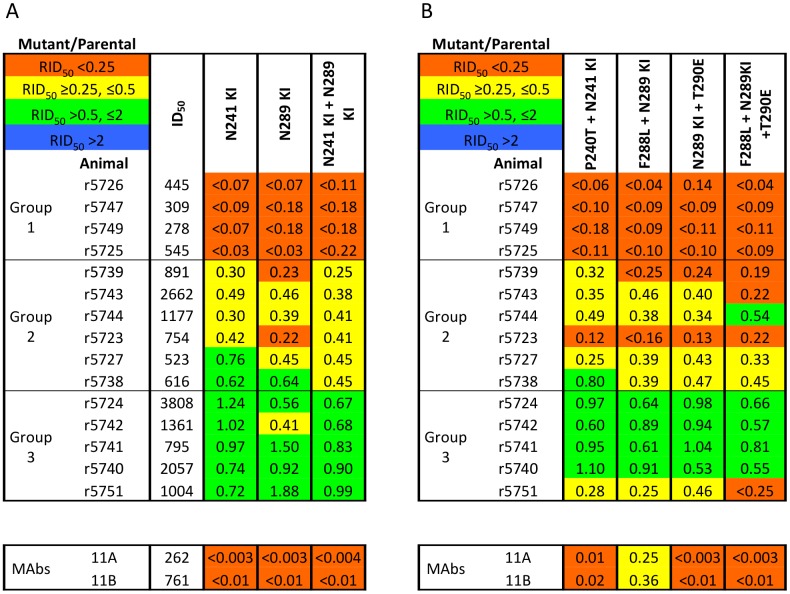
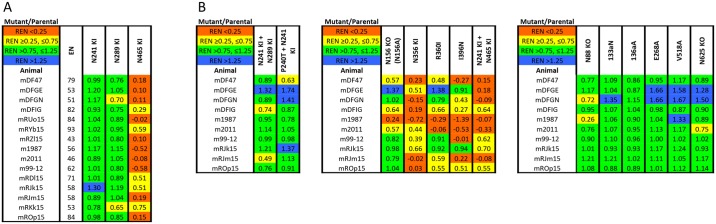
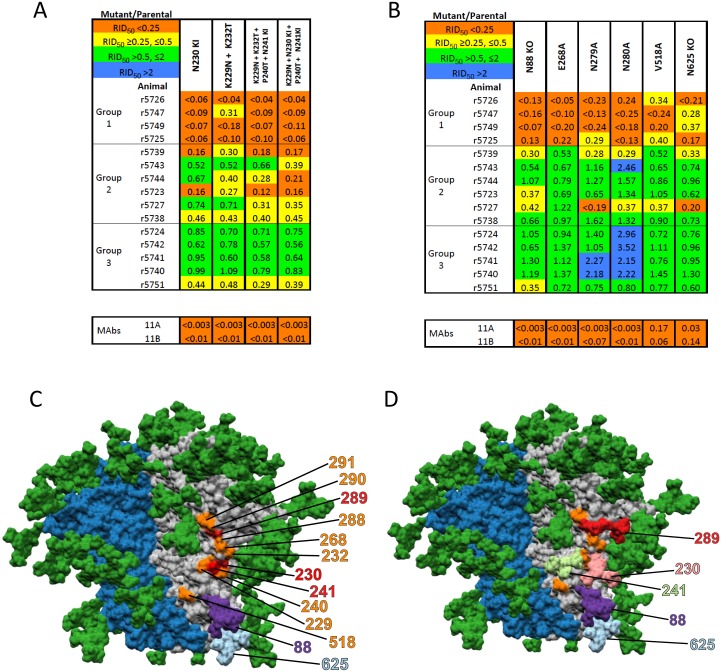
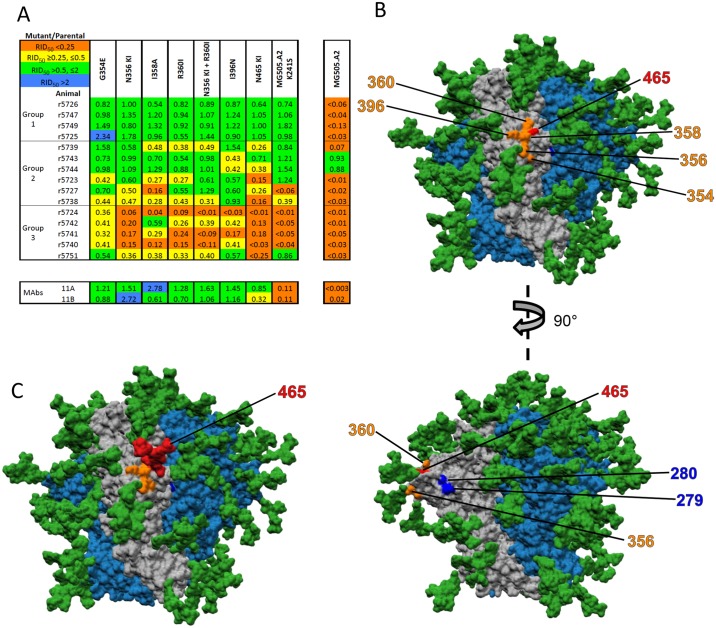
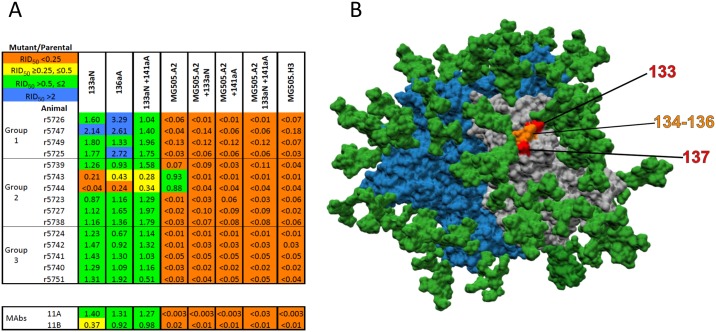
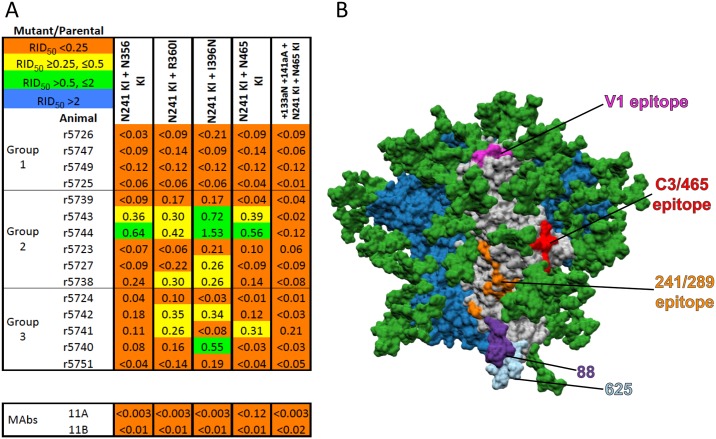
The native-like, soluble SOSIP.664 trimer based on the BG505 clade A env gene of HIV-1 is immunogenic in various animal species, of which the most studied are rabbits and rhesus macaques. The trimer induces autologous neutralizing antibodies (NAbs) consistently but at a wide range of titers and with incompletely determined specificities. A precise delineation of immunogenic neutralization epitopes on native-like trimers could help strategies to extend the NAb response to heterologous HIV-1 strains. One autologous NAb epitope on the BG505 Env trimer is known to involve residues lining a hole in the glycan shield that is blocked by adding a glycan at either residue 241 or 289. This glycan-hole epitope accounts for the NAb response of most trimer-immunized rabbits but not for that of a substantial subset. Here, we have used a large panel of mutant BG505 Env-pseudotyped viruses to define additional sites. A frequently immunogenic epitope in rabbits is blocked by adding a glycan at residue 465 near the junction of the gp120 V5 loop and β24 strand and is influenced by amino-acid changes in the structurally nearby C3 region. We name this new site the "C3/465 epitope". Of note is that the C3 region was under selection pressure in the infected infant from whom the BG505 virus was isolated. A third NAb epitope is located in the V1 region of gp120, although it is rarely immunogenic. In macaques, NAb responses induced by BG505 SOSIP trimers are more often directed at the C3/465 epitope than the 241/289-glycan hole.
基于 HIV-1 BG505 分支 A Env 基因的天然样可溶性 SOSIP.664 三聚体在多种动物物种中具有免疫原性,其中研究最多的是兔和恒河猴。三聚体一致地诱导自体中和抗体(NAb),但滴度范围广泛,特异性不完全确定。对天然样三聚体上的免疫原性中和表位进行精确描绘有助于扩展对异源 HIV-1 株的 NAb 反应的策略。BG505Env 三聚体上的一个自体 NAb 表位已知涉及糖基化屏蔽中一个孔的边缘残基,该孔被在残基 241 或 289 添加一个糖基化所阻断。这个糖基化孔表位解释了大多数三聚体免疫兔的 NAb 反应,但不能解释大部分兔的 NAb 反应。在这里,我们使用了一个大型的突变 BG505Env-假型病毒面板来定义其他位点。在兔中经常免疫的一个表位被在接近 gp120 V5 环和β24 链交界处的残基 465 添加一个糖基化所阻断,并且受到结构上附近的 C3 区域中氨基酸变化的影响。我们将这个新位点命名为“C3/465 表位”。值得注意的是,C3 区域在从该 BG505 病毒分离的感染婴儿中受到选择压力。第三个 NAb 表位位于 gp120 的 V1 区域,但很少被免疫。在恒河猴中,BG505SOSIP 三聚体诱导的 NAb 反应更常针对 C3/465 表位,而不是针对 241/289 糖基化孔。