European Commission, Joint Research Centre (JRC), Ispra, Italy.
European Commission, Joint Research Centre (JRC), Ispra, Italy.
Toxicol Appl Pharmacol. 2018 Sep 1;354:7-18. doi: 10.1016/j.taap.2018.02.008. Epub 2018 Feb 22.
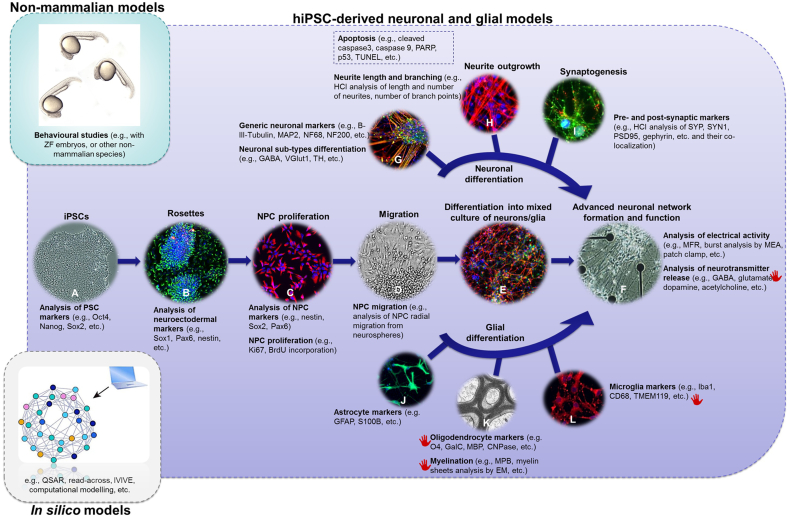
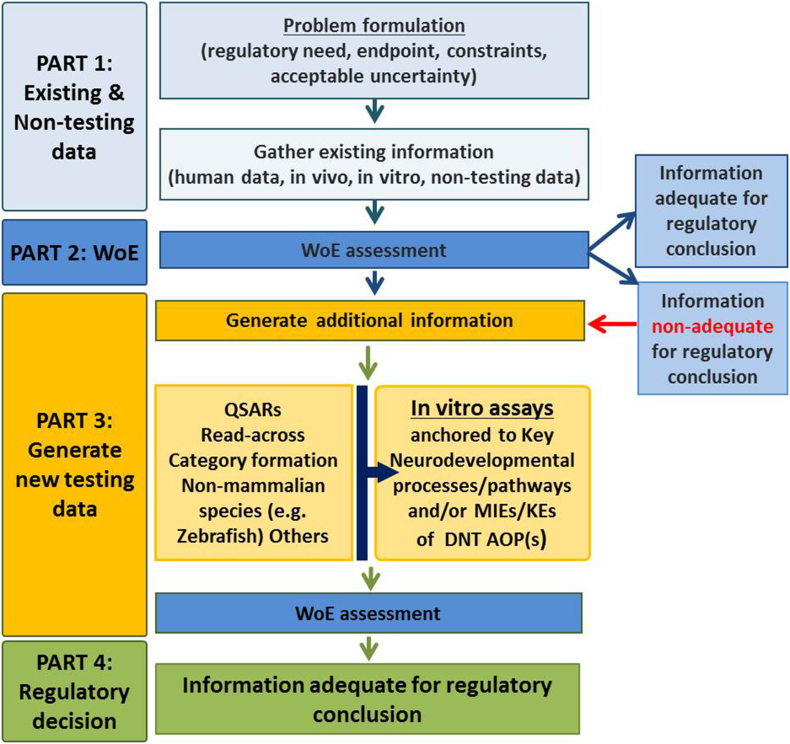
Currently, the identification of chemicals that have the potential to induce developmental neurotoxicity (DNT) is based on animal testing. Since at the regulatory level, systematic testing of DNT is not a standard requirement within the EU or USA chemical legislation safety assessment, DNT testing is only performed in higher tiered testing triggered based on chemical structure activity relationships or evidence of neurotoxicity in systemic acute or repeated dose toxicity studies. However, these triggers are rarely used and, in addition, do not always serve as reliable indicators of DNT, as they are generally based on observations in adult rodents. Therefore, there is a pressing need for developing alternative methodologies that can reliably support identification of DNT triggers, and more rapidly and cost-effectively support the identification and characterization of chemicals with DNT potential. We propose to incorporate mechanistic knowledge and data derived from in vitro studies to support various regulatory applications including: (a) the identification of potential DNT triggers, (b) initial chemical screening and prioritization, (c) hazard identification and characterization, (d) chemical biological grouping, and (e) assessment of exposure to chemical mixtures. Ideally, currently available cellular neuronal/glial models derived from human induced pluripotent stem cells (hiPSCs) should be used as they allow evaluation of chemical impacts on key neurodevelopmental processes, by reproducing different windows of exposure during human brain development. A battery of DNT in vitro test methods derived from hiPSCs could generate valuable mechanistic data, speeding up the evaluation of thousands of compounds present in industrial, agricultural and consumer products that lack safety data on DNT potential.
目前,鉴定具有潜在发育神经毒性(DNT)的化学物质是基于动物测试。由于在监管层面,欧盟或美国的化学法规安全评估并未将 DNT 系统性测试作为标准要求,因此仅在基于化学结构-活性关系或系统急性或重复剂量毒性研究中存在神经毒性的证据触发的更高层次测试中进行 DNT 测试。然而,这些触发因素很少使用,并且并不总是作为 DNT 的可靠指标,因为它们通常基于成年啮齿动物的观察结果。因此,迫切需要开发替代方法学,以可靠地支持鉴定 DNT 触发因素,并更快速、更有效地支持具有 DNT 潜力的化学物质的鉴定和特征描述。我们建议将来自体外研究的机制知识和数据纳入各种监管应用中,包括:(a)鉴定潜在的 DNT 触发因素,(b)初步的化学筛选和优先级排序,(c)危害识别和特征描述,(d)化学生物学分组,以及(e)评估对化学混合物的暴露。理想情况下,应使用源自人类诱导多能干细胞(hiPSC)的现有细胞神经元/神经胶质模型,因为它们可以通过复制人类大脑发育过程中的不同暴露窗口,评估化学物质对关键神经发育过程的影响。源自 hiPSC 的一系列 DNT 体外测试方法可以生成有价值的机制数据,从而加快对工业、农业和消费品中存在的数千种化合物的评估,这些化合物缺乏关于 DNT 潜力的安全数据。