European Commission, Joint Research Centre (JRC), Ispra, Italy.
Environ Health. 2020 Feb 24;19(1):23. doi: 10.1186/s12940-020-00578-x.
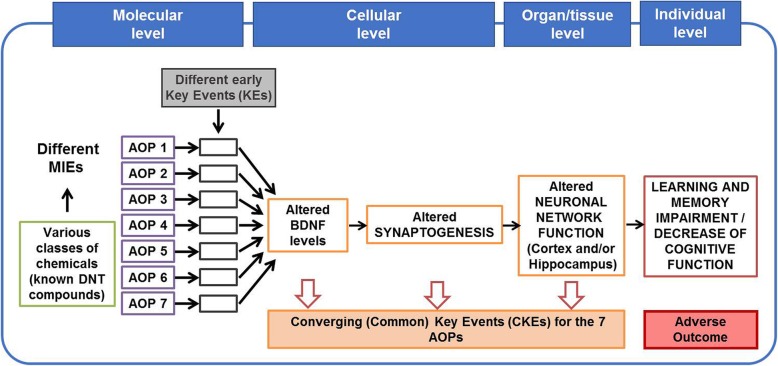
In light of the vulnerability of the developing brain, mixture risk assessment (MRA) for the evaluation of developmental neurotoxicity (DNT) should be implemented, since infants and children are co-exposed to more than one chemical at a time. One possible approach to tackle MRA could be to cluster DNT chemicals in a mixture on the basis of their mode of action (MoA) into 'similar' and 'dissimilar', but still contributing to the same adverse outcome, and anchor DNT assays to common key events (CKEs) identified in DNT-specific adverse outcome pathways (AOPs). Moreover, the use of human in vitro models, such as induced pluripotent stem cell (hiPSC)-derived neuronal and glial cultures would enable mechanistic understanding of chemically-induced adverse effects, avoiding species extrapolation.
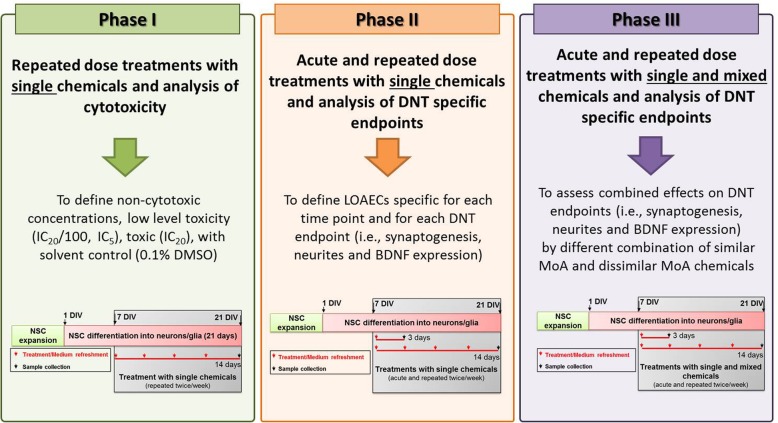
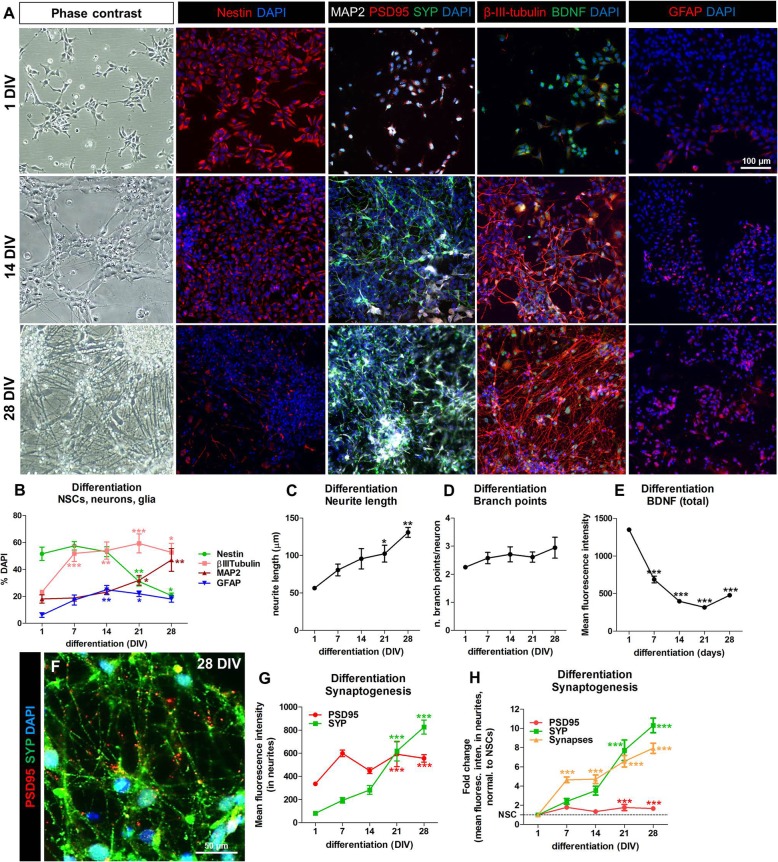
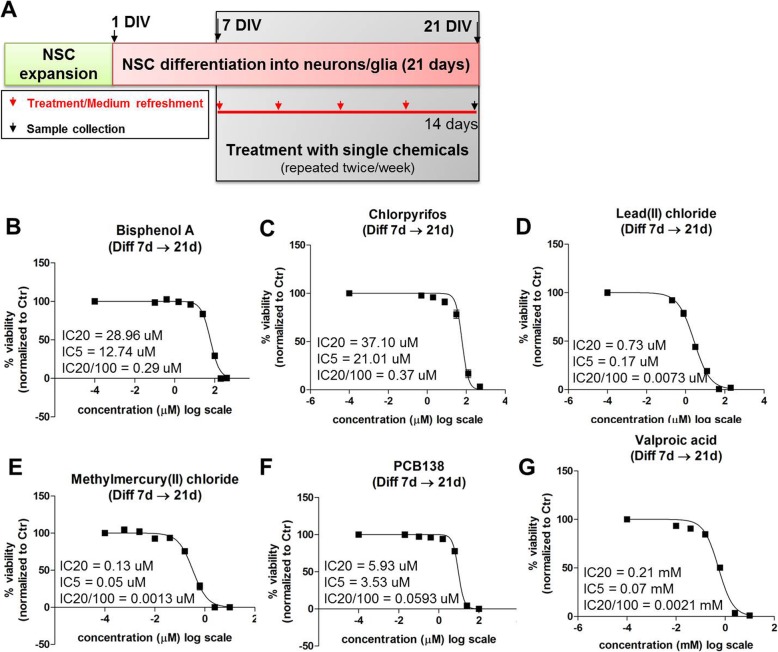
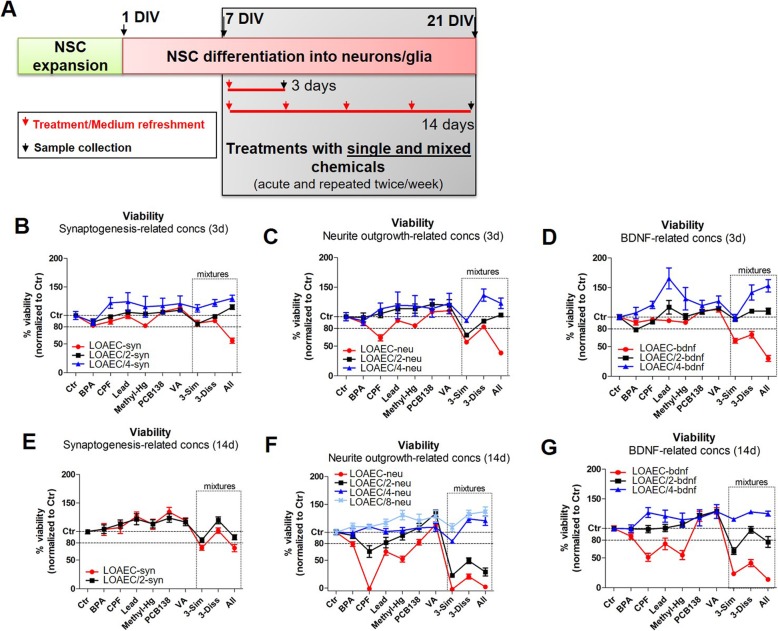
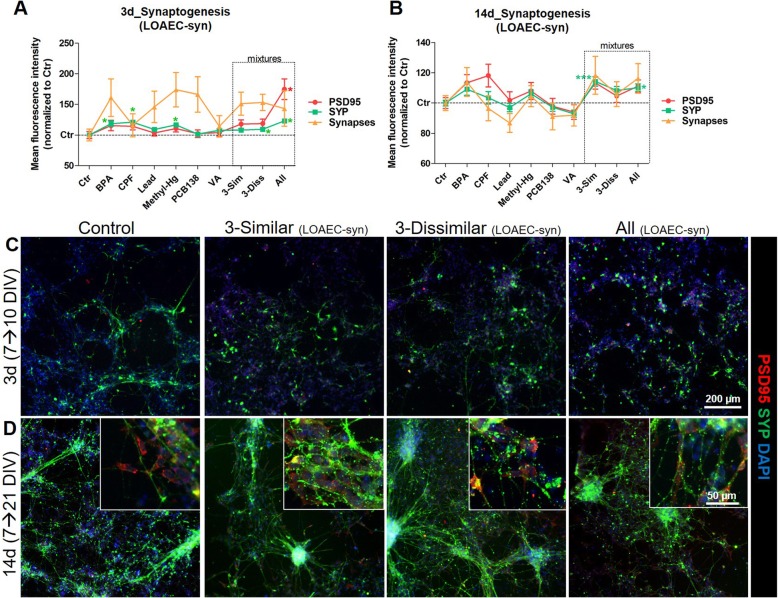
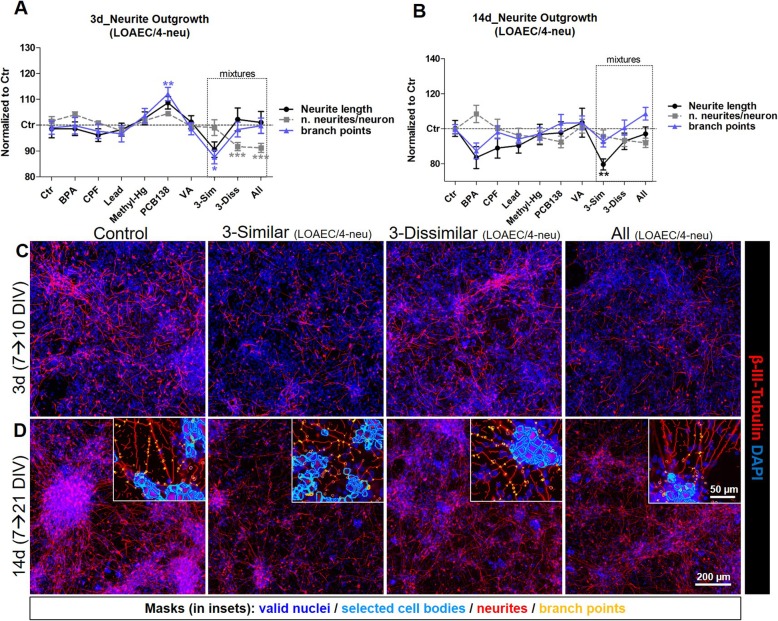
HiPSC-derived neural progenitors differentiated into mixed cultures of neurons and astrocytes were used to assess the effects of acute (3 days) and repeated dose (14 days) treatments with single chemicals and in mixtures belonging to different classes (i.e., lead(II) chloride and methylmercury chloride (heavy metals), chlorpyrifos (pesticide), bisphenol A (organic compound and endocrine disrupter), valproic acid (drug), and PCB138 (persistent organic pollutant and endocrine disrupter), which are associated with cognitive deficits, including learning and memory impairment in children. Selected chemicals were grouped based on their mode of action (MoA) into 'similar' and 'dissimilar' MoA compounds and their effects on synaptogenesis, neurite outgrowth, and brain derived neurotrophic factor (BDNF) protein levels, identified as CKEs in currently available AOPs relevant to DNT, were evaluated by immunocytochemistry and high content imaging analysis.
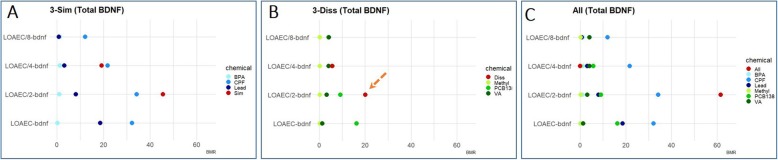
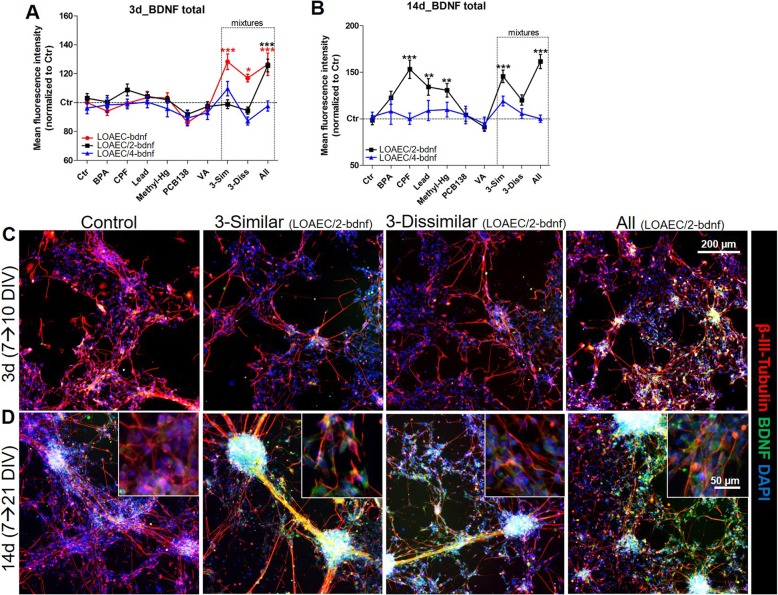
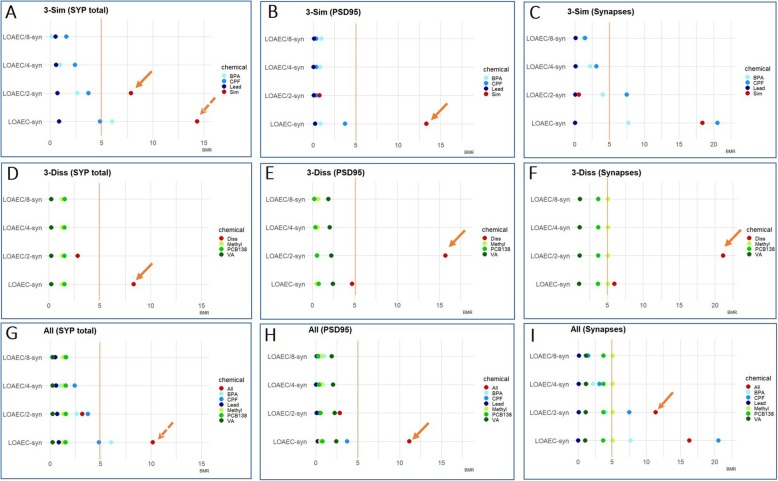
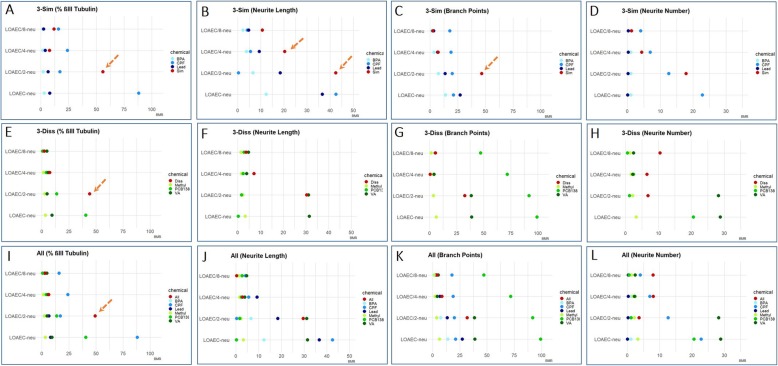
Chemicals working through similar MoA (i.e., alterations of BDNF levels), at non-cytotoxic (IC/100), very low toxic (IC), or moderately toxic (IC) concentrations, induce DNT effects in mixtures, as shown by increased number of neurons, impairment of neurite outgrowth and synaptogenesis (the most sensitive endpoint as confirmed by mathematical modelling) and increase of BDNF levels, to a certain extent reproducing autism-like cellular changes observed in the brain of autistic children.
Our findings suggest that the use of human iPSC-derived mixed neuronal/glial cultures applied to a battery of assays anchored to key events of an AOP network represents a valuable approach to identify mixtures of chemicals with potential to cause learning and memory impairment in children.
鉴于发育中大脑的脆弱性,对于发育神经毒性 (DNT) 的评估,应采用混合物风险评估 (MRA),因为婴儿和儿童同时会接触到一种以上的化学物质。MRA 的一种可能方法是根据其作用模式 (MoA) 将 DNT 化学物质聚类到混合物中,分为“相似”和“不同”,但仍会导致相同的不良后果,并将 DNT 测定锚定到 DNT 特异性不良后果途径 (AOP) 中确定的常见关键事件 (CKE)。此外,使用人类体外模型,如诱导多能干细胞 (hiPSC) 衍生的神经元和神经胶质培养物,将能够深入了解化学诱导的不良影响的机制,避免物种外推。
分化为神经元和星形胶质细胞混合培养物的 hiPSC 衍生神经祖细胞用于评估单一化学物质和属于不同类别的混合物(即氯化铅(II)和甲基汞 (重金属)、毒死蜱 (杀虫剂)、双酚 A (有机化合物和内分泌干扰物)、丙戊酸 (药物)和 PCB138 (持久性有机污染物和内分泌干扰物))的急性 (3 天) 和重复剂量 (14 天) 处理的影响,这些化学物质与认知缺陷有关,包括儿童学习和记忆障碍。根据其作用模式 (MoA) 将选定的化学物质分为“相似”和“不同”MoA 化合物,并评估其对突触发生、神经突生长和脑源性神经营养因子 (BDNF) 蛋白水平的影响,这些化学物质被鉴定为目前可用于与 DNT 相关的 AOP 的 CKE。通过免疫细胞化学和高内涵成像分析进行评估。
作用模式相似的化学物质(即 BDNF 水平的改变),在非细胞毒性 (IC/100)、极低毒性 (IC) 或中度毒性 (IC) 浓度下,会在混合物中诱导 DNT 效应,这表现为神经元数量增加、神经突生长和突触发生受损(通过数学建模确认的最敏感终点)以及 BDNF 水平升高,在某种程度上再现了自闭症儿童大脑中观察到的类似自闭症的细胞变化。
我们的研究结果表明,使用人类 iPSC 衍生的混合神经元/神经胶质培养物应用于一系列锚定到 AOP 网络关键事件的测定,代表了一种有价值的方法,可以识别出具有导致儿童学习和记忆障碍潜力的化学物质混合物。