Kühr Sebastian, Schneider Stefanie, Meisterjahn Boris, Schlich Karsten, Hund-Rinke Kerstin, Schlechtriem Christian
1Fraunhofer Institute for Molecular Biology and Applied Ecology IME, Auf dem Aberg 1, 57392 Schmallenberg, Germany.
2Department Chemistry and Biology, "Ecotoxicology" Work Group, University of Siegen, 57068 Siegen, Germany.
Environ Sci Eur. 2018;30(1):7. doi: 10.1186/s12302-018-0137-1. Epub 2018 Feb 13.
Increasing amounts of engineered nanoparticles (NPs) in wastewater can reach the aquatic environment by passing through the sewage treatment plant (STP). NPs can induce ecotoxicological effects due to their specific chemical properties. However, their bioavailability and toxicity are potentially influenced by transformation processes caused by substances present in the STP, e.g., humic acids or sulfides. Due to the lack of a test system allowing to test NPs under realistic environmental conditions, we coupled two existing test systems, the activated sludge simulation test (OECD TG 303A 2001) and the chronic exposure test with the freshwater amphipod (Environment Canada 2013), to gain a test scenario that allows to consider the altered behavior and fate of NPs induced by the STP process. This should improve the environmental realism of the chronic exposure test with . In the first study, we tested the STP effluent containing AgNPs. In the second and third study, tap water and control STP effluent were spiked with AgNPs and used as test media.
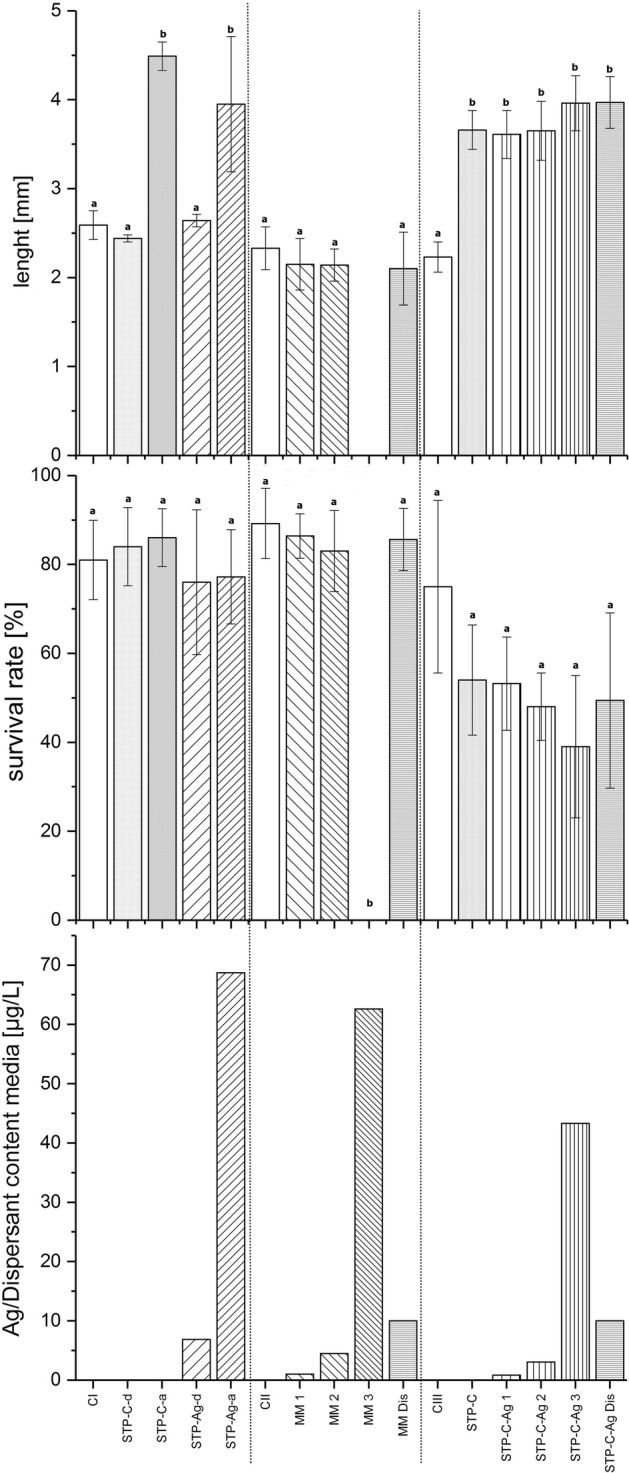
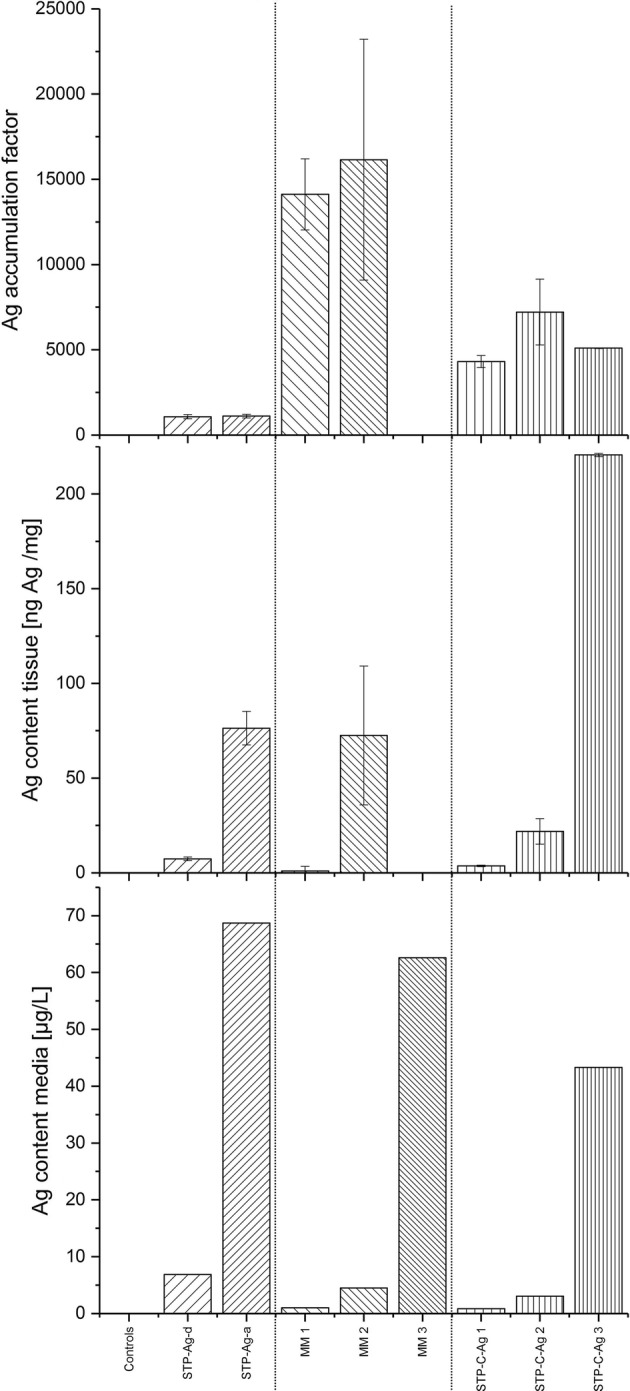
The chronic exposure studies with the freshwater amphipod showed that the investigated AgNPs lose most of their toxicity while passing through the STP. Over all studies with total Ag concentrations ranging from 0.85 to 68.70 µg/L, significant effects of the AgNPs were only observed in the survival of test animals exposed to tap water containing the highest Ag concentration (62.59 µg/L). Accumulation of silver in the body of test animals was clearly dependent on the pretreatment of the AgNPs. Silver ions (Ag) released from AgNPs are supposed to be the major pathway leading to body burden following exposure to test media containing AgNPs.
The coupled test system is suitable for testing substances that can reach the environment via the STP effluent. The investigated AgNPs lose most of their toxicity while passing through the STP. Accumulation of silver in the animals exposed to the different treatments was apparent, whereby silver ions (Ag) released from AgNPs were supposed to be the major pathway leading to body burden.
废水中工程纳米颗粒(NPs)的数量不断增加,可通过污水处理厂(STP)进入水生环境。纳米颗粒因其特定的化学性质可诱导生态毒理学效应。然而,它们的生物利用度和毒性可能受到污水处理厂中存在的物质(如腐殖酸或硫化物)引起的转化过程的影响。由于缺乏能够在现实环境条件下测试纳米颗粒的测试系统,我们将两个现有的测试系统——活性污泥模拟测试(经合组织TG 303A 2001)和淡水双壳类动物慢性暴露测试(加拿大环境部2013)相结合,以获得一个能够考虑污水处理厂过程引起的纳米颗粒行为和归宿变化的测试方案。这应能提高用……进行的慢性暴露测试的环境真实性。在第一项研究中,我们测试了含有银纳米颗粒的污水处理厂出水。在第二项和第三项研究中,向自来水和对照污水处理厂出水中添加银纳米颗粒并用作测试介质。
对淡水双壳类动物的慢性暴露研究表明,所研究的银纳米颗粒在通过污水处理厂时大部分毒性丧失。在所有总银浓度范围为0.85至68.70μg/L的研究中,仅在暴露于含最高银浓度(62.59μg/L)自来水的试验动物的存活情况中观察到银纳米颗粒的显著影响。试验动物体内银的积累明显取决于银纳米颗粒的预处理。从银纳米颗粒释放的银离子(Ag)被认为是暴露于含银纳米颗粒测试介质后导致体内负荷的主要途径。
耦合测试系统适用于测试可通过污水处理厂出水进入环境的物质。所研究的银纳米颗粒在通过污水处理厂时大部分毒性丧失。暴露于不同处理的动物体内银的积累明显,由此从银纳米颗粒释放的银离子(Ag)被认为是导致体内负荷的主要途径。