Laboratorio de Biología Estructural y Molecular, Departamento de Biología, Facultad de Ciencias, Universidad de Chile, Santiago, Chile.
Laboratorio de Microbiología de Sistemas, Departamento de Biología, Facultad de Ciencias, Universidad de Chile, Santiago, Chile.
Front Cell Infect Microbiol. 2018 Feb 9;8:30. doi: 10.3389/fcimb.2018.00030. eCollection 2018.
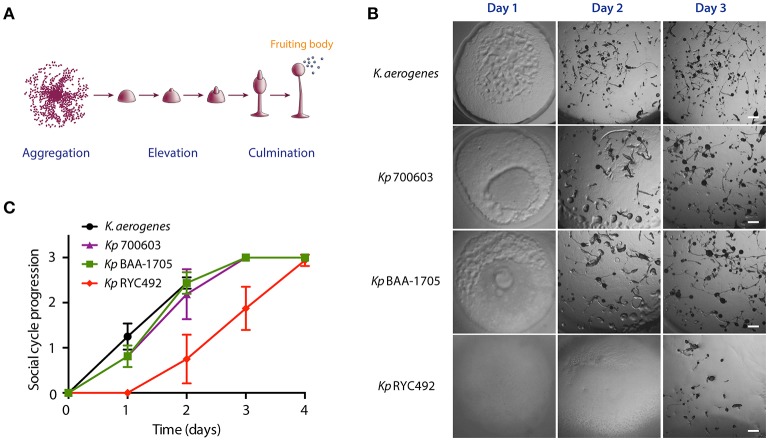
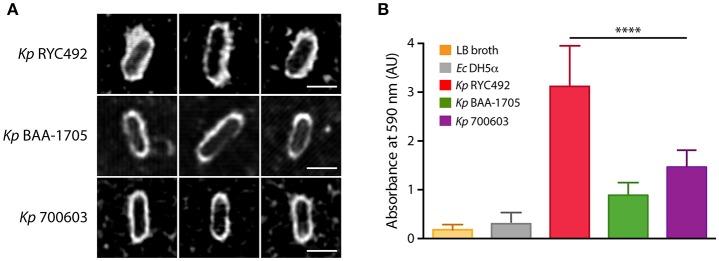
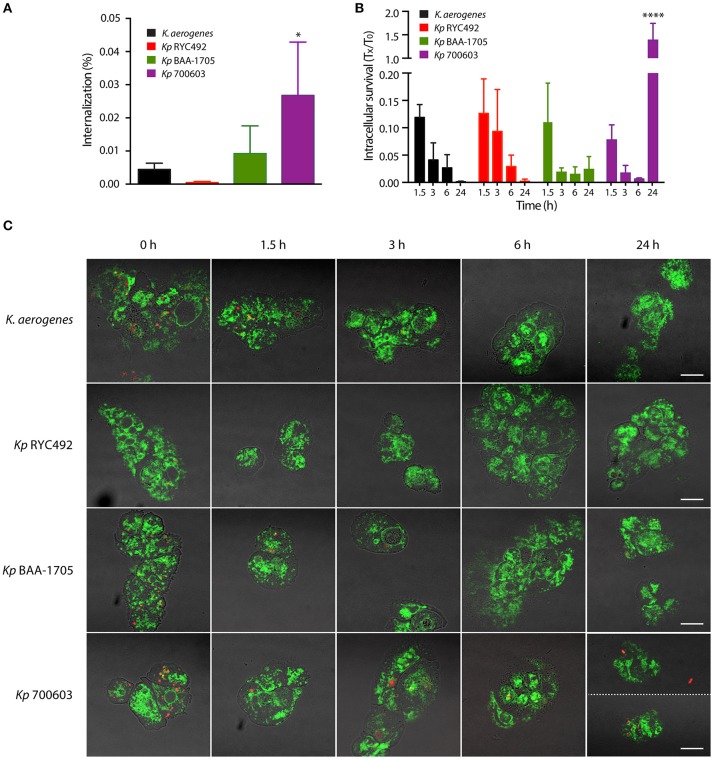
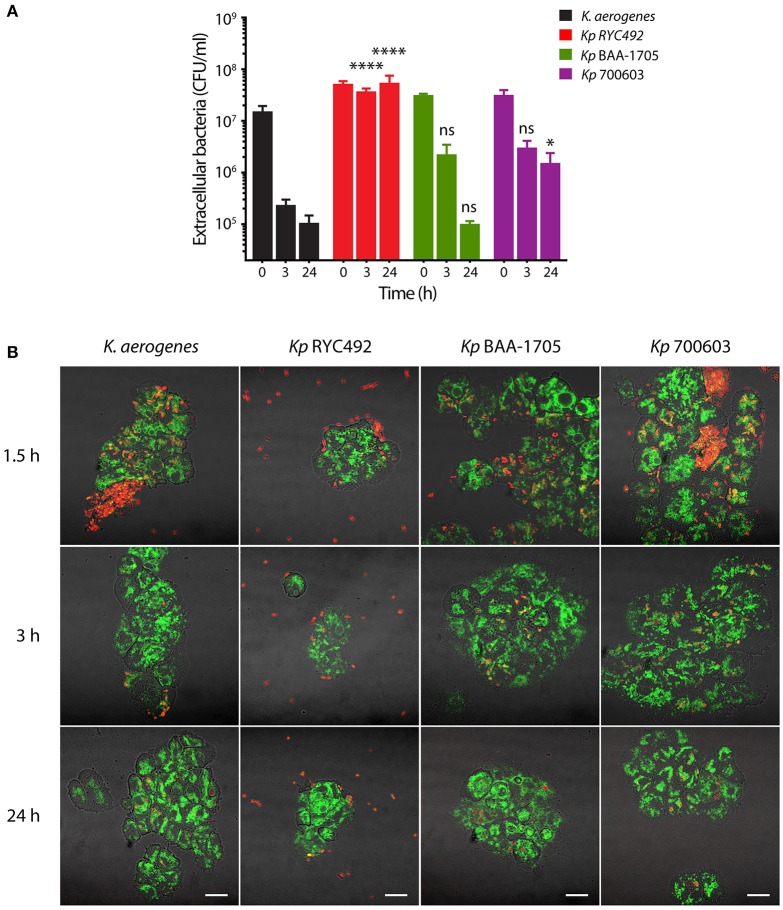
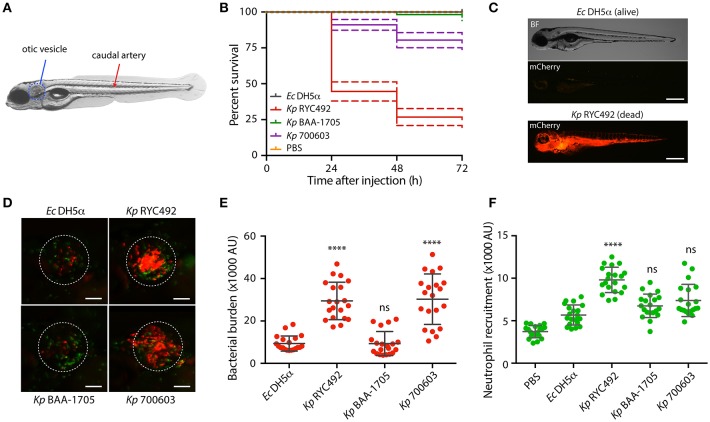
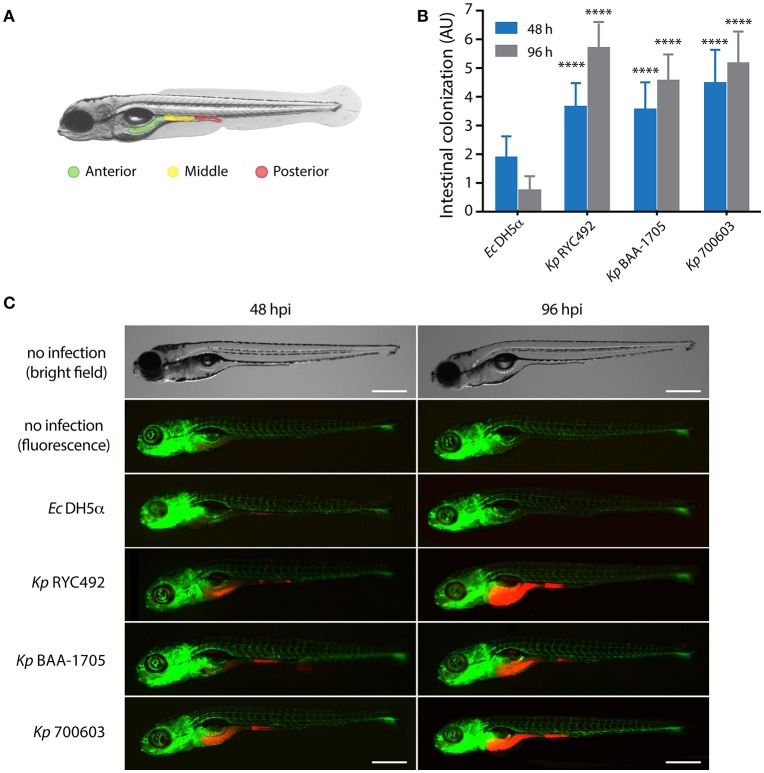
Multiresistant and invasive hypervirulent strains have become one of the most urgent bacterial pathogen threats. Recent analyses revealed a high genomic plasticity of this species, harboring a variety of mobile genetic elements associated with virulent strains, encoding proteins of unknown function whose possible role in pathogenesis have not been addressed. virulence has been studied mainly in animal models such as mice and pigs, however, practical, financial, ethical and methodological issues limit the use of mammal hosts. Consequently, the development of simple and cost-effective experimental approaches with alternative host models is needed. In this work we described the use of both, the social amoeba and professional phagocyte and the fish (zebrafish) as surrogate host models to study virulence. We compared three clinical isolates evaluating their resistance to phagocytosis, intracellular survival, lethality, intestinal colonization, and innate immune cells recruitment. Optical transparency of both host models permitted studying the infective process , following the -host interactions through live-cell imaging. We demonstrated that RYC492, but not the multiresistant strains 700603 and BAA-1705, is virulent to both host models and elicits a strong immune response. Moreover, this strain showed a high resistance to phagocytosis by , an increased ability to form biofilms and a more prominent and irregular capsule. Besides, the strain 700603 showed the unique ability to replicate inside amoeba cells. Genomic comparison of the strains showed that the RYC492 strain has a higher overall content of virulence factors although no specific genes could be linked to its phagocytosis resistance, nor to the intracellular survival observed for the 700603 strain. Our results indicate that both zebrafish and are advantageous host models to study different traits of that are associated with virulence.
多药耐药和侵袭性强毒力菌株已成为最紧迫的细菌病原体威胁之一。最近的分析显示,该物种具有高度的基因组可塑性,携带多种与毒力菌株相关的可移动遗传元件,编码功能未知的蛋白质,其在发病机制中的可能作用尚未得到解决。毒力主要在动物模型(如小鼠和猪)中进行研究,然而,实际情况、财务、伦理和方法学问题限制了哺乳动物宿主的使用。因此,需要开发具有替代宿主模型的简单且经济有效的实验方法。在这项工作中,我们描述了使用群居变形虫和专业吞噬细胞和鱼类(斑马鱼)作为替代宿主模型来研究毒力。我们比较了三个临床分离株,评估它们对吞噬作用、细胞内存活、致死性、肠道定植和固有免疫细胞募集的抗性。这两种宿主模型的光学透明性允许研究感染过程,通过活细胞成像跟踪宿主相互作用。我们证明,RYC492 但不是多药耐药株 700603 和 BAA-1705,对两种宿主模型都具有毒力,并引发强烈的免疫反应。此外,该菌株对吞噬作用具有高抗性,能够形成生物膜,且荚膜更突出且不规则。此外,700603 株表现出在变形虫细胞内复制的独特能力。对菌株的基因组比较表明,RYC492 株具有更高的毒力因子总体含量,尽管无法将特定基因与吞噬作用抗性或 700603 株观察到的细胞内存活联系起来。我们的结果表明,斑马鱼和变形虫都是研究与毒力相关的不同 特性的有利宿主模型。