Géry Antoine, Dubreule Christelle, André Véronique, Rioult Jean-Philippe, Bouchart Valérie, Heutte Natacha, Eldin de Pécoulas Philippe, Krivomaz Tetyana, Garon David
1 Normandie University, UNICAEN, Centre F. Baclesse, Caen, France.
2 Labéo Frank Duncombe, Saint-Contest, France.
Integr Cancer Ther. 2018 Sep;17(3):832-843. doi: 10.1177/1534735418757912. Epub 2018 Feb 27.
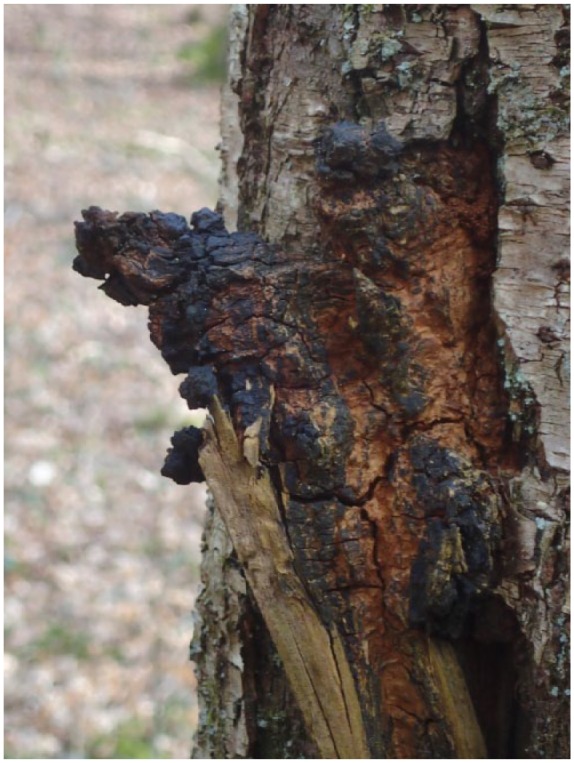
Inonotus obliquus, also known as Chaga, is a parasitic fungus growing on birches and used in traditional medicine (especially by Khanty people) to treat various health problems. In this study, we aimed to quantify the 3 metabolites frequently cited in literature, that is, betulin, betulinic acid, and inotodiol in the Chaga recently discovered in forests located in Normandy (France), and to compare their concentrations with Ukrainian and Canadian Chaga. This study also explores the cytotoxicity of the French Chaga against cancer-derived cells and transformed cells.
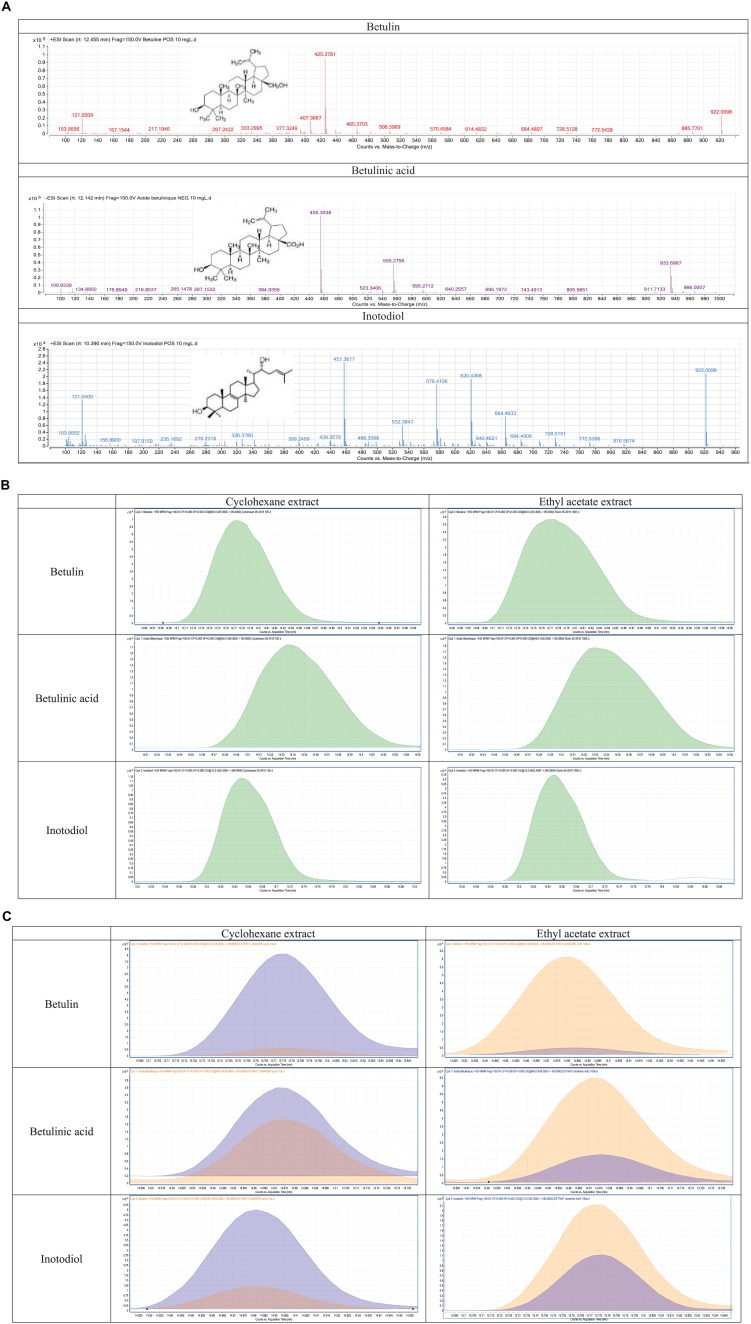
A quantification method by HPLC-MS-MS (high-performance liquid chromatography-tandem mass spectrometry) of betulin, betulinic acid, and inotodiol was developed to study the French Chaga and compare the concentration of these metabolites with extracts provided from Chaga growing in Canada and Ukraine. This method was also used to identify and quantify those 3 compounds in other traditional preparations of Chaga (aqueous extract, infusion, and decoction). Among these preparations, the aqueous extract that contains betulin, betulinic acid, and inotodiol was chosen to evaluate and compare its cytotoxic activity toward human lung adenocarcinoma cells (A549 line) and human bronchial epithelial cells (BEAS-2B line).
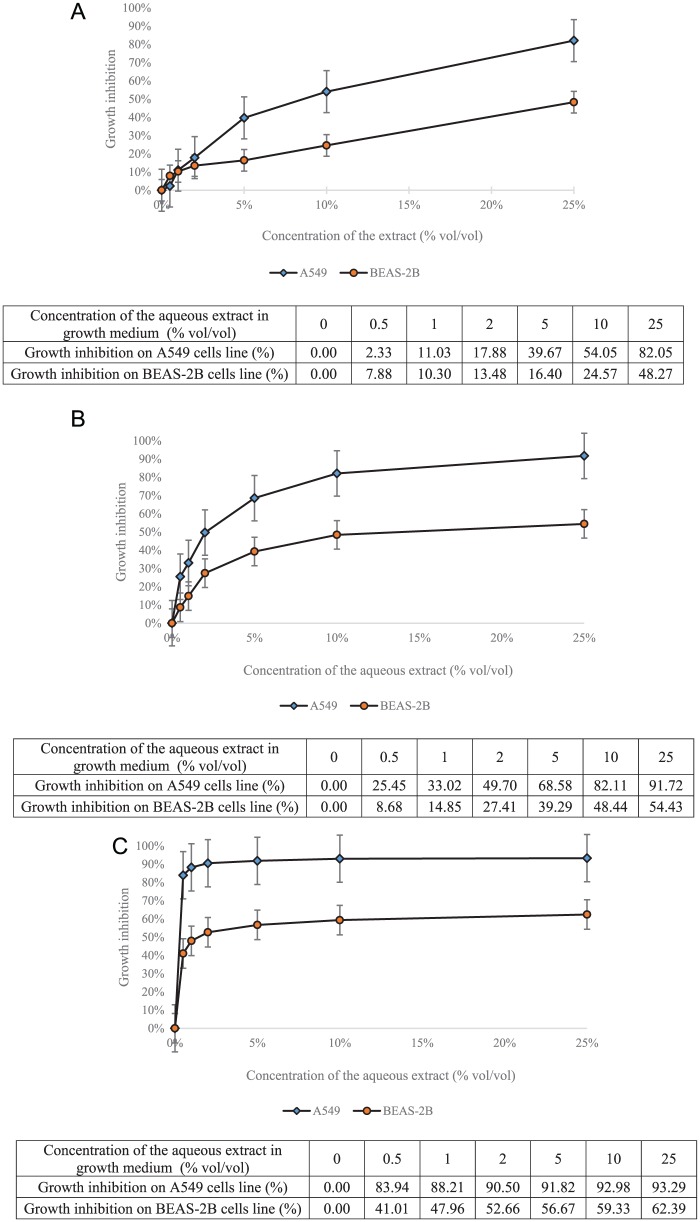
French Chaga contains betulin and betulinic acid at higher levels than in other Chaga, whereas the concentration of inotodiol is greater in the Canadian Chaga. Moreover, the results highlighted a cytotoxic activity of the Chaga's aqueous extract after 48 and 72 hours of exposure with a higher effect on cancer-derived cells A549 than on normal transformed cells BEAS-2B ( P = 0.025 after 48 hours of exposure and P = 0.004 after 72 hours of exposure).
桦褐孔菌,又称白桦茸,是一种生长在桦树上的寄生真菌,在传统医学中(尤其是汉特人使用)用于治疗各种健康问题。在本研究中,我们旨在对文献中经常提到的3种代谢物,即白桦脂醇、白桦脂酸和氧化三萜二醇,在法国诺曼底森林中最近发现的桦褐孔菌中进行定量,并将它们的浓度与乌克兰和加拿大的桦褐孔菌进行比较。本研究还探讨了法国桦褐孔菌对癌细胞和转化细胞的细胞毒性。
开发了一种通过高效液相色谱-串联质谱(HPLC-MS-MS)对白桦脂醇、白桦脂酸和氧化三萜二醇进行定量的方法,以研究法国桦褐孔菌,并将这些代谢物的浓度与加拿大和乌克兰生长的桦褐孔菌提取物进行比较。该方法还用于鉴定和定量桦褐孔菌其他传统制剂(水提取物、浸剂和煎剂)中的这3种化合物。在这些制剂中,选择含有白桦脂醇、白桦脂酸和氧化三萜二醇的水提取物来评估和比较其对人肺腺癌细胞(A549细胞系)和人支气管上皮细胞(BEAS-2B细胞系)的细胞毒性活性。
法国桦褐孔菌中白桦脂醇和白桦脂酸的含量高于其他桦褐孔菌,而加拿大桦褐孔菌中氧化三萜二醇的浓度更高。此外,结果突出显示,桦褐孔菌水提取物在暴露48小时和72小时后具有细胞毒性活性,对癌细胞A549的影响比对正常转化细胞BEAS-2B的影响更大(暴露48小时后P = 0.025,暴露72小时后P = 0.004)。