Alliance for Vascular Access Teaching and Research (AVATAR), Menzies Health Institute Queensland, Griffith University, Brisbane, Australia.
School of Nursing and Midwifery, Griffith University, Brisbane, Australia.
PLoS One. 2018 Feb 28;13(2):e0193436. doi: 10.1371/journal.pone.0193436. eCollection 2018.
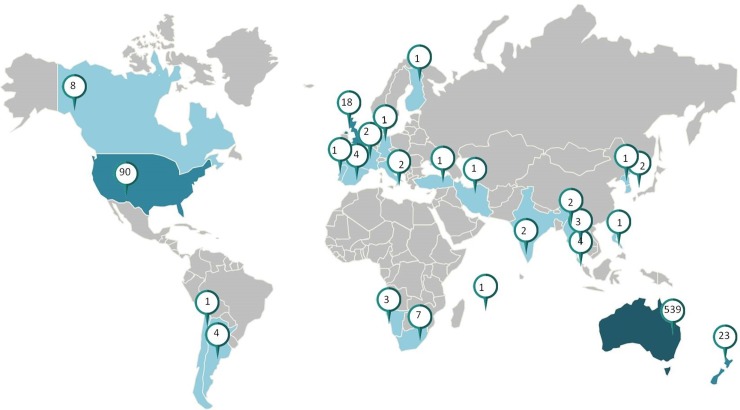
Peripheral intravascular cannula/catheter (PIVC) insertion is a common invasive procedure, but PIVC failure before the end of therapy is unacceptably high. As PIVC failure disrupts treatment and reinsertion can be distressing for the patient, prevention of PIVC failure is an important patient outcome. Consumer participation in PIVC care to prevent failure is an untapped resource. This study aimed to understand consumers' PIVC experience; establish aspects of PIVC insertion and care relevant to them; and to compare experiences of adult consumers to adult carers of a child. An international, web-based, cross-sectional survey was distributed via social media inviting adult consumers and adult carers of a child under 18 years who had experienced having a PIVC in the last five years (one survey each for adults and adult carers) to complete a 10-item survey. As such, sampling bias is a limitation and results should be carefully considered in light of this. There were 712 respondents from 25 countries, mainly female (87.1%) and adults (80%). A little over 50% of adults described insertion as moderately painful or worse, with level of insertion difficulty (0-10 scale) identified as moderate (median 4, IQR 1, 7). Adult carers reported significantly more pain during insertion and insertion difficulty (both p < 0.001). Rates of first insertion attempt failure were higher in children compared with adults (89/139 [64%] vs 221/554 [40%]; p < 0.001), and 23% of children required ≥ 4 attempts, compared with 9% of adults (p < 0.0001). Three themes from open-ended question emerged: Significance of safe and consistent PIVC care; Importance of staff training and competence; and Value of communication. The PIVC experience can be painful, stressful and frustrating for consumers. Priorities for clinicians and policy makers should include use of pain relief as standard practice to reduce the pain associated with PIVC insertion and developing strategies to increase first PIVC insertion attempt success particularly for children and older consumers.
外周血管内导管(PIVC)插入是一种常见的有创操作,但治疗结束前 PIVC 失败的情况过高,无法接受。由于 PIVC 失败会中断治疗,而且重新插入可能会给患者带来痛苦,因此预防 PIVC 失败是一个重要的患者结局。消费者参与 PIVC 护理以预防失败是一个未被充分利用的资源。本研究旨在了解消费者的 PIVC 体验;确定与他们相关的 PIVC 插入和护理方面;并比较成年消费者和 18 岁以下儿童的成年照顾者的体验。一项国际的、基于网络的、横断面调查通过社交媒体发布,邀请在过去五年内经历过 PIVC 的成年消费者和成年照顾者(每个成年组各有一个调查)完成一份包含 10 个问题的调查。因此,抽样偏差是一个限制,应该根据这一点仔细考虑结果。共有来自 25 个国家的 712 名受访者,主要是女性(87.1%)和成年人(80%)。超过 50%的成年人描述插入过程中等度疼痛或更严重,插入难度(0-10 分制)被确定为中度(中位数 4,IQR 1,7)。成年照顾者在插入过程中和插入难度方面报告的疼痛明显更严重(均 p < 0.001)。与成年人相比,儿童的首次插入尝试失败率更高(89/139 [64%] 比 221/554 [40%];p < 0.001),23%的儿童需要进行≥4 次尝试,而成年人中只有 9%(p < 0.0001)。从开放性问题中出现了三个主题:安全和一致的 PIVC 护理的重要性;员工培训和能力的重要性;以及沟通的价值。消费者的 PIVC 体验可能是痛苦、有压力和令人沮丧的。临床医生和政策制定者的优先事项应包括将缓解疼痛作为标准做法,以减少与 PIVC 插入相关的疼痛,并制定策略来提高首次 PIVC 插入尝试的成功率,特别是对于儿童和老年消费者。