Laboratory of Renewable Resources Engineering, Purdue University, West Lafayette, IN 47907, USA.
Department of Agricultural and Biological Engineering, Purdue University, West Lafayette, IN 47907, USA.
Molecules. 2018 Feb 24;23(2):503. doi: 10.3390/molecules23020503.
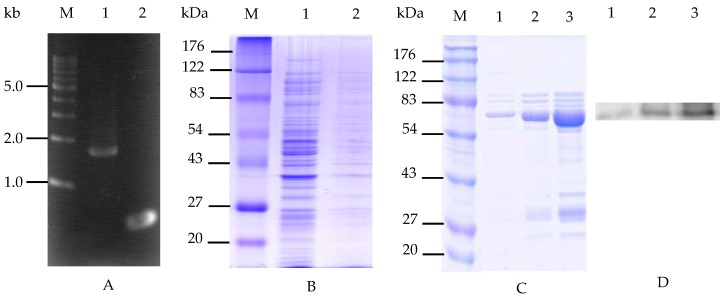
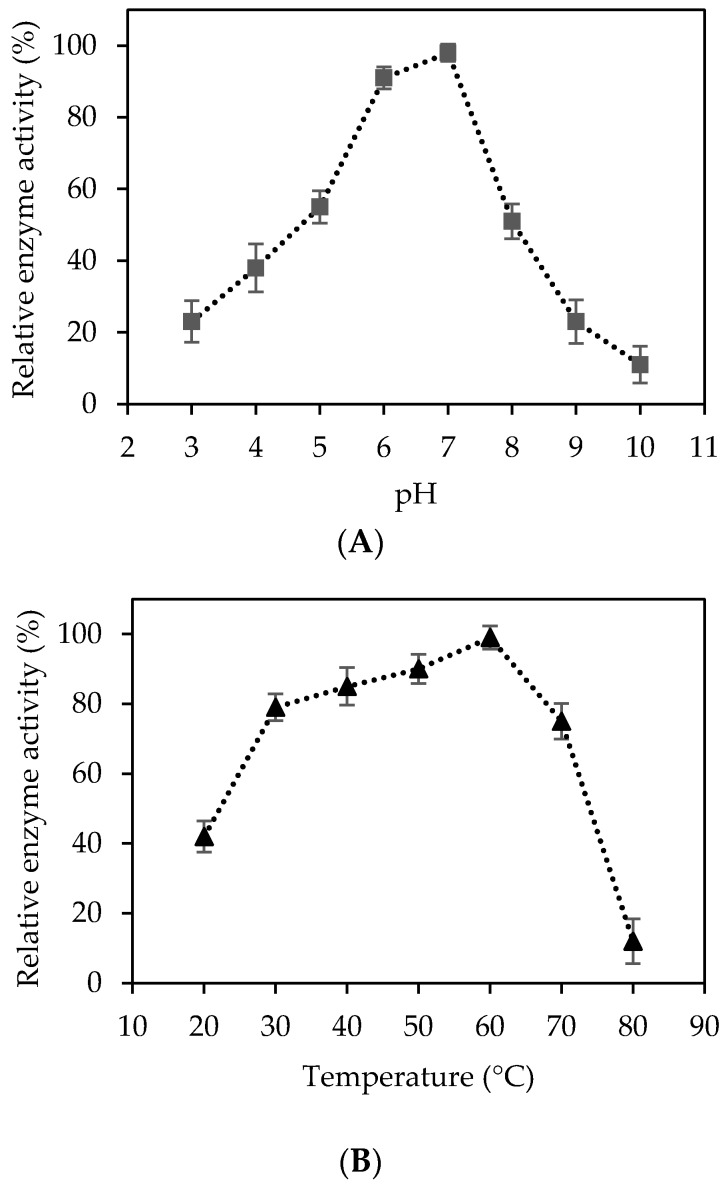
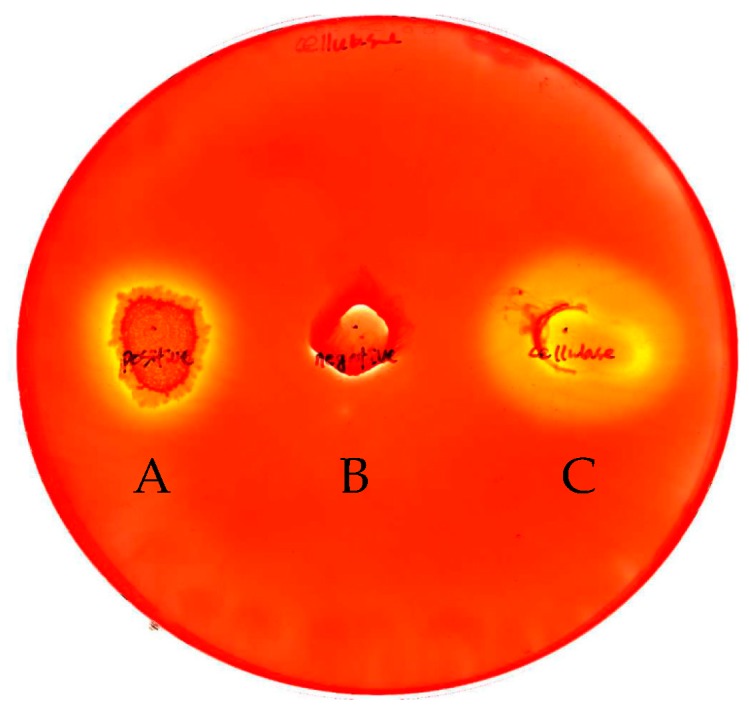
One of the main challenges of using recombinant enzymes is that they are derived from genetically-modified microorganisms commonly located in the intracellular region. The use of these recombinant enzymes for commercial purposes requires the additional processes of cell disruption and purification, which may result in enzyme loss, denaturation, and increased total production cost. In this study, the cellulase gene of ATCC 14580 was cloned, over-expressed, and surface displayed in recombinant using an ice-nucleation protein (INP). INP, an outer membrane-bound protein from , was utilized as an anchor linker, which was cloned with a foreign cellulase gene into the pET21a vector to develop a surface display system on the outer membrane of . The resulting strain successfully revealed cellulase on the host cell surface. The over-expressed INP-cellulase fusion protein was confirmed via staining assay for determining the extracellular cellulase and Western blotting method for the molecular weight (MW) of cellulase, which was estimated to be around 61.7 kDa. Cell fractionation and localization tests demonstrated that the INP-cellulase fusion protein was mostly present in the supernatant (47.5%) and outer membrane (19.4%), while the wild-type strain intracellularly retained enzymes within cytosol (>61%), indicating that the INP gene directed the cellulase expression on the bacteria cell surface. Further studies of the optimal enzyme activity were observed at 60 °C and pH 7.0, and at least 75% of maximal enzyme activity was preserved at 70 °C.
使用重组酶的主要挑战之一是,它们源自通常位于细胞内区域的基因修饰微生物。为了商业目的而使用这些重组酶需要额外的细胞破碎和纯化过程,这可能导致酶的损失、变性和总生产成本的增加。在本研究中,通过利用冰核蛋白(INP),对 ATCC 14580 的纤维素酶基因进行了克隆、过表达和表面展示。INP 是一种来自 的外膜结合蛋白,被用作锚定接头,其与外源纤维素酶基因一起被克隆到 pET21a 载体中,以在 的外膜上开发表面展示系统。所得菌株成功地在宿主细胞表面展示了纤维素酶。通过染色测定法确定了细胞外纤维素酶,通过 Western 印迹法确定了纤维素酶的分子量(MW),从而证实了过表达的 INP-纤维素酶融合蛋白的存在,估计其分子量约为 61.7 kDa。细胞分级分离和定位测试表明,INP-纤维素酶融合蛋白主要存在于上清液(47.5%)和外膜(19.4%)中,而野生型菌株则将酶保留在细胞质内(>61%),表明 INP 基因指导纤维素酶在细菌表面的表达。在 60°C 和 pH 7.0 下观察到最佳酶活性的进一步研究,并且在 70°C 下至少保留了 75%的最大酶活性。