Department of Dermatology, College of Medicine, The Catholic University of Korea, Seoul, 137-040, South Korea.
Departments of Dermatology, Venereology, Allergology and Immunology, Dessau Medical Center, Brandenburg Medical School Theodor Fontane, Dessau, Germany.
Sci Rep. 2018 Mar 5;8(1):4024. doi: 10.1038/s41598-018-22132-z.
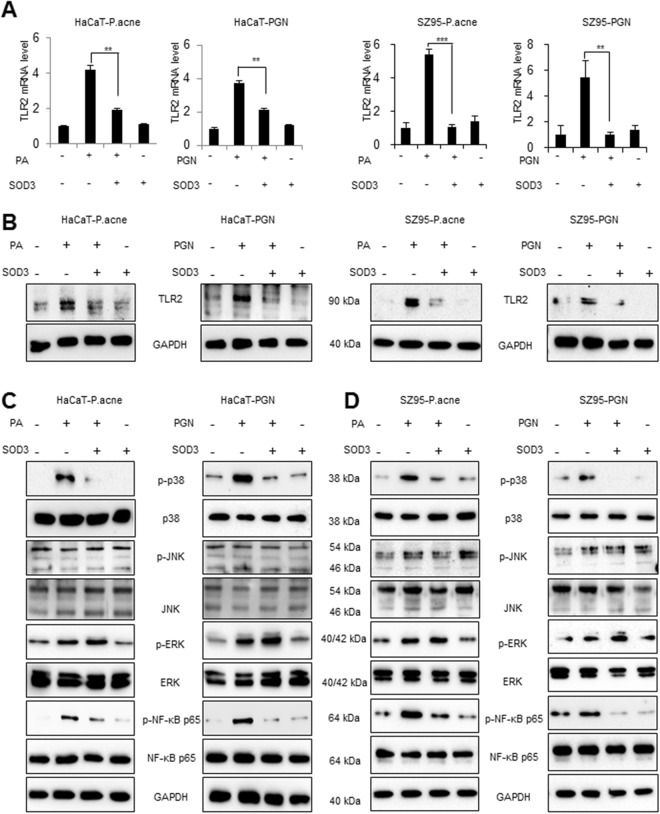
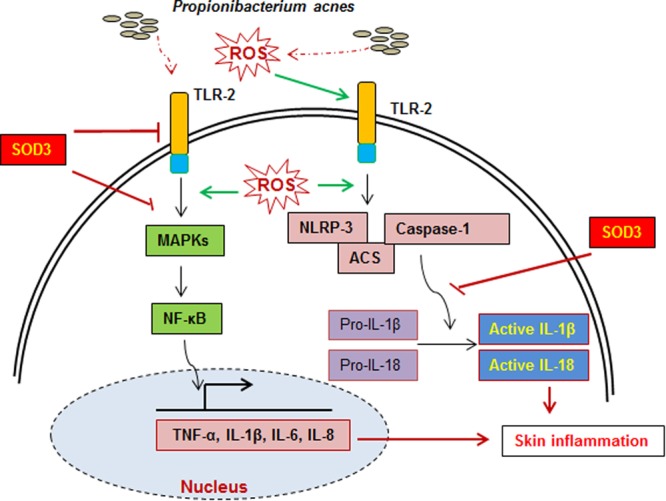
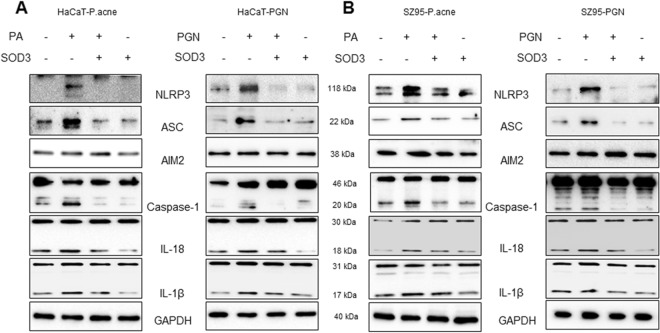
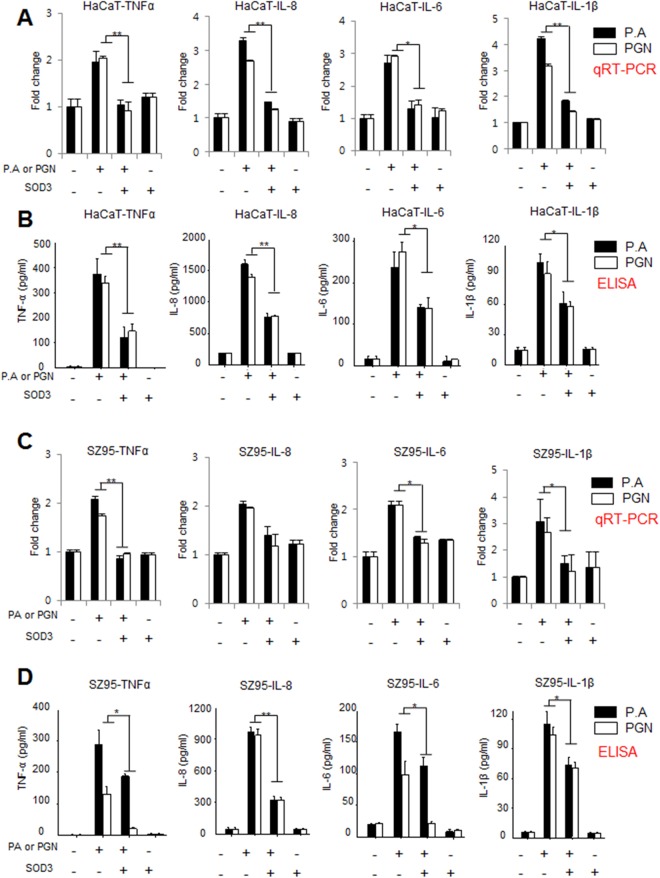
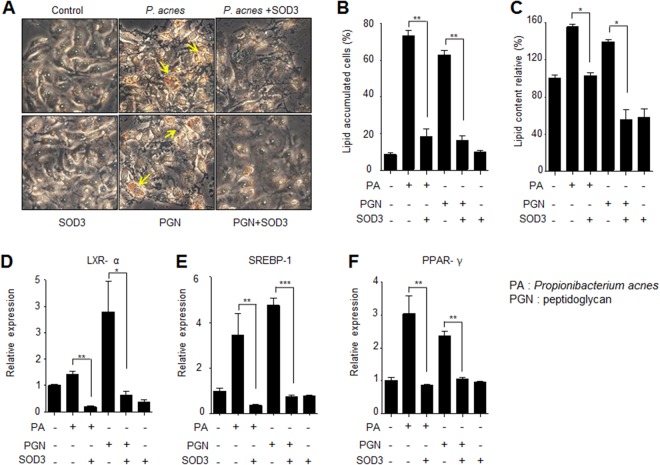
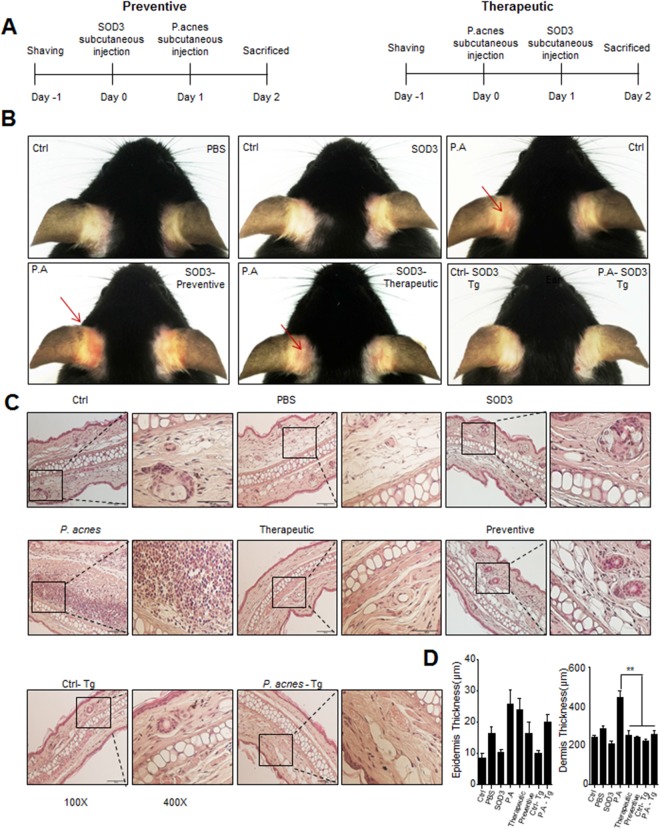
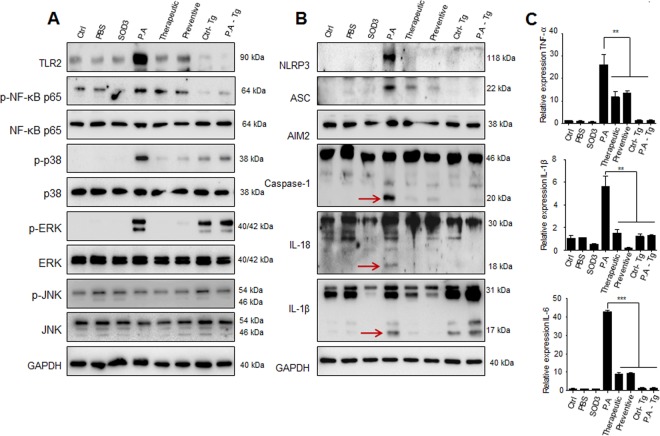
Propionibacterium acnes is a well-known commensal bacterium that plays an important role in the pathogenesis of acne and chronic inflammatory skin disease. In this study, we investigated the effect of superoxide dismutase 3 (SOD3) on P. acnes- or peptidoglycan (PGN)-induced inflammation in vitro and in vivo. Our data demonstrated that SOD3 suppressed toll-like receptor-2 (TLR-2) expression in P. acnes- or PGN-treated keratinocytes and sebocytes. Moreover, we found that SOD3 suppressed the expressions of phosphorylated nuclear factor-κB (NF-κB) and p38 in P. acnes- or PGN-treated cells. SOD3 also exhibited an anti-inflammatory role by reducing the expression of inflammasome-related proteins (NLRP3, ASC, caspase-1) and inhibiting the expression of pro-inflammatory cytokines, including tumor necrosis factor-α, interleukin-1β, interleukin-6, and interleukin-8. In addition, SOD3 reduced lipid accumulation and expression of lipogenic regulators in P. acnes-treated sebocytes. Recombinant SOD3-treated wild-type mice and SOD3 transgenic mice, which were subcutaneously infected with P. acnes, showed tolerance to inflammation through reducing inflammatory cell infiltration in skin, ear thickness, and expression of inflammatory mediators. Our result showed that SOD3 could suppress the inflammation through inhibition of TLR2/p38/NF-κB axis and NLRP3 inflammasome activation. Therefore, SOD3 could be a promising candidate for treatment of P. acnes-mediated skin inflammation.
痤疮丙酸杆菌是一种众所周知的共生菌,在痤疮和慢性炎症性皮肤病的发病机制中起重要作用。在这项研究中,我们研究了超氧化物歧化酶 3(SOD3)对痤疮丙酸杆菌或肽聚糖(PGN)诱导的体外和体内炎症的影响。我们的数据表明,SOD3 抑制了痤疮丙酸杆菌或 PGN 处理的角质形成细胞和皮脂细胞中 TLR-2(TLR-2)的表达。此外,我们发现 SOD3 抑制了 PGN 处理细胞中磷酸化核因子-κB(NF-κB)和 p38 的表达。SOD3 还通过降低炎症小体相关蛋白(NLRP3、ASC、半胱天冬酶-1)的表达和抑制促炎细胞因子(包括肿瘤坏死因子-α、白细胞介素-1β、白细胞介素-6 和白细胞介素-8)的表达发挥抗炎作用。此外,SOD3 减少了痤疮丙酸杆菌处理的皮脂细胞中的脂质积累和脂肪生成调节剂的表达。用重组 SOD3 处理的野生型小鼠和皮下感染痤疮丙酸杆菌的 SOD3 转基因小鼠通过减少皮肤、耳朵厚度和炎症介质表达中的炎症细胞浸润显示出对炎症的耐受性。我们的结果表明,SOD3 可以通过抑制 TLR2/p38/NF-κB 轴和 NLRP3 炎症小体激活来抑制炎症。因此,SOD3 可能是治疗痤疮丙酸杆菌介导的皮肤炎症的有前途的候选药物。