Department of Nuclear Medicine & Department of Oncology, Rui Jin Hospital, Shanghai Jiao Tong University School of Medicine.
Department of Biochemistry and Molecular Cell Biology; Key Laboratory of Cell Differentiation and Apoptosis of Chinese Ministry of Education, Shanghai Jiao Tong University School of Medicine.
Theranostics. 2018 Feb 2;8(5):1376-1388. doi: 10.7150/thno.22717. eCollection 2018.
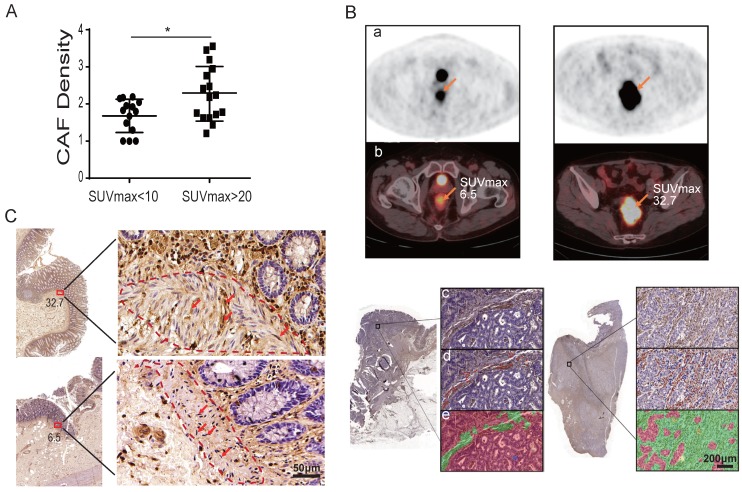
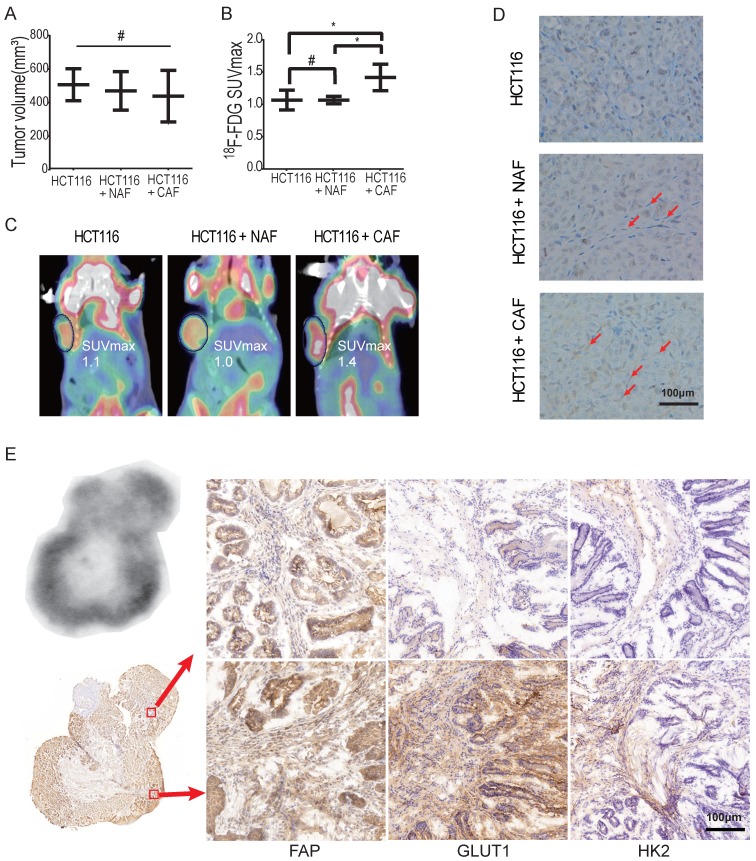
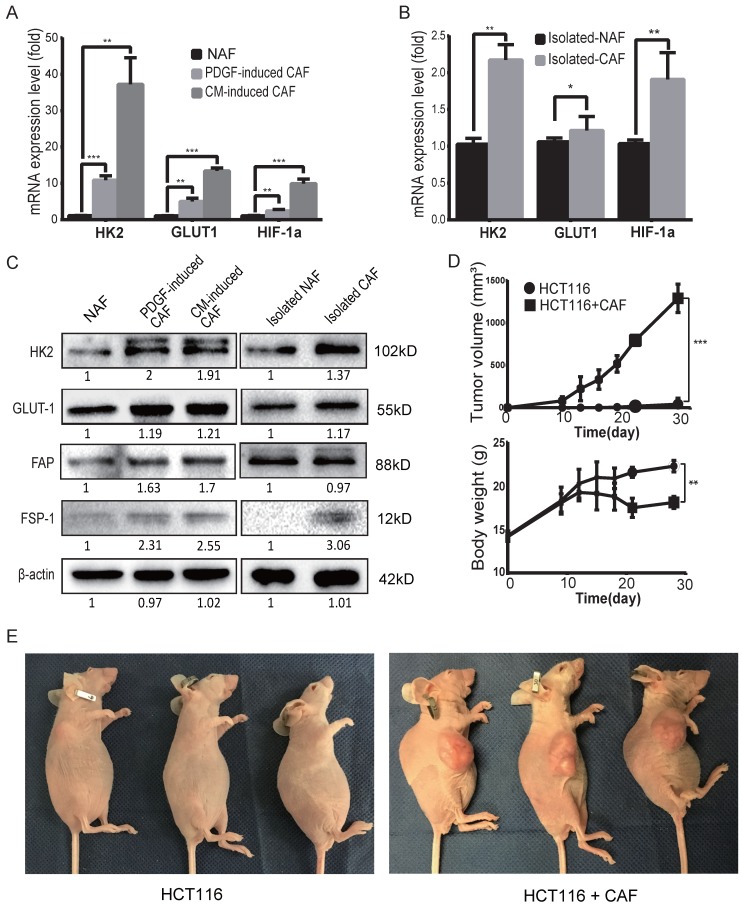
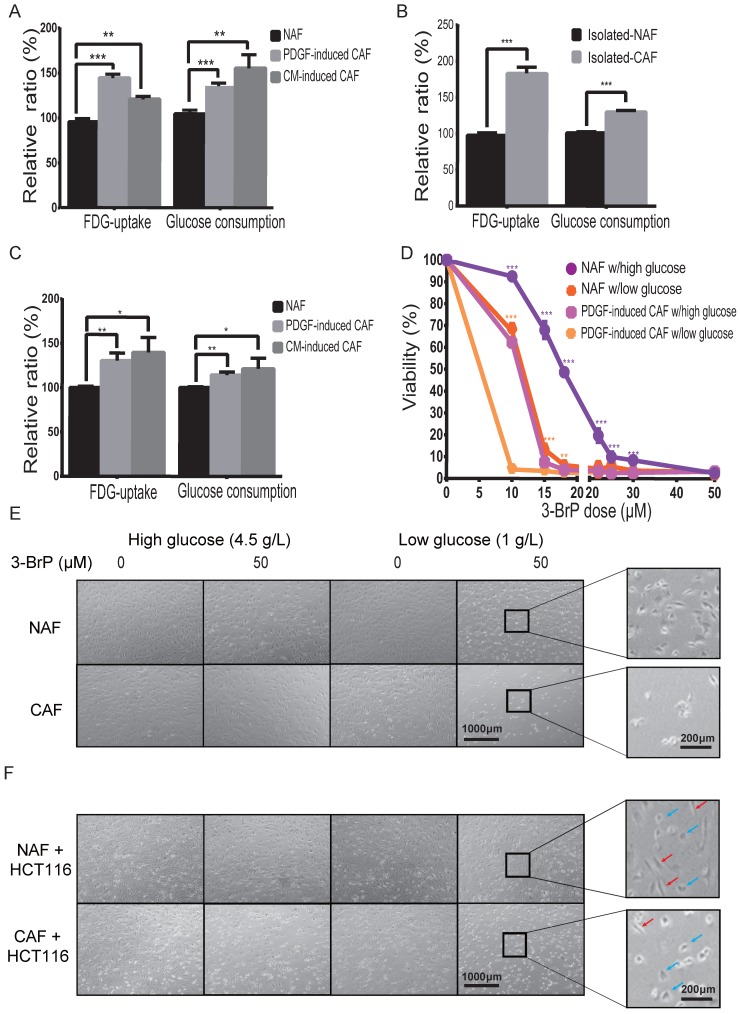
Elevated glucose uptake is a hallmark of cancer. Fluorodeoxyglucose (FDG) uptake was believed to indicate the aggressiveness of tumors and the standardized uptake value (SUV) is a well-known measurement for FDG uptake in positron emission tomography-computed tomography (PET/CT). However, the SUV is variable due to the heterogeneity of tumors. 126 patients with colorectal cancer underwent F-FDG PET/CT scanning before surgery between Jan 2011 and April 2016. Cancer-associated fibroblast (CAF) densities were calculated with the inForm Advanced image analysis software and were comparatively analyzed between patients with high and low maximum SUV (SUVmax-high and SUVmax-low). Glucose uptake was evaluated in induced and isolated CAFs and CAF-cocultured colon cancer HCT116 cells. Moreover, micro-PET/CT was performed on xenografted tumors and autoradiography was performed in the AOM/DSS induced colon cancer model. CAFs were glycolytic, evidenced by glucose uptake and upregulated HK2 expression. Compared to non-activated fibroblasts (NAFs), CAFs were more dependent on glucose and sensitive to a glycolysis inhibitor. CAFs increased the SUVmax in xenograft tumors and spontaneous colon cancers. Moreover, multivariate analysis revealed that the SUVmax was only associated with tumor size among conventional parameters in colon cancer patients (126 cases, = 0.009). Besides tumor size, the CAF density was the critical factor associated with SUVmax and outcome, which was 2.27 ± 0.74 and 1.68 ± 0.45 in the SUVmax-high and the SUVmax-low groups, respectively ( = 0.014). CAFs promote tumor progression and increase SUVmax of F-FDG, suggesting CAFs lead to the intratumor heterogeneity of the SUV and the SUVmax is a prognostic marker for cancer patients.
葡萄糖摄取增加是癌症的一个标志。氟脱氧葡萄糖(FDG)摄取被认为表明肿瘤的侵袭性,标准化摄取值(SUV)是正电子发射断层扫描-计算机断层扫描(PET/CT)中 FDG 摄取的常用测量方法。然而,由于肿瘤的异质性,SUV 是可变的。2011 年 1 月至 2016 年 4 月期间,126 例结直肠癌患者在手术前接受了 F-FDG PET/CT 扫描。使用 inForm 高级图像分析软件计算癌症相关成纤维细胞(CAF)密度,并在 SUVmax 高(SUVmax-high)和 SUVmax 低(SUVmax-low)患者之间进行比较分析。评估了诱导和分离的 CAF 以及 CAF 共培养的结肠癌细胞 HCT116 中的葡萄糖摄取。此外,在异种移植肿瘤上进行了微 PET/CT,在 AOM/DSS 诱导的结肠癌模型中进行了放射自显影。CAF 是糖酵解的,证据是葡萄糖摄取和上调的 HK2 表达。与非激活成纤维细胞(NAFs)相比,CAF 更依赖葡萄糖,并且对糖酵解抑制剂敏感。CAF 增加了异种移植肿瘤和自发结肠癌的 SUVmax。此外,多变量分析显示,SUVmax 仅与结肠癌患者的常规参数中的肿瘤大小相关(126 例, = 0.009)。除了肿瘤大小外,CAF 密度是与 SUVmax 和结果相关的关键因素,SUVmax-high 和 SUVmax-low 组分别为 2.27 ± 0.74 和 1.68 ± 0.45( = 0.014)。CAF 促进肿瘤进展并增加 F-FDG 的 SUVmax,表明 CAF 导致 SUV 肿瘤内异质性,SUVmax 是癌症患者的预后标志物。