Department of Neurology, Yale School of Medicine, New Haven, CT, United States.
Front Immunol. 2018 Feb 19;9:217. doi: 10.3389/fimmu.2018.00217. eCollection 2018.
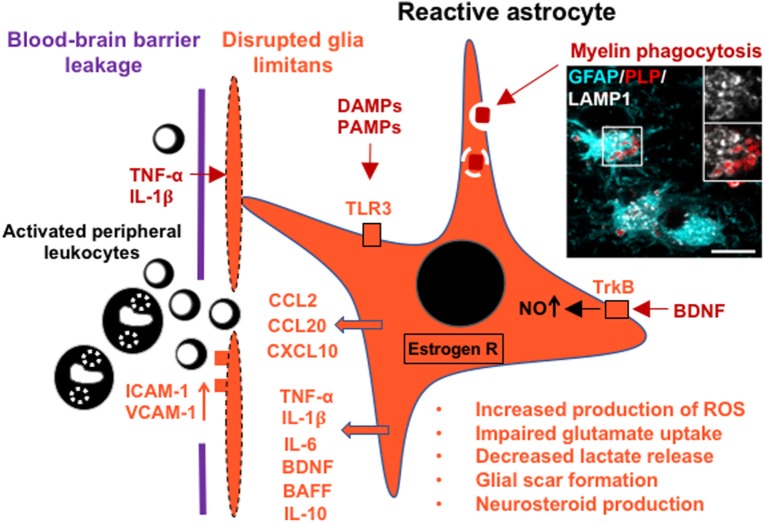
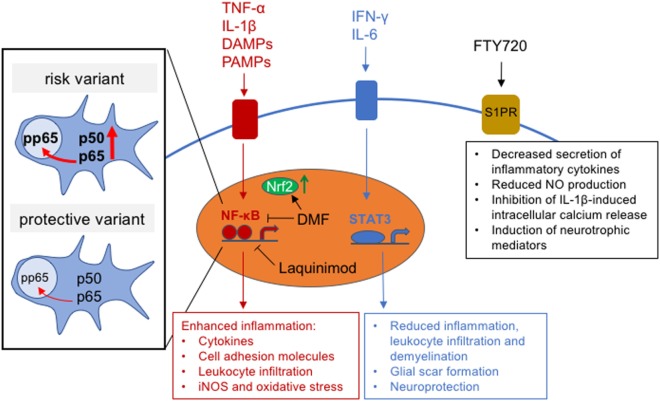
The role traditionally assigned to astrocytes in the pathogenesis of multiple sclerosis (MS) lesions has been the formation of the glial scar once inflammation has subsided. Astrocytes are now recognized to be early and highly active players during lesion formation and key for providing peripheral immune cells access to the central nervous system. Here, we review the role of astrocytes in the formation and evolution of MS lesions, including the recently described functional polarization of astrocytes, discuss prototypical pathways for astrocyte activation, and summarize mechanisms by which MS treatments affect astrocyte function.
星形胶质细胞在多发性硬化症 (MS) 病变发病机制中传统的作用是在炎症消退后形成神经胶质瘢痕。现在已经认识到,星形胶质细胞在病变形成过程中是早期和高度活跃的参与者,是为外周免疫细胞进入中枢神经系统提供途径的关键。在这里,我们综述了星形胶质细胞在 MS 病变形成和演变中的作用,包括最近描述的星形胶质细胞功能极化,讨论了星形胶质细胞激活的典型途径,并总结了 MS 治疗影响星形胶质细胞功能的机制。