Lino Cardenas Christian L, Kessinger Chase W, Cheng Yisha, MacDonald Carolyn, MacGillivray Thomas, Ghoshhajra Brian, Huleihel Luai, Nuri Saifar, Yeri Ashish S, Jaffer Farouc A, Kaminski Naftali, Ellinor Patrick, Weintraub Neal L, Malhotra Rajeev, Isselbacher Eric M, Lindsay Mark E
Thoracic Aortic Center, Massachusetts General Hospital, Harvard Medical School, 55 Fruit Street, Boston, MA, 02114, USA.
Cardiovascular Research Center, Massachusetts General Hospital, Harvard Medical School, 55 Fruit Street, Boston, MA, 02114, USA.
Nat Commun. 2018 Mar 8;9(1):1009. doi: 10.1038/s41467-018-03394-7.
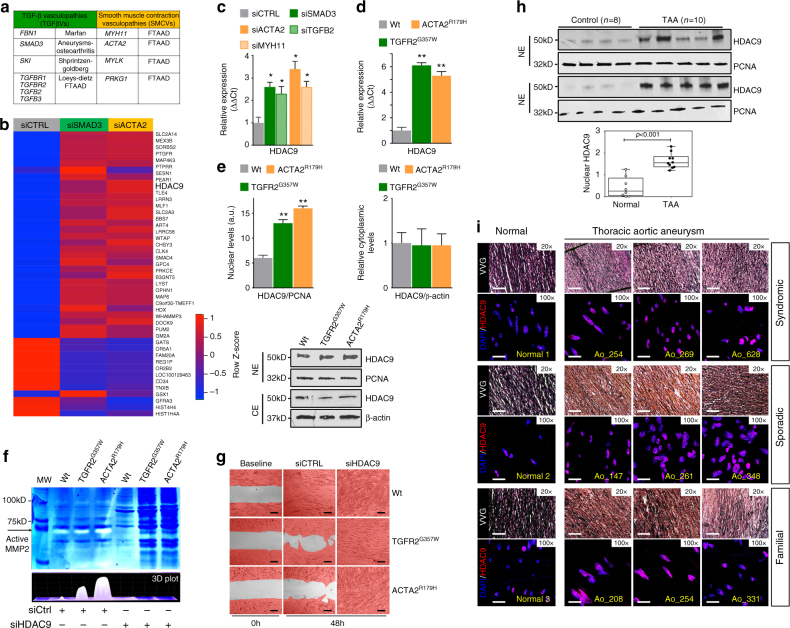
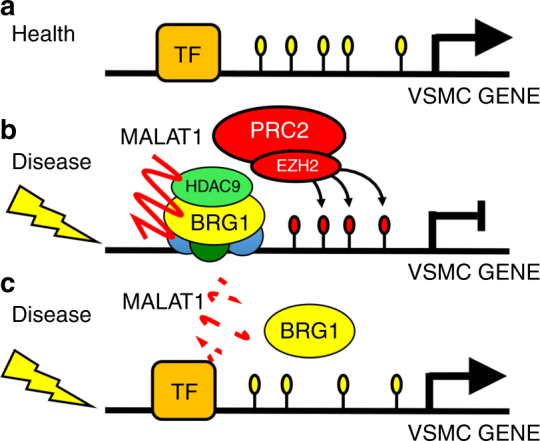
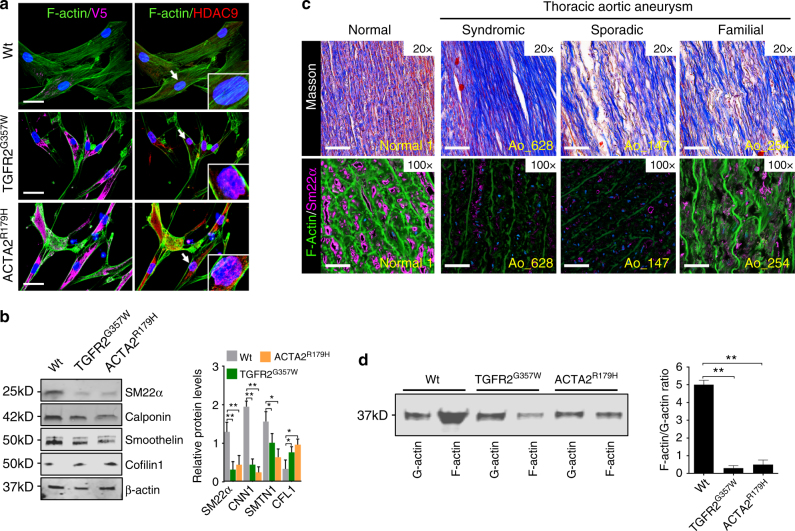
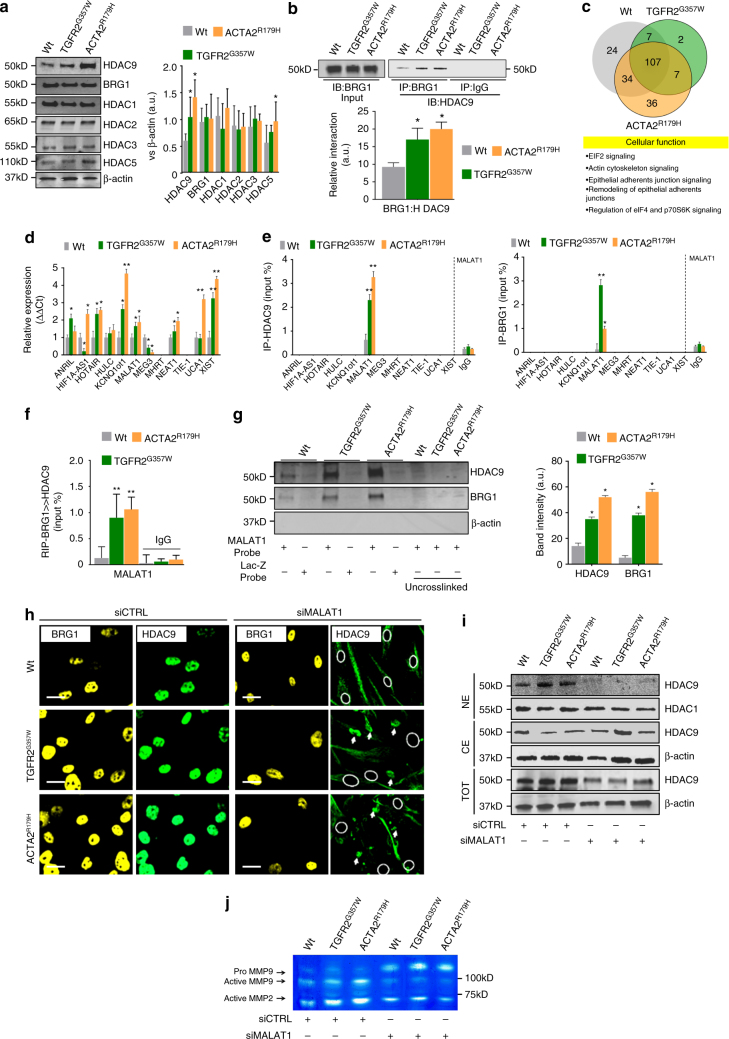
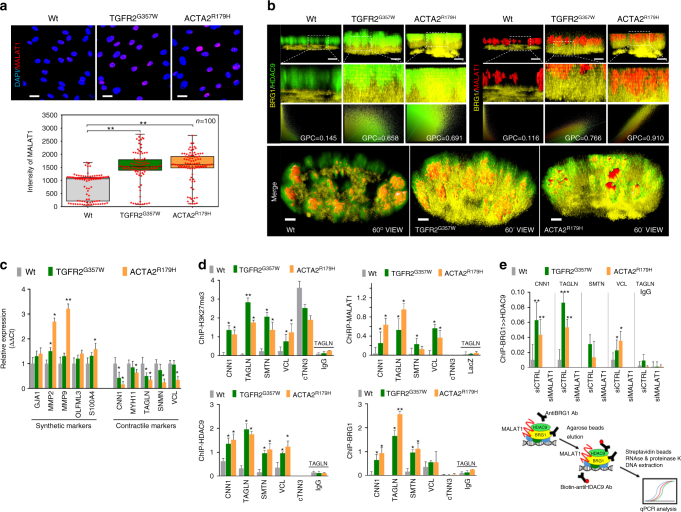
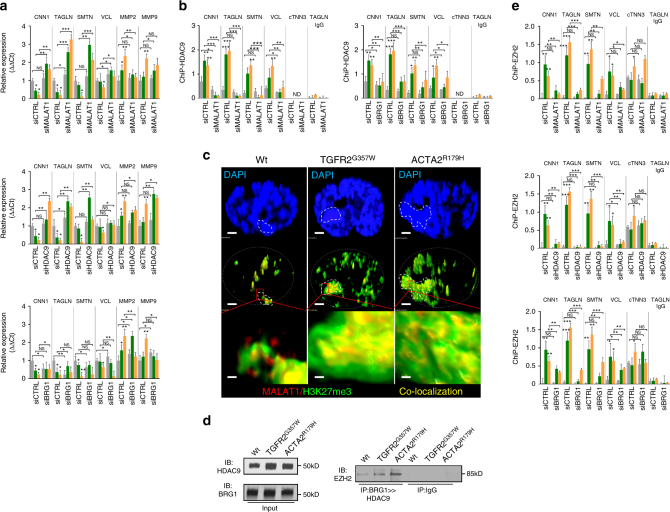
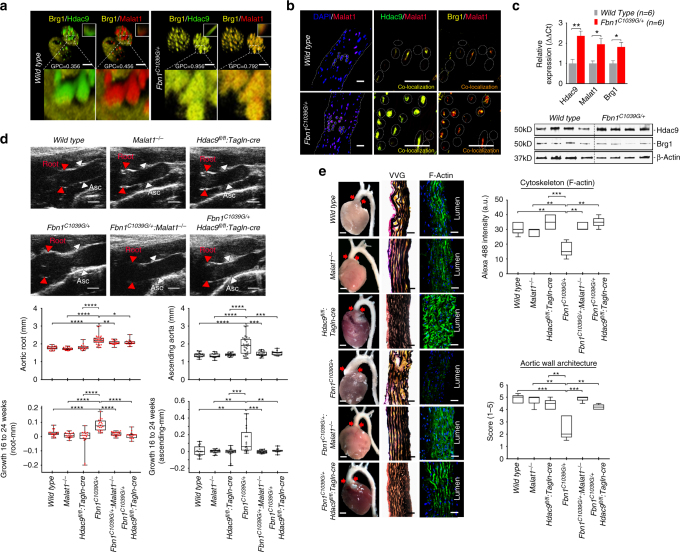
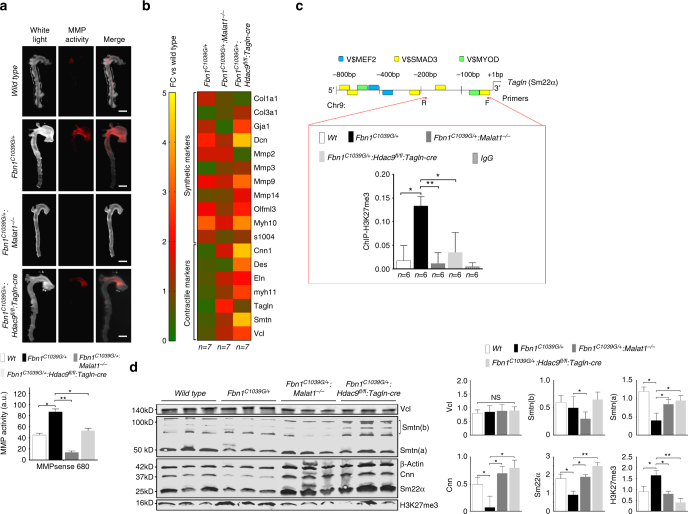
Thoracic aortic aneurysm (TAA) has been associated with mutations affecting members of the TGF-β signaling pathway, or components and regulators of the vascular smooth muscle cell (VSMC) actomyosin cytoskeleton. Although both clinical groups present similar phenotypes, the existence of potential common mechanisms of pathogenesis remain obscure. Here we show that mutations affecting TGF-β signaling and VSMC cytoskeleton both lead to the formation of a ternary complex comprising the histone deacetylase HDAC9, the chromatin-remodeling enzyme BRG1, and the long noncoding RNA MALAT1. The HDAC9-MALAT1-BRG1 complex binds chromatin and represses contractile protein gene expression in association with gain of histone H3-lysine 27 trimethylation modifications. Disruption of Malat1 or Hdac9 restores contractile protein expression, improves aortic mural architecture, and inhibits experimental aneurysm growth. Thus, we highlight a shared epigenetic pathway responsible for VSMC dysfunction in both forms of TAA, with potential therapeutic implication for other known HDAC9-associated vascular diseases.
胸主动脉瘤(TAA)与影响转化生长因子-β(TGF-β)信号通路成员或血管平滑肌细胞(VSMC)肌动球蛋白细胞骨架的组成成分及调节因子的突变有关。尽管这两个临床组表现出相似的表型,但潜在的共同发病机制仍不清楚。在此,我们表明,影响TGF-β信号传导和VSMC细胞骨架的突变均导致由组蛋白脱乙酰酶HDAC9、染色质重塑酶BRG1和长链非编码RNA MALAT1组成的三元复合物的形成。HDAC9-MALAT1-BRG1复合物结合染色质,并与组蛋白H3赖氨酸27三甲基化修饰增加相关,从而抑制收缩蛋白基因表达。破坏Malat1或Hdac9可恢复收缩蛋白表达,改善主动脉壁结构,并抑制实验性动脉瘤生长。因此,我们强调了一条共同的表观遗传途径,该途径导致两种形式的TAA中VSMC功能障碍,对其他已知的与HDAC9相关的血管疾病具有潜在的治疗意义。