Kim Yong-Seok, Ahn Jae-Sung, Kim Semi, Kim Hyun-Jin, Kim Shin-Hee, Kang Ju-Seop
Department of Biochemistry and Molecular Biology, College of Medicine, Seoul 04763, Korea.
Department of Pharmacology and Clinical Pharmacology Laboratory, College of Medicine, Hanyang University, Seoul 04763, Korea.
Korean J Physiol Pharmacol. 2018 Mar;22(2):113-125. doi: 10.4196/kjpp.2018.22.2.113. Epub 2018 Feb 23.
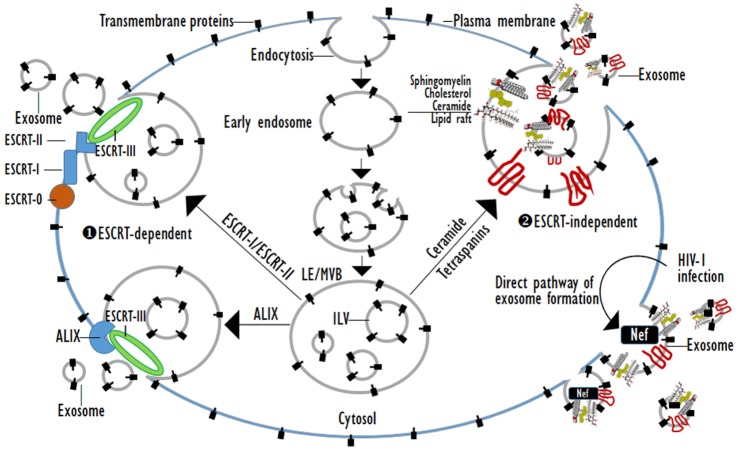
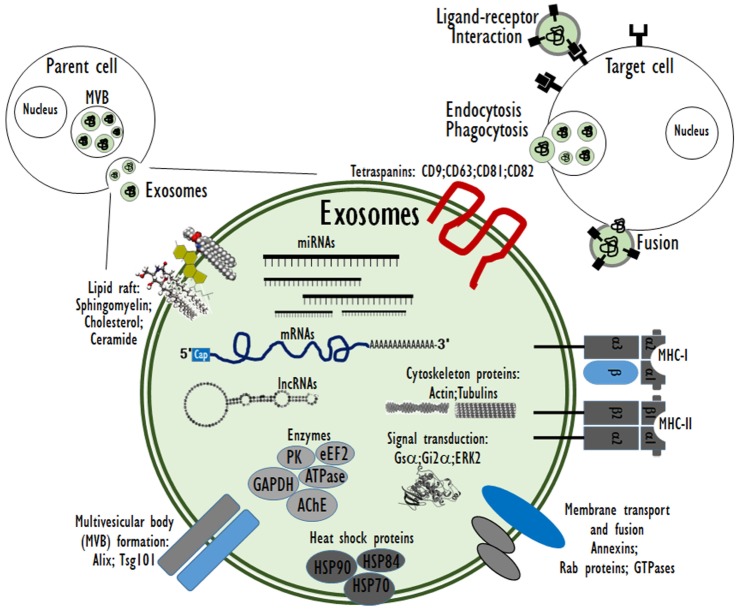
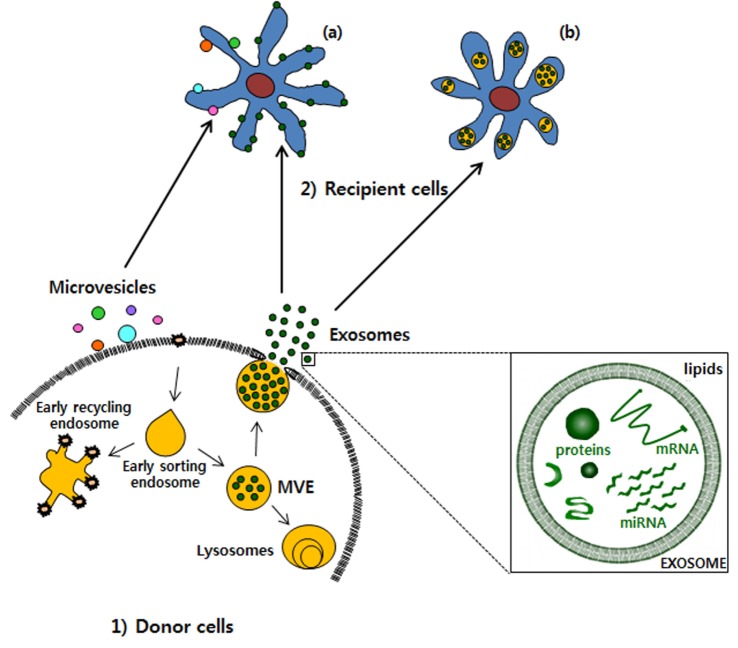
Exosomes are membranous vesicles of 30-150 nm in diameter that are derived from the exocytosis of the intraluminal vesicles of many cell types including immune cells, stem cells, cardiovascular cells and tumor cells. Exosomes participate in intercellular communication by delivering their contents to recipient cells, with or without direct contact between cells, and thereby influence physiological and pathological processes. They are present in various body fluids and contain proteins, nucleic acids, lipids, and microRNAs that can be transported to surrounding cells. Theragnosis is a concept in next-generation medicine that simultaneously combines accurate diagnostics with therapeutic effects. Molecular components in exosomes have been found to be related to certain diseases and treatment responses, indicating that they may have applications in diagnosis via molecular imaging and biomarker detection. In addition, recent studies have reported that exosomes have immunotherapeutic applications or can act as a drug delivery system for targeted therapies with drugs and biomolecules. In this review, we describe the formation, structure, and physiological roles of exosomes. We also discuss their roles in the pathogenesis and progression of diseases including neurodegenerative diseases, cardiovascular diseases, and cancer. The potential applications of exosomes for theragnostic purposes in various diseases are also discussed. This review summarizes the current knowledge about the physiological and pathological roles of exosomes as well as their diagnostic and therapeutic uses, including emerging exosome-based therapies that could not be applied until now.
外泌体是直径为30 - 150纳米的膜性囊泡,来源于包括免疫细胞、干细胞、心血管细胞和肿瘤细胞在内的多种细胞类型的腔内囊泡的胞吐作用。外泌体通过将其内容物传递给受体细胞来参与细胞间通讯,无论细胞之间是否直接接触,从而影响生理和病理过程。它们存在于各种体液中,含有可转运至周围细胞的蛋白质、核酸、脂质和微小RNA。诊疗一体化是下一代医学中的一个概念,它将精确诊断与治疗效果同时结合起来。已发现外泌体中的分子成分与某些疾病及治疗反应相关,这表明它们可能在通过分子成像和生物标志物检测进行诊断方面具有应用价值。此外,最近的研究报道外泌体具有免疫治疗应用,或者可作为药物和生物分子靶向治疗的药物递送系统。在本综述中,我们描述了外泌体的形成、结构和生理作用。我们还讨论了它们在包括神经退行性疾病、心血管疾病和癌症在内的疾病发病机制和进展中的作用。还讨论了外泌体在各种疾病诊疗中的潜在应用。本综述总结了关于外泌体生理和病理作用以及其诊断和治疗用途的当前知识,包括直到现在才得以应用的基于外泌体的新兴疗法。