Institute of Neurological Disease, Translational Neuroscience Center, West China Hospital, Sichuan University, Chengdu, Sichuan 610041, P.R. China.
Institute of Neuroscience, Animal Zoology Department, Kunming Medical University, Kunming, Yunnan 650031, P.R. China.
Int J Mol Med. 2018 Jun;41(6):3267-3277. doi: 10.3892/ijmm.2018.3553. Epub 2018 Mar 9.
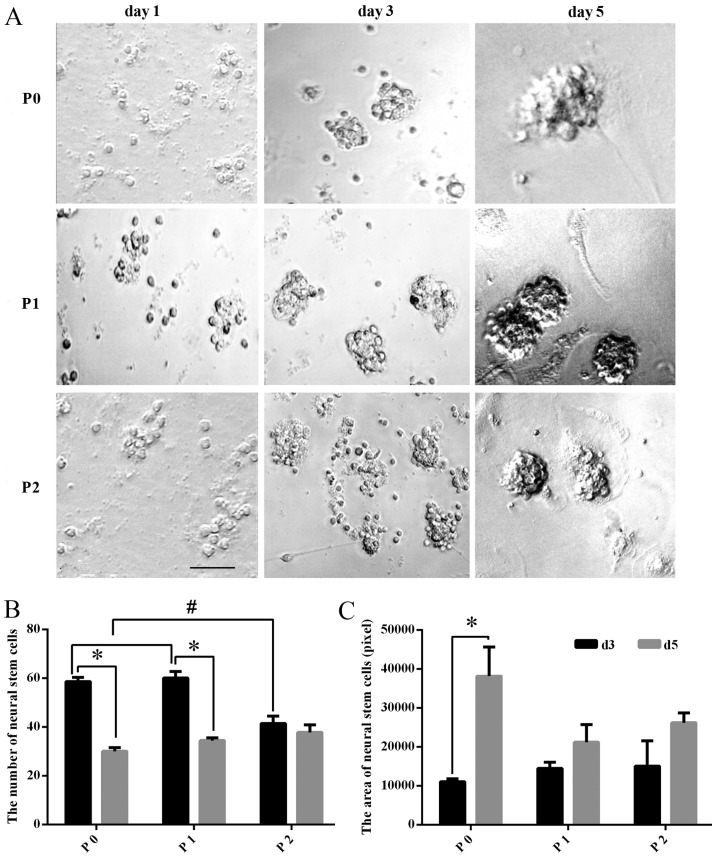
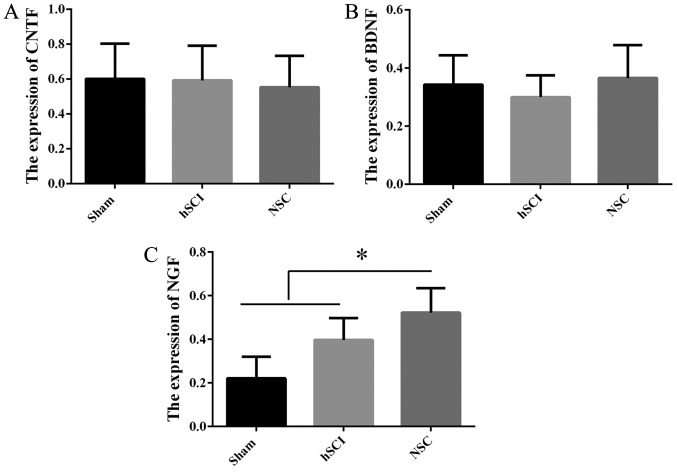
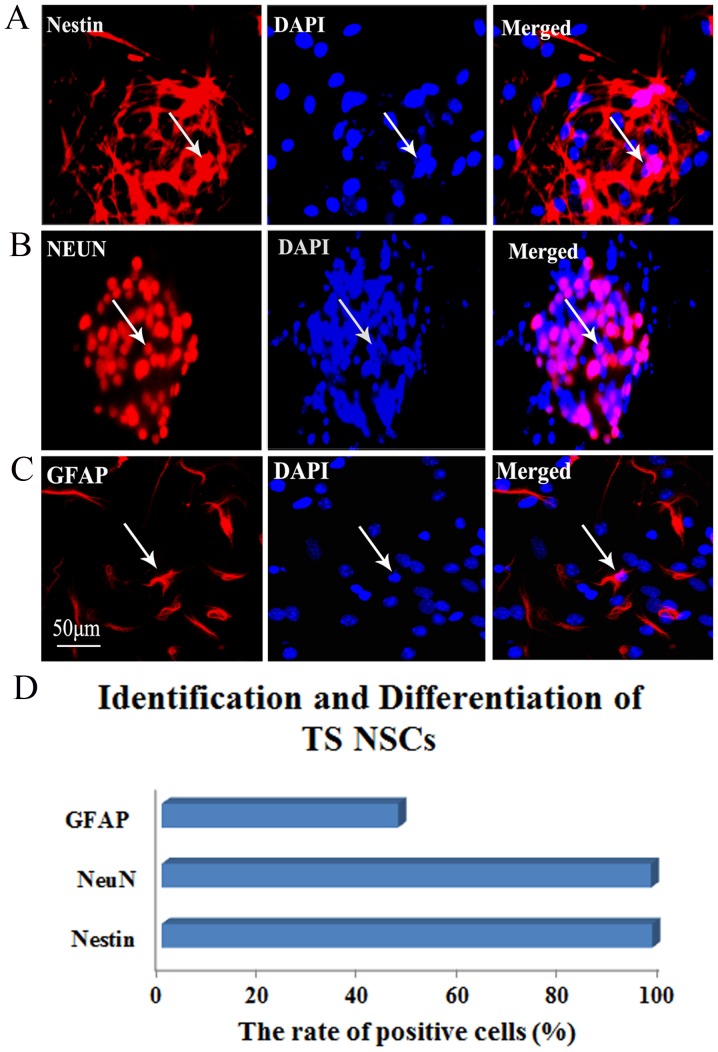
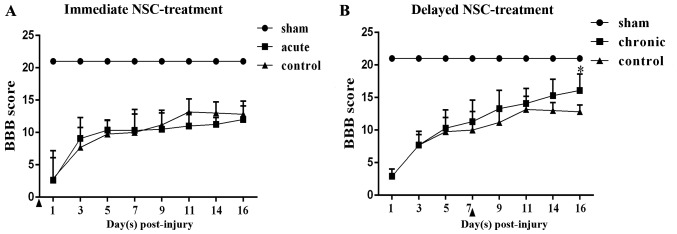
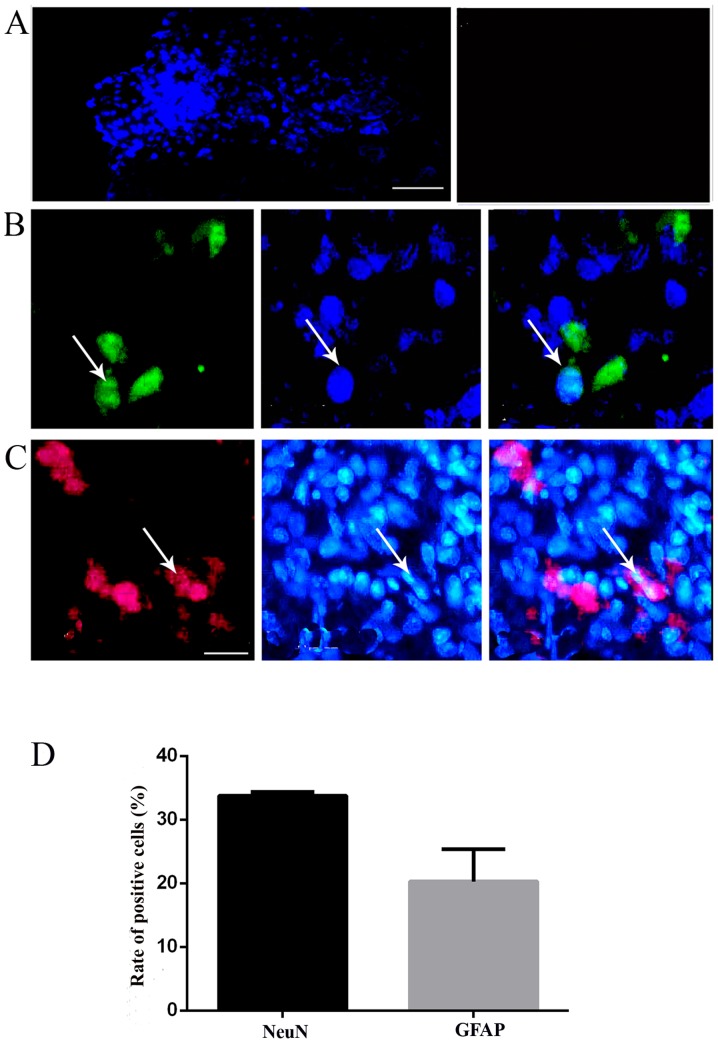
The aim of the present study was to determine the effect of implanted neural stem cells (NSCs) on the functional recovery of tree shrews (TSs) subjected to hemi‑sectioned spinal cord injury (hSCI), and to investigate the possible mechanism involved. NSCs (passage 2), derived from the hippocampus of TSs (embryonic day 20), were labeled with Hoechst 33342 and transplanted intraspinally into the hSC of TSs at thoracic level 10 in the acute (immediately after injury) and chronic (day 9 post‑injury) stages. The Basso‑Beattie‑Bresnahan (BBB) score was recorded from days 1 to 16 post‑injury, and the survival, migration, differentiation and neurotrophic factor (NTF) expression in vivo were detected. In vitro and in vivo, the expanded NSCs were able to differentiate into neurons and astrocytes, and secreted a variety of NTFs, including ciliary NTF, transforming growth factor‑β1, glial cell line‑derived NTF, nerve growth factor (NGF), brain‑derived NTF and insulin‑like growth factor. Following transplantation, the BBB score in the TSs with chronic‑stage transplantation exhibited a statistically significant increase, while there was no significant difference in the acute group, compared with the control group. This corresponded with the marked upregulation of NGF indicated by reverse transcription‑quantitative polymerase chain reaction. In conclusion, the transplantation of NSCs into the hSC in the chronic phase, but not the acute stage, of hSCI in non‑human primate TSs is effective and associated with upregulated NGF expression. These findings may provide novel strategies for the treatment of SCI in clinical patients.
本研究旨在探讨植入神经干细胞(NSCs)对树鼩(TSs)半横断脊髓损伤(hSCI)后功能恢复的影响,并探讨可能涉及的机制。将来源于 TSs(胚胎第 20 天)海马的 NSCs(第 2 代)用 Hoechst 33342 标记,在急性(损伤后立即)和慢性(损伤后第 9 天)阶段经脊柱内移植到 TSs 的胸段 10 水平 hSC 中。自损伤后第 1 天至第 16 天记录 Basso-Beattie-Bresnahan(BBB)评分,并检测体内细胞的存活、迁移、分化和神经营养因子(NTF)表达。体外和体内实验表明,扩增的 NSCs 能够分化为神经元和星形胶质细胞,并分泌多种 NTF,包括睫状神经营养因子、转化生长因子-β1、胶质细胞系源性神经营养因子、神经生长因子(NGF)、脑源性神经营养因子和胰岛素样生长因子。慢性移植组的 BBB 评分明显升高,而急性移植组与对照组相比无显著差异。这与逆转录-定量聚合酶链反应(RT-qPCR)所示 NGF 的显著上调相吻合。综上所述,将 NSCs 移植到非人类灵长类 TSs 的 hSCI 慢性期而非急性期 hSC 中是有效的,并且与 NGF 表达上调相关。这些发现可能为临床患者 SCI 的治疗提供新策略。