van Gorkom Gwendolyn N Y, Klein Wolterink Roel G J, Van Elssen Catharina H M J, Wieten Lotte, Germeraad Wilfred T V, Bos Gerard M J
Division of Hematology, Department of Internal Medicine, GROW-School for Oncology and Developmental Biology, Maastricht University Medical Center, 6202AZ Maastricht, The Netherlands.
Department of Transplantation Immunology, Maastricht University Medical Center, 6202 AZ Maastricht, The Netherlands.
Antioxidants (Basel). 2018 Mar 10;7(3):41. doi: 10.3390/antiox7030041.
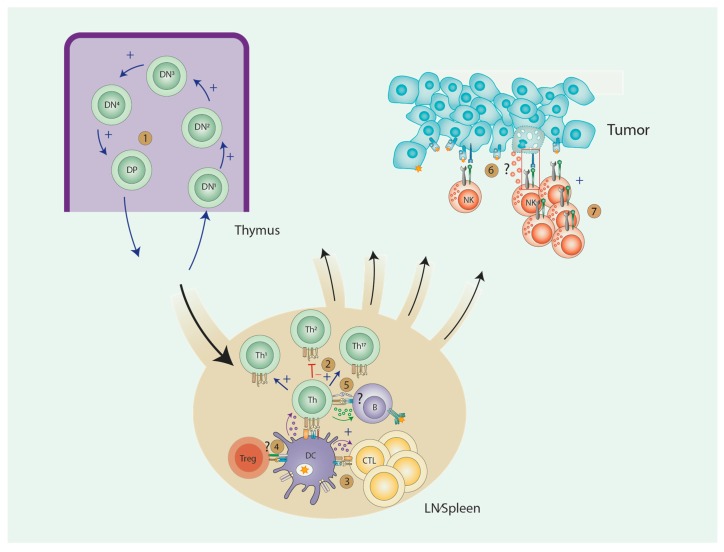
Vitamin C or ascorbic acid (AA) is implicated in many biological processes and has been proposed as a supplement for various conditions, including cancer. In this review, we discuss the effects of AA on the development and function of lymphocytes. This is important in the light of cancer treatment, as the immune system needs to regenerate following chemotherapy or stem cell transplantation, while cancer patients are often AA-deficient. We focus on lymphocytes, as these white blood cells are the slowest to restore, rendering patients susceptible to often lethal infections. T lymphocytes mediate cellular immunity and have been most extensively studied in the context of AA biology. In vitro studies demonstrate that T cell development requires AA, while AA also enhances T cell proliferation and may influence T cell function. There are limited and opposing data on the effects of AA on B lymphocytes that mediate humoral immunity. However, AA enhances the proliferation of NK cells, a group of cytotoxic innate lymphocytes. The influence of AA on natural killer (NK) cell function is less clear. In summary, an increasing body of evidence indicates that AA positively influences lymphocyte development and function. Since AA is a safe and cheap nutritional supplement, it is worthwhile to further explore its potential benefits for immune reconstitution of cancer patients treated with immunotoxic drugs.
维生素C或抗坏血酸(AA)参与许多生物过程,并已被提议作为包括癌症在内的各种病症的补充剂。在本综述中,我们讨论了AA对淋巴细胞发育和功能的影响。鉴于癌症治疗,这一点很重要,因为免疫系统在化疗或干细胞移植后需要再生,而癌症患者往往缺乏AA。我们关注淋巴细胞,因为这些白细胞恢复最慢,使患者易受往往致命的感染。T淋巴细胞介导细胞免疫,并且在AA生物学背景下研究最为广泛。体外研究表明,T细胞发育需要AA,而AA还能增强T细胞增殖,并可能影响T细胞功能。关于AA对介导体液免疫的B淋巴细胞的影响,数据有限且相互矛盾。然而,AA能增强NK细胞(一类具有细胞毒性的先天性淋巴细胞)的增殖。AA对自然杀伤(NK)细胞功能的影响尚不清楚。总之,越来越多的证据表明,AA对淋巴细胞发育和功能有积极影响。由于AA是一种安全且廉价的营养补充剂,因此值得进一步探索其对接受免疫毒性药物治疗的癌症患者免疫重建的潜在益处。