Key Laboratory for Biotechnology on Medicinal Plants of Jiangsu Province, School of Life Science, Jiangsu Normal University, Xuzhou, Jiangsu Province, China.
College of Health Sciences, Jiangsu Normal University, Xuzhou, Jiangsu Province, China.
J Cell Mol Med. 2018 Jun;22(6):3167-3182. doi: 10.1111/jcmm.13597. Epub 2018 Mar 13.
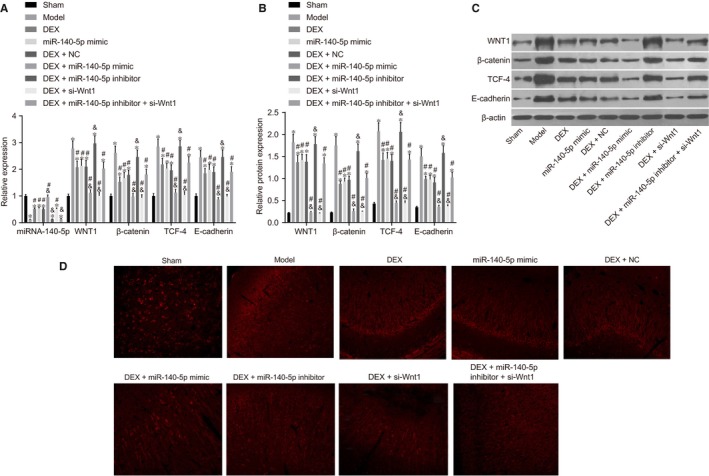
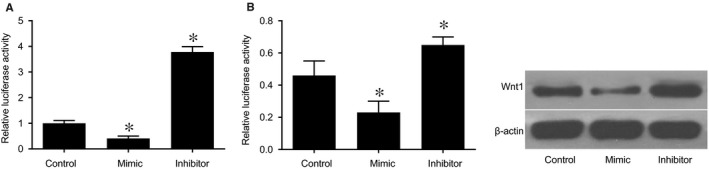
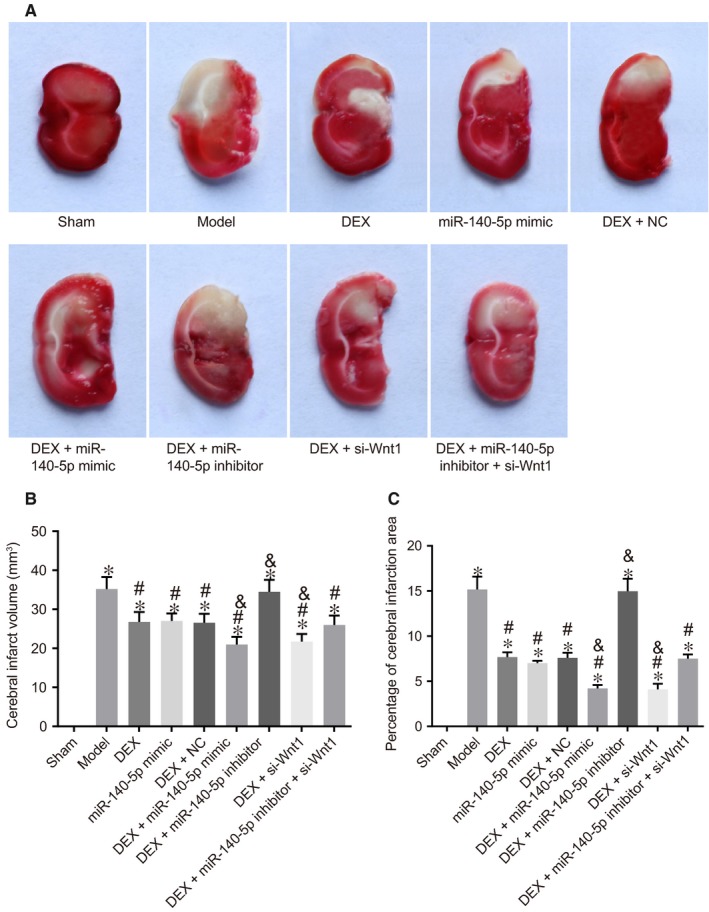
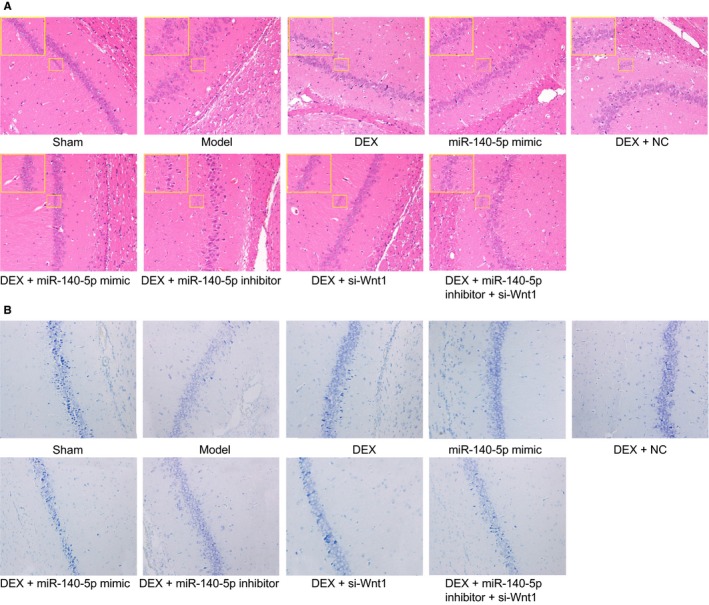
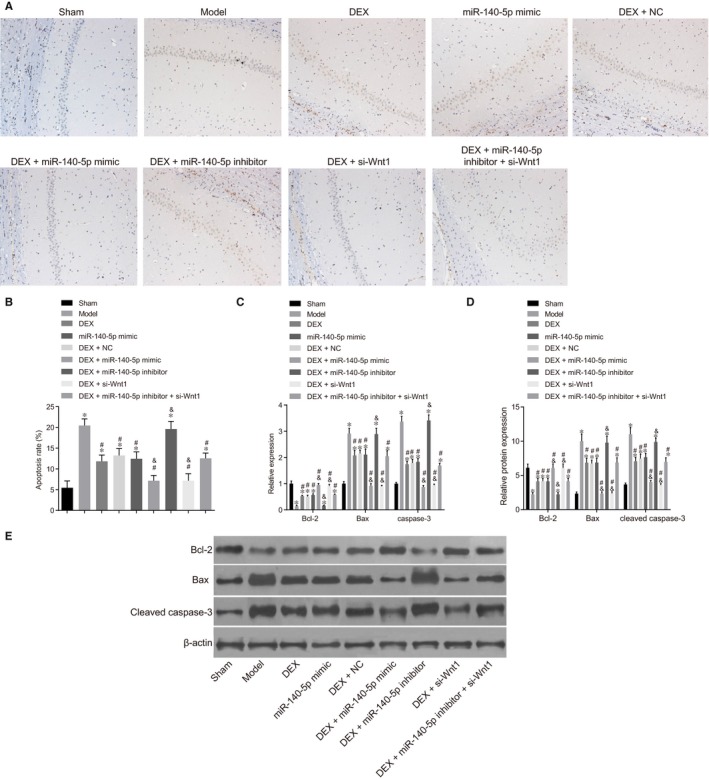
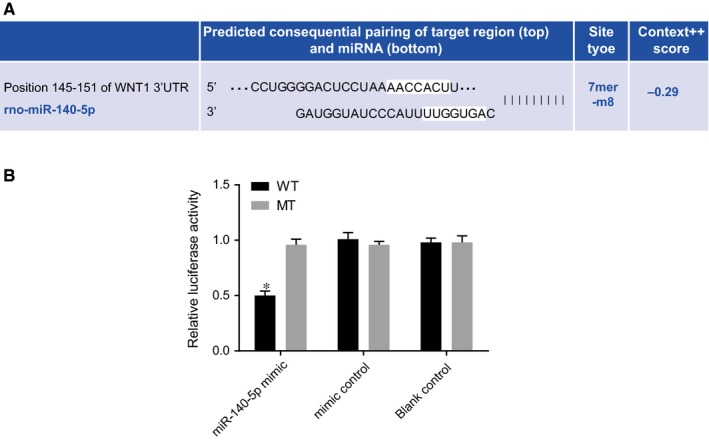
Hypoxia-ischaemia (HI) remains a major cause of foetal brain damage presented a scarcity of effective therapeutic approaches. Dexmedetomidine (DEX) and microRNA-140-5p (miR-140-5p) have been highlighted due to its potentially significant role in the treatment of cerebral ischaemia. This study was to investigate the role by which miR-140-5p provides cerebral protection using DEX to treat hypoxic-ischaemic brain damage (HIBD) in neonatal rats via the Wnt/β-catenin signalling pathway. The HIBD rat models were established and allocated into various groups with different treatment plans, and eight SD rats into sham group. The learning and memory ability of the rats was assessed. Apoptosis and pathological changes in the hippocampus CA1 region and expressions of the related genes of the Wnt/β-catenin signalling pathway as well as the genes responsible of apoptosis were detected. Compared with the sham group, the parameters of weight, length growth, weight ratio between hemispheres, the rate of reaching standard, as well as Bcl-2 expressions, were all increased. Furthermore, observations of increased levels of cerebral infarction volume, total mortality rate, response times, total response duration, expressions of Wnt1, β-catenin, TCF-4, E-cadherin, apoptosis rate of neurons, and Bax expression were elevated. Following DEX treatment, the symptoms exhibited by HIBD rats were ameliorated. miR-140-5p and si-Wnt1 were noted to attenuate the progression of HIBD. Our study demonstrates that miR-140-5p promotes the cerebral protective effects of DEX against HIBD in neonatal rats by targeting the Wnt1 gene through via the negative regulation of the Wnt/β-catenin signalling pathway.
缺氧缺血(HI)仍然是胎儿脑损伤的主要原因,目前缺乏有效的治疗方法。右美托咪定(DEX)和 microRNA-140-5p(miR-140-5p)由于其在治疗脑缺血方面的潜在重要作用而备受关注。本研究旨在通过 Wnt/β-catenin 信号通路探讨 miR-140-5p 通过 DEX 治疗新生大鼠缺氧缺血性脑损伤(HIBD)提供脑保护的作用。建立 HIBD 大鼠模型,并根据不同的治疗方案将其分为不同的组,另外 8 只 SD 大鼠分为假手术组。评估大鼠的学习记忆能力。检测海马 CA1 区的细胞凋亡和病理变化以及 Wnt/β-catenin 信号通路相关基因和凋亡相关基因的表达。与假手术组相比,体重、体长生长、半球间重量比、达标率以及 Bcl-2 表达均增加。此外,还观察到脑梗死体积、总死亡率、反应时间、总反应时间、Wnt1、β-catenin、TCF-4、E-钙粘蛋白、神经元凋亡率和 Bax 表达的增加。DEX 治疗后,HIBD 大鼠的症状得到改善。miR-140-5p 和 si-Wnt1 被认为可以通过靶向 Wnt1 基因负调控 Wnt/β-catenin 信号通路来减轻 HIBD 的进展。本研究表明,miR-140-5p 通过靶向 Wnt1 基因负调控 Wnt/β-catenin 信号通路,促进 DEX 对新生大鼠 HIBD 的脑保护作用。