Department of Public Health and Infectious Diseases, University of Rome La Sapienza, Rome, Italy.
Department of Gynecological-Obstetric and Urological Sciences, University of Rome La Sapienza, Rome, Italy.
Front Immunol. 2018 Mar 1;9:376. doi: 10.3389/fimmu.2018.00376. eCollection 2018.
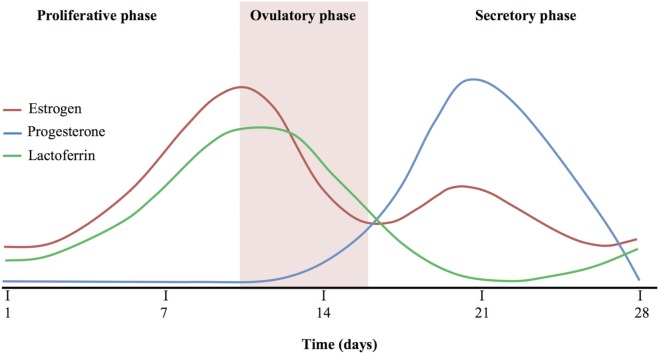
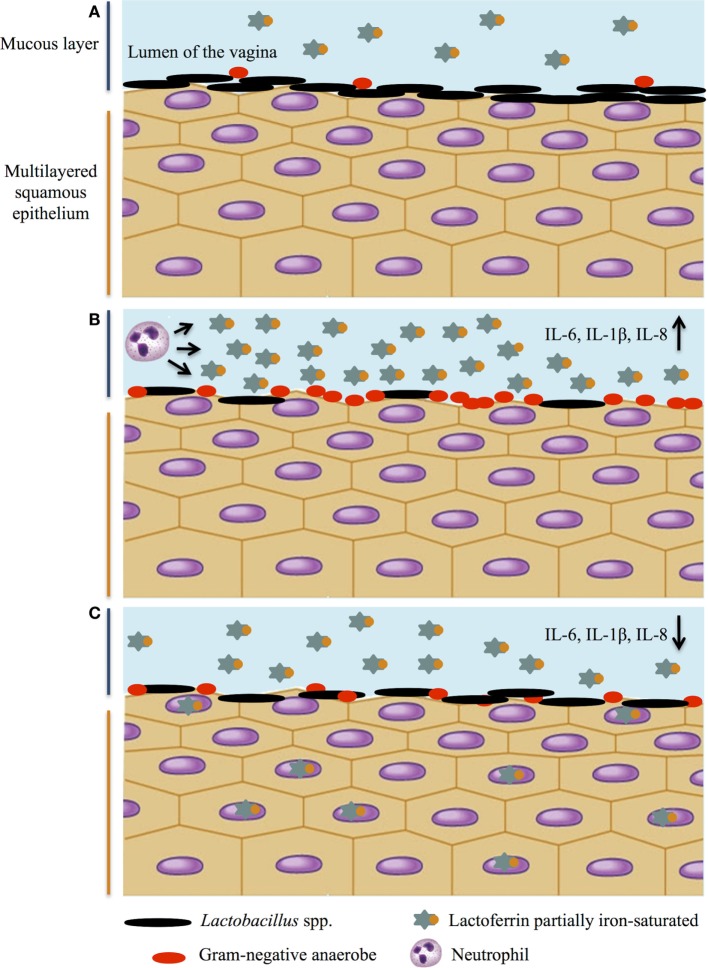
The innate defense system of the female mucosal genital tract involves a close and complex interaction among the healthy vaginal microbiota, different cells, and various proteins that protect the host from pathogens. Vaginal lactobacilli and lactoferrin represent two essential actors in the vaginal environment. Lactobacilli represent the dominant bacterial species able to prevent facultative and obligate anaerobes outnumber in vaginal microbiota maintaining healthy microbial homeostasis. Several mechanisms underlie the protection exerted by lactobacilli: competition for nutrients and tissue adherence, reduction of the vaginal pH, modulation of immunity, and production of bioactive compounds. Among bioactive factors of cervicovaginal mucosa, lactoferrin, an iron-binding cationic glycoprotein, is a multifunctional glycoprotein with antibacterial, antifungal, antiviral, and antiparasitic activities, recently emerging as an important modulator of inflammation. Lactobacilli and lactoferrin are largely under the influence of female hormones and of paracrine production of various cytokines. Lactoferrin is strongly increased in lower genital tract mucosal fluid of women affected by , and infections promoting both innate and adaptive immune responses. In vaginal dysbiosis characterized by low amounts of vaginal lactobacilli and increased levels of endogenous anaerobic bacteria, the increase in lactoferrin could act as an immune modulator assuming the role normally played by the healthy microbiota in vaginal mucosa. Then lactoferrin and lactobacilli may be considered as biomarkers of altered microbial homeostasis at vaginal level. Considering the shortage of effective treatments to counteract recurrent and/or antibiotic-resistant bacterial infections, the intravaginal administration of lactobacilli and lactoferrin could be a novel efficient therapeutic strategy and a valuable tool to restore mucosal immune homeostasis.
女性生殖道的先天防御系统涉及健康阴道微生物群、不同细胞和各种保护宿主免受病原体侵害的蛋白质之间的密切而复杂的相互作用。阴道乳杆菌和乳铁蛋白是阴道环境中的两个重要因素。乳杆菌是能够防止阴道微生物群中兼性和专性厌氧菌数量过多的主要细菌种类,维持健康的微生物内稳态。乳杆菌发挥保护作用的机制有:竞争营养物质和组织黏附、降低阴道 pH 值、调节免疫和产生生物活性化合物。在宫颈阴道黏膜的生物活性因子中,乳铁蛋白是一种具有抗菌、抗真菌、抗病毒和抗寄生虫活性的多功能糖蛋白,作为炎症的重要调节剂,最近受到关注。乳杆菌和乳铁蛋白在很大程度上受到女性激素和各种细胞因子旁分泌产生的影响。在 和 感染的女性下生殖道黏膜液中,乳铁蛋白强烈增加,促进先天和适应性免疫反应。在以阴道乳杆菌数量减少和内源性厌氧菌水平升高为特征的阴道微生态失调中,乳铁蛋白的增加可能作为免疫调节剂发挥作用,承担健康阴道微生物群在阴道黏膜中的作用。然后,乳铁蛋白和乳杆菌可以被认为是阴道水平微生物内稳态改变的生物标志物。考虑到缺乏有效的治疗方法来对抗复发性和/或抗生素耐药性细菌感染,阴道内给予乳杆菌和乳铁蛋白可能是一种新的有效的治疗策略,也是恢复黏膜免疫内稳态的有价值的工具。