Tran Thuy Thi Thu, Phan Chinh Thi Thuy, Pham Tuan Cong, Nguyen Quynh Thuy
Department of Occupational Health and Safety, Hanoi School of Public Health, Hanoi, Vietnam.
National Institute of Occupational and Environmental Health, Vietnam.
AIMS Public Health. 2016 Sep 14;3(4):733-749. doi: 10.3934/publichealth.2016.4.733. eCollection 2016.
The seafood processing industry has been developing and providing marked contribution to Vietnam's economic growth in recent years. However, information on working conditions and their impacts to workers' health in this sector, focusing on musculoskeletal problems in female workers, has been poorly documented.
This paper examines the prevalence of after-shift musculoskeletal disorder symptoms (A-MSDS) and work-related factors in female workers in a seafood processing factory in Vietnam.
As part of a comprehensive study, a cross-sectional survey was implemented in one seafood processing factory in the center of Vietnam in 2014. A self-administered questionnaire was completed by 394 female workers to collect information about their A-MSDS state, demographic characteristics, health status and work conditions. Descriptive analysis and logistic regression were applied to describe and analyse the results.
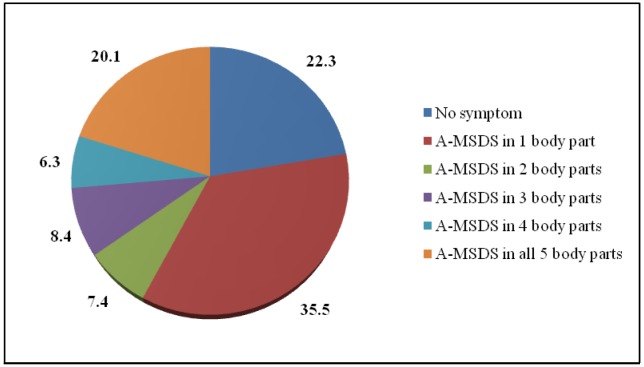
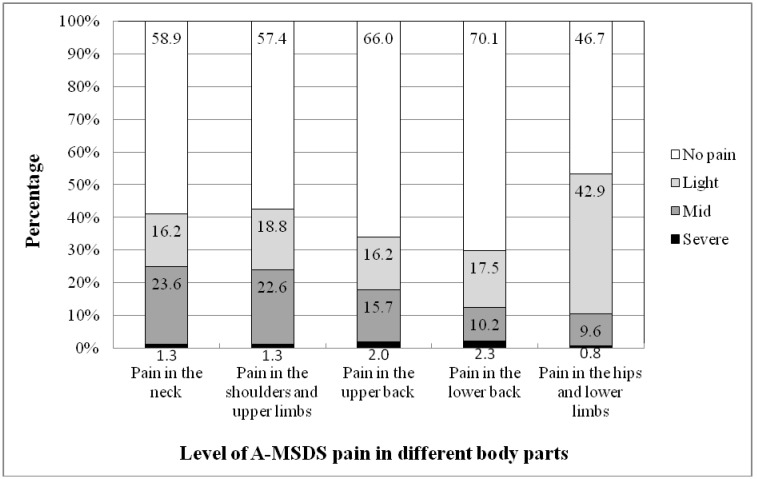
Nearly four-fifths of female workers experienced MSDs in at least one body part (77.7%) and 20.1% of them had MSDs in all investigated regions. The prevalence of A-MSDS in different body parts markedly varied, with the proportion of pain in the hips and lower extremities being as high as 53.3%, followed by pain in the shoulders and upper extremities (42.6%) and the neck (41.1%). A humid working environment, exposure to vibration and chemicals as well as taxing task demands and work organizations were found to significantly contribute to the increased risk of after-shift musculoskeletal disorders in female workers.
Approximately 80% of female workers in the seafood processing factory experienced musculoskeletal pains after work, especially in the hips, extremities, neck and shoulders which were contributed by work conditions and task demands.
近年来,越南海产品加工业不断发展,为越南经济增长做出了显著贡献。然而,关于该行业工作条件及其对工人健康的影响,尤其是针对女工肌肉骨骼问题的相关信息记录较少。
本文研究越南一家海产品加工厂女工下班后肌肉骨骼疾病症状(A-MSDS)的患病率及工作相关因素。
作为一项综合研究的一部分,2014年在越南中部的一家海产品加工厂开展了一项横断面调查。394名女工通过自行填写问卷,收集她们的A-MSDS状况、人口统计学特征、健康状况和工作条件等信息。采用描述性分析和逻辑回归对结果进行描述和分析。
近五分之四的女工至少有一个身体部位出现肌肉骨骼疾病(77.7%),其中20.1%在所有调查部位都有肌肉骨骼疾病。不同身体部位的A-MSDS患病率差异显著,髋部和下肢疼痛比例高达53.3%,其次是肩部和上肢疼痛(42.6%)以及颈部疼痛(41.1%)。潮湿的工作环境、接触振动和化学品以及繁重的任务要求和工作组织被发现显著增加了女工下班后肌肉骨骼疾病的风险。
海产品加工厂约80%的女工下班后出现肌肉骨骼疼痛,尤其是髋部、四肢、颈部和肩部,这是由工作条件和任务要求导致的。