He Rong-Quan, Yang Xia, Liang Liang, Chen Gang, Ma Jie
Department of Medical Oncology, First Affiliated Hospital of Guangxi Medical University, Nanning, Guangxi Zhuang Autonomous Region 530021, P.R. China.
Department of Pathology, First Affiliated Hospital of Guangxi Medical University, Nanning, Guangxi Zhuang Autonomous Region 530021, P.R. China.
Oncol Lett. 2018 Apr;15(4):5517-5532. doi: 10.3892/ol.2018.8045. Epub 2018 Feb 13.
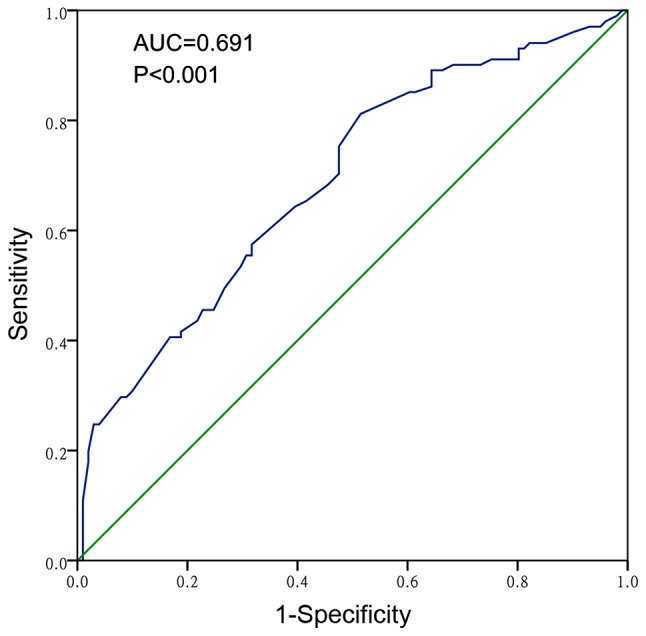
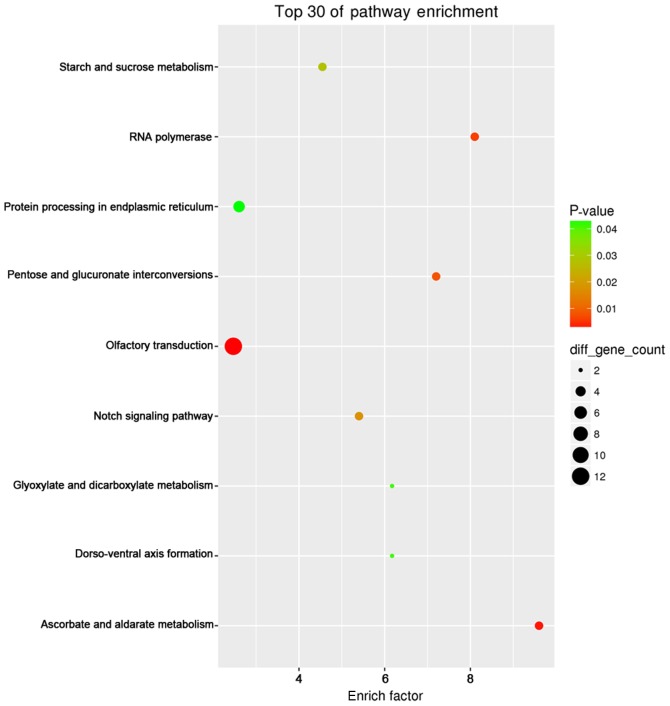
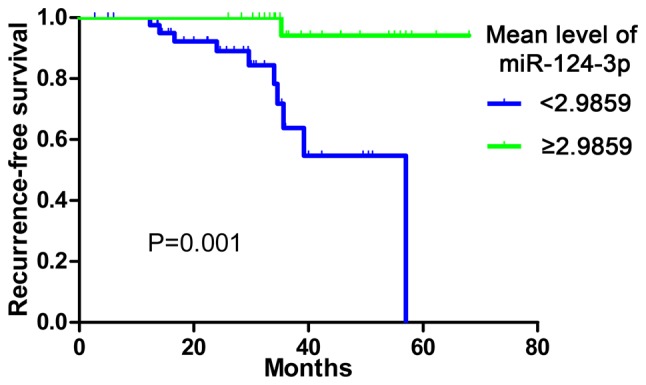
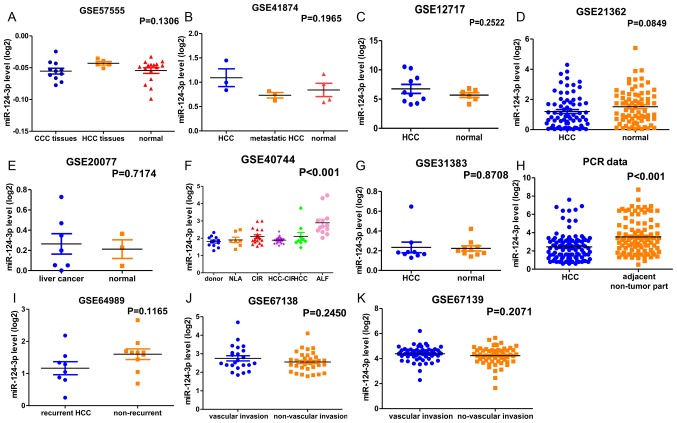
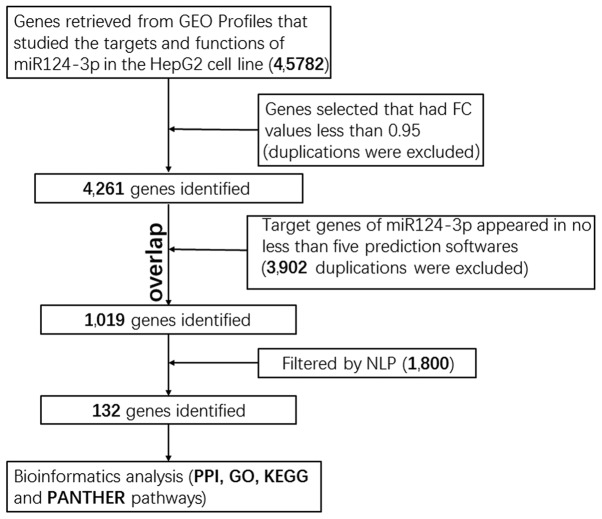
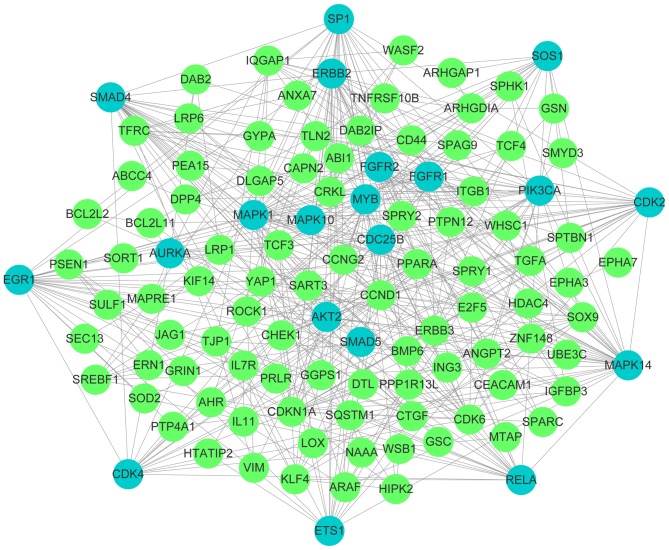
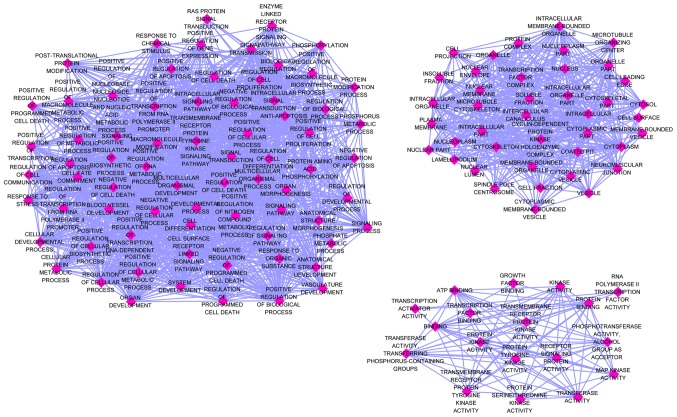
The present study aimed to explore the potential clinical significance of microRNA (miR)-124-3p expression in the hepatocarcinogenesis and development of hepatocellular carcinoma (HCC), as well as the potential target genes of functional HCC pathways. Reverse transcription-quantitative polymerase chain reaction was performed to evaluate the expression of miR-124-3p in 101 HCC and adjacent non-cancerous tissue samples. Additionally, the association between miR-124-3p expression and clinical parameters was also analyzed. Differentially expressed genes identified following miR-124-3p transfection, the prospective target genes predicted and the key genes of HCC obtained from Natural Language Processing (NLP) were integrated to obtain potential target genes of miR-124-3p in HCC. Relevant signaling pathways were assessed with protein-protein interaction (PPI) networks, Gene Ontology (GO) enrichment analysis, Kyoto Encyclopedia of Genes and Genomes (KEGG) and Protein Annotation Through Evolutionary Relationships (PANTHER) pathway enrichment analysis. miR-124-3p expression was significantly reduced in HCC tissues compared with expression in adjacent non-cancerous liver tissues. In HCC, miR-124-3p was demonstrated to be associated with clinical stage. The mean survival time of the low miR-124-3p expression group was reduced compared with that of the high expression group. A total of 132 genes overlapped from differentially expressed genes, miR-124-3p predicted target genes and NLP identified genes. PPI network construction revealed a total of 109 nodes and 386 edges, and 20 key genes were identified. The major enriched terms of three GO categories included regulation of cell proliferation, positive regulation of cellular biosynthetic processes, cell leading edge, cytosol and cell projection, protein kinase activity, transcription activator activity and enzyme binding. KEGG analysis revealed pancreatic cancer, prostate cancer and non-small cell lung cancer as the top three terms. Angiogenesis, the endothelial growth factor receptor signaling pathway and the fibroblast growth factor signaling pathway were identified as the most significant terms in the PANTHER pathway analysis. The present study confirmed that miR-124-3p acts as a tumor suppressor in HCC. miR-124-3p may target multiple genes, exerting its effect spatiotemporally, or in combination with a diverse range of processes in HCC. Functional characterization of miR-124-3p targets will offer novel insight into the molecular changes that occur in HCC progression.
本研究旨在探讨微小RNA(miR)-124-3p表达在肝细胞癌(HCC)发生发展中的潜在临床意义,以及功能性HCC通路的潜在靶基因。采用逆转录-定量聚合酶链反应检测101例HCC组织及癌旁非癌组织样本中miR-124-3p的表达。此外,还分析了miR-124-3p表达与临床参数之间的关联。整合miR-124-3p转染后鉴定出的差异表达基因、预测的潜在靶基因以及通过自然语言处理(NLP)获得的HCC关键基因,以获取miR-124-3p在HCC中的潜在靶基因。通过蛋白质-蛋白质相互作用(PPI)网络、基因本体(GO)富集分析、京都基因与基因组百科全书(KEGG)以及基于进化关系的蛋白质注释(PANTHER)通路富集分析来评估相关信号通路。与癌旁非癌肝组织相比,HCC组织中miR-124-3p表达显著降低。在HCC中,miR-124-3p与临床分期相关。miR-124-3p低表达组的平均生存时间比高表达组缩短。差异表达基因、miR-124-3p预测靶基因和NLP鉴定基因共重叠132个基因。PPI网络构建显示共有109个节点和386条边,并鉴定出20个关键基因。三个GO类别的主要富集术语包括细胞增殖调控、细胞生物合成过程的正调控、细胞前沿、胞质溶胶和细胞突起、蛋白激酶活性、转录激活活性和酶结合。KEGG分析显示胰腺癌、前列腺癌和非小细胞肺癌位列前三位。血管生成、内皮生长因子受体信号通路和成纤维细胞生长因子信号通路在PANTHER通路分析中被确定为最显著的术语。本研究证实miR-124-3p在HCC中起肿瘤抑制作用。miR-124-3p可能靶向多个基因,在时空上发挥作用,或与HCC中的多种过程相结合。对miR-124-3p靶标的功能表征将为HCC进展过程中发生的分子变化提供新的见解。