Xiangya School of Pharmaceutical Sciences, Central South University, Changsha 410013, China.
Hunan Provincial Research Center for Safety Evaluation of Drugs, Liuyang National Economic and Technical Development Zone 410331, China.
Theranostics. 2018 Feb 14;8(7):1911-1922. doi: 10.7150/thno.22534. eCollection 2018.
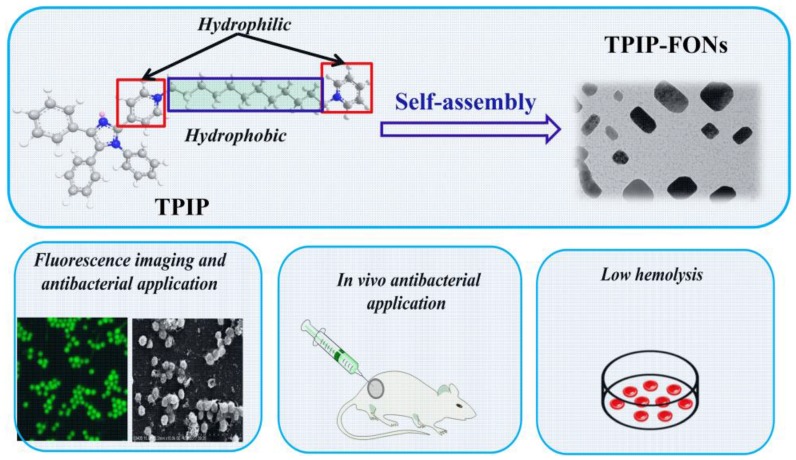
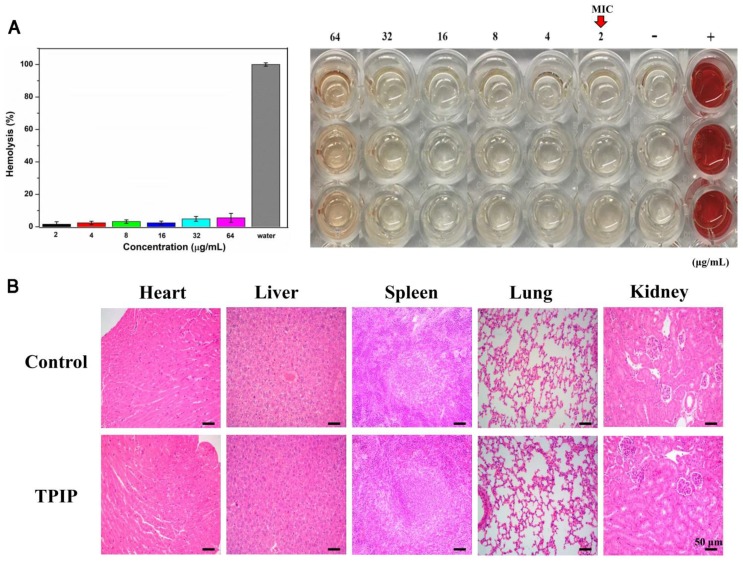
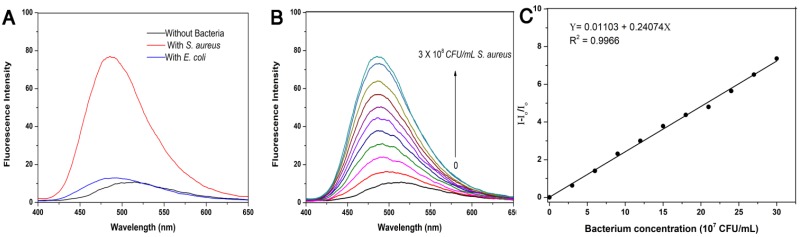
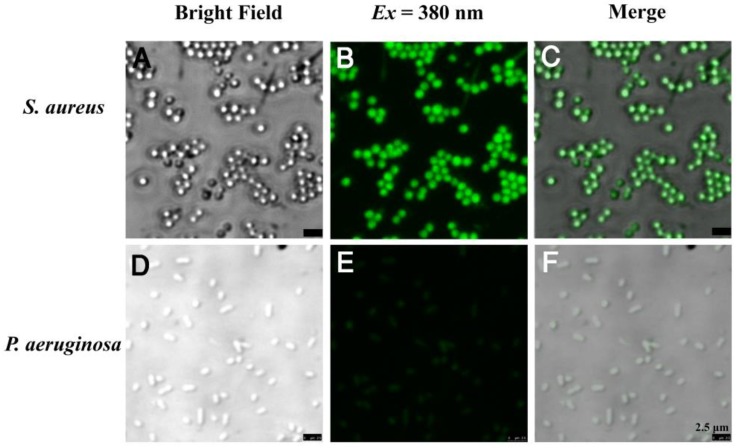
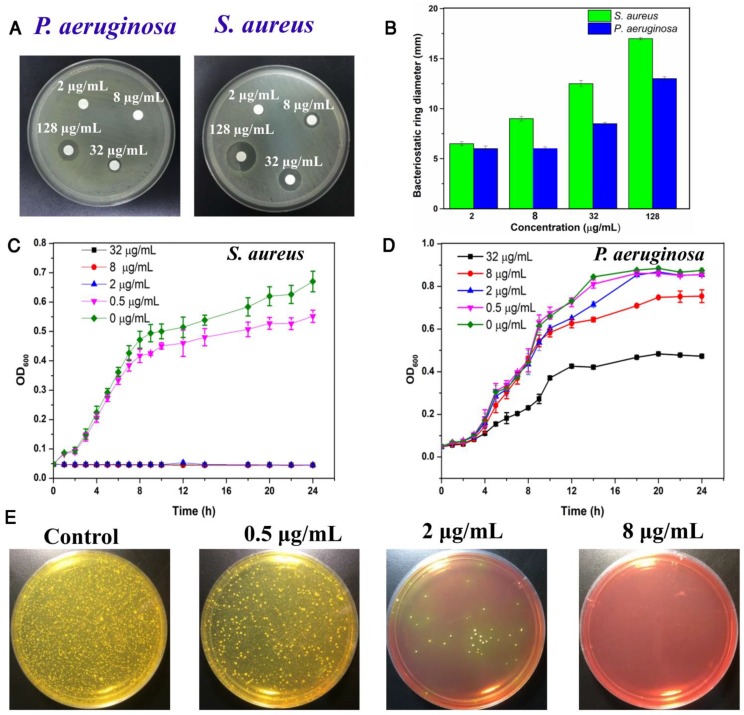
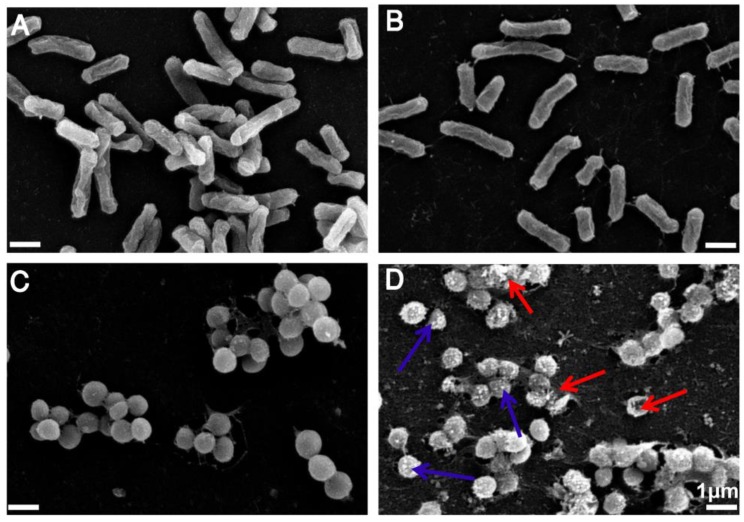
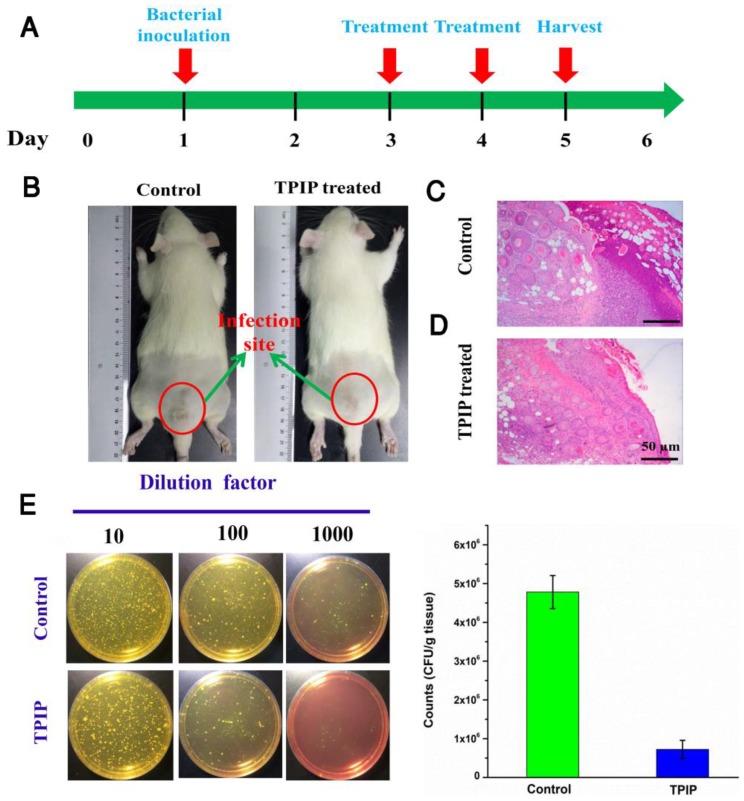
Increasing bacterial infections as well as a rise in bacterial resistance call for the development of novel and safe antimicrobial agents without inducing bacterial resistance. Nanoparticles (NPs) present some advantages in treating bacterial infections and provide an alternative strategy to discover new antibiotics. Here, we report the development of novel self-assembled fluorescent organic nanoparticles () with excellent antibacterial efficacy and good biocompatibility. Self-assembly of 1-(12-(pyridin-1-ium-1-yl)dodecyl)-4-(1,4,5-triphenyl-1H-imidazol-2-yl)pyridin-1-ium in aqueous solution was investigated using dynamic light scattering (DLS) and transmission electron microscopy (TEM). The bacteria were imaged under a laser scanning confocal microscope. We evaluated the antibacterial efficacy of using sugar plate test. The antimicrobial mechanism was explored by SEM. The biocompatibility of the nanoparticles was examined using cytotoxicity test, hemolysis assay, and histological staining. We further tested the antibacterial efficacy of using the -infected rats. In aqueous solution, could self-assemble into nanoparticles () with characteristic aggregation-induced emission (AIE). could simultaneously image gram-positive bacteria without the washing process. antimicrobial activity suggested that had excellent antibacterial activity against (MIC = 2.0 µg mL). Furthermore, exhibited intrinsic biocompatibility with mammalian cells, in particular, red blood cells. studies further demonstrated that had excellent antibacterial efficacy and significantly reduced bacterial load in the infectious sites. The integrated design of bacterial imaging and antibacterial functions in the self-assembled small molecules provides a promising strategy for the development of novel antimicrobial nanomaterials.
细菌感染的增加以及细菌耐药性的上升,要求开发新型安全的抗菌剂,而不诱导细菌耐药性。纳米粒子 (NPs) 在治疗细菌感染方面具有一些优势,并为发现新抗生素提供了一种替代策略。在这里,我们报告了具有优异抗菌功效和良好生物相容性的新型自组装荧光有机纳米粒子 () 的开发。通过动态光散射 (DLS) 和透射电子显微镜 (TEM) 研究了 1-(12-(吡啶-1-基)十二烷基)-4-(1,4,5-三苯基-1H-咪唑-2-基)吡啶-1- 水溶液中的自组装。使用激光扫描共聚焦显微镜对细菌进行成像。我们使用糖平板试验评估了 的抗菌功效。通过 SEM 探索了抗菌机制。通过细胞毒性试验、溶血试验和组织学染色来检查纳米粒子的生物相容性。我们进一步使用 - 感染大鼠测试了 的抗菌功效。在水溶液中, 可以自组装成具有特征聚集诱导发射 (AIE) 的纳米粒子 ()。 可以同时对革兰氏阳性菌进行成像,而无需进行洗涤过程。 抗菌活性表明 对 (MIC = 2.0 µg mL)具有出色的抗菌活性。此外, 与哺乳动物细胞,特别是红细胞具有内在的生物相容性。 研究进一步表明, 具有出色的抗菌功效,并显著降低了感染部位的细菌负荷。自组装小分子中细菌成像和抗菌功能的集成设计为开发新型抗菌纳米材料提供了有前途的策略。