Subramaniam Karuna, Kothare Hardik, Mizuiri Danielle, Nagarajan Srikantan S, Houde John F
Department of Psychiatry, University of California, San Francisco, San Francisco, CA, United States.
Department of Radiology and Biomedical Imaging, University of California, San Francisco, San Francisco, CA, United States.
Front Hum Neurosci. 2018 Mar 6;12:82. doi: 10.3389/fnhum.2018.00082. eCollection 2018.
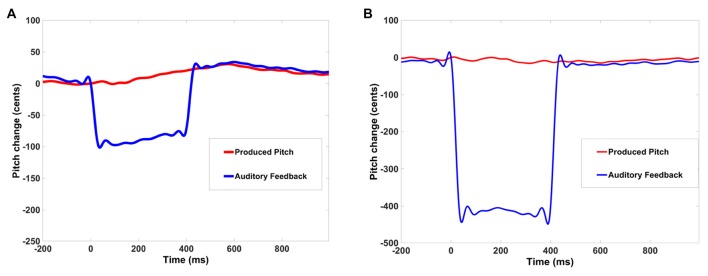
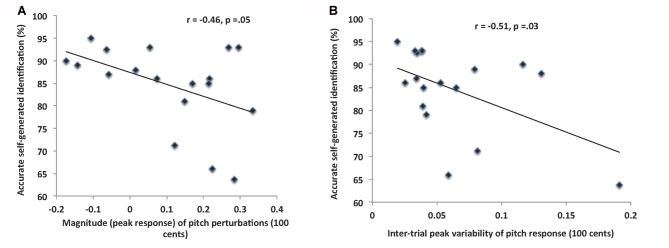
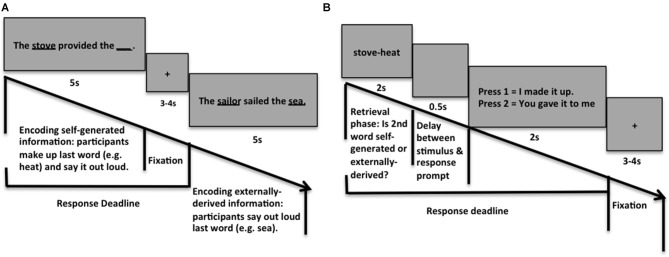
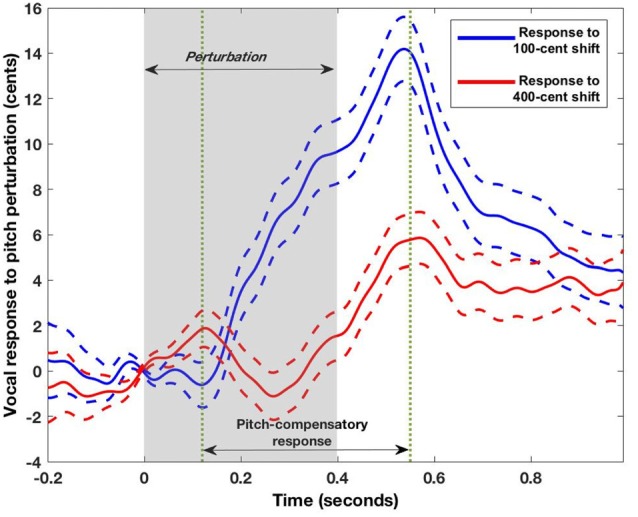
Self-agency is the experience of being the agent of one's own thoughts and motor actions. The intact experience of self-agency is necessary for successful interactions with the outside world (i.e., reality monitoring) and for responding to sensory feedback of our motor actions (e.g., speech feedback control). Reality monitoring is the ability to distinguish internally self-generated information from outside reality (externally-derived information). In the present study, we examined the relationship of self-agency between lower-level speech feedback monitoring (i.e., monitoring what we hear ourselves say) and a higher-level cognitive reality monitoring task. In particular, we examined whether speech feedback monitoring and reality monitoring were driven by the capacity to experience self-agency-the ability to make predictions about the outcomes of self-generated actions. During the reality monitoring task, subjects made judgments as to whether information was previously self-generated (self-agency judgments) or externally derived (external-agency judgments). During speech feedback monitoring, we assessed self-agency by altering environmental auditory feedback so that subjects listened to a perturbed version of their own speech. When subjects heard minimal perturbations in their auditory feedback while speaking, they made corrective responses, indicating that they judged the perturbations as errors in their speech output. We found that self-agency judgments in the reality-monitoring task were higher in people who had smaller corrective responses ( = 0.05) and smaller inter-trial variability ( = 0.03) during minimal pitch perturbations of their auditory feedback. These results provide support for a unitary process for the experience of self-agency governing low-level speech control and higher level reality monitoring.
自我能动性是指个体体验到自己是自身思想和运动行为的发起者。完整的自我能动性体验对于与外部世界进行成功互动(即现实监测)以及对我们运动行为的感官反馈做出反应(例如语音反馈控制)而言是必要的。现实监测是一种将内部自我生成的信息与外部现实(外部衍生信息)区分开来的能力。在本研究中,我们考察了较低层次的语音反馈监测(即监测我们听到自己所说的内容)与较高层次的认知现实监测任务之间的自我能动性关系。具体而言,我们考察了语音反馈监测和现实监测是否由体验自我能动性的能力所驱动,即对自我生成行为的结果进行预测的能力。在现实监测任务中,受试者要判断信息是先前自我生成的(自我能动性判断)还是外部衍生的(外部能动性判断)。在语音反馈监测过程中,我们通过改变环境听觉反馈来评估自我能动性,以便受试者收听自己语音的干扰版本。当受试者在说话时听到听觉反馈中的微小干扰时,他们会做出纠正反应,这表明他们将这些干扰判断为语音输出中的错误。我们发现,在听觉反馈的最小音高干扰期间,纠正反应较小( = 0.05)且试验间变异性较小( = 0.03)的人在现实监测任务中的自我能动性判断更高。这些结果为自我能动性体验在支配低层次语音控制和高层次现实监测方面的统一过程提供了支持。