Hao Bo, Chen Zhen, Bi Baochen, Yu Miaomei, Yao Shuang, Feng Yuehua, Yu Yang, Pan Lili, Di Dongmei, Luo Guanghua, Zhang Xiaoying
Department of Cardiothoracic Surgery, The Third Affiliated Hospital of Soochow University, Changzhou 213003, P.R. China.
Department of Urology, The Third Affiliated Hospital of Soochow University, Changzhou 213003, P.R. China.
Oncotarget. 2018 Jan 12;9(16):13088-13099. doi: 10.18632/oncotarget.24178. eCollection 2018 Feb 27.
Accumulating evidence showed that high expression of toll like receptor 4 (TLR4) was significantly associated with the outcome of patients with solid cancers. However, other studies failed to draw a similar conclusion. Thus, a systematic meta-analysis was performed to assess the prognostic value of TLR4 in solid tumors.
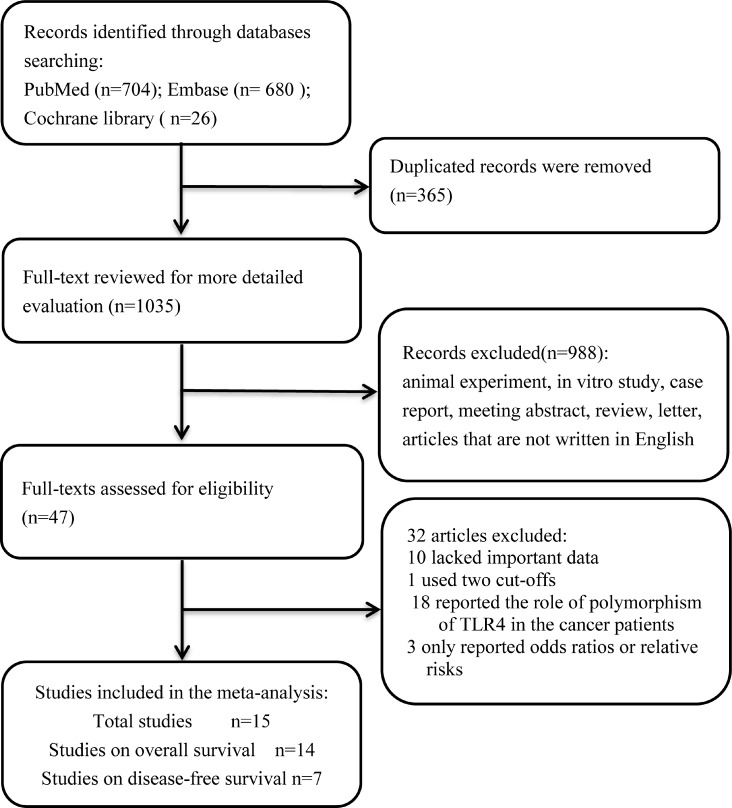
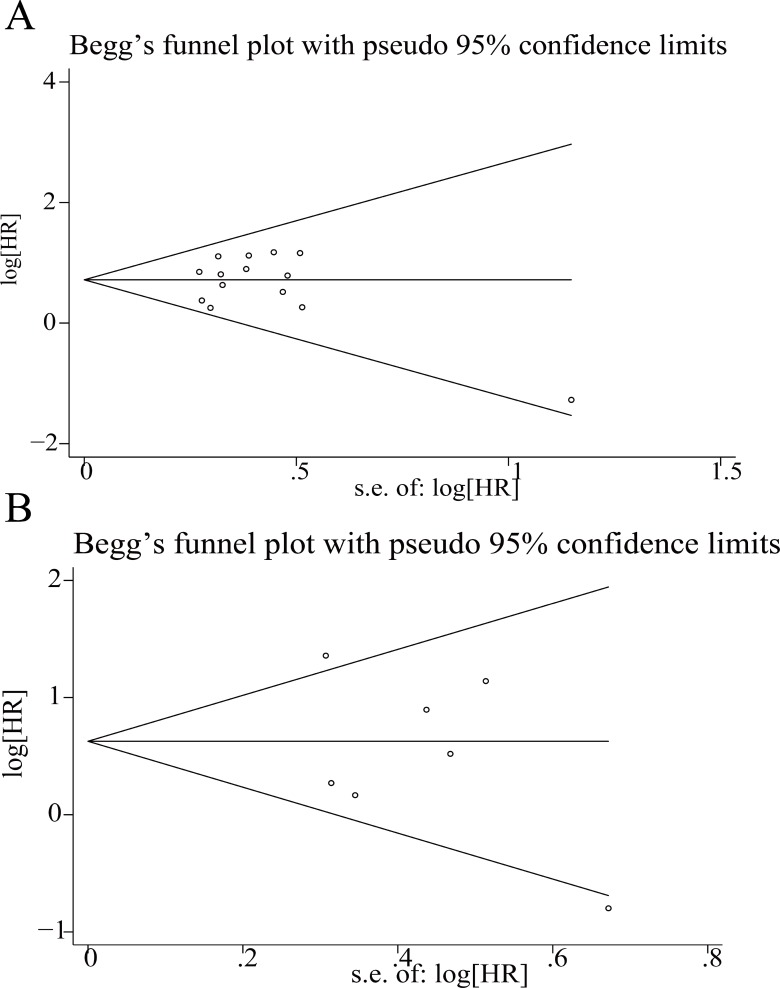
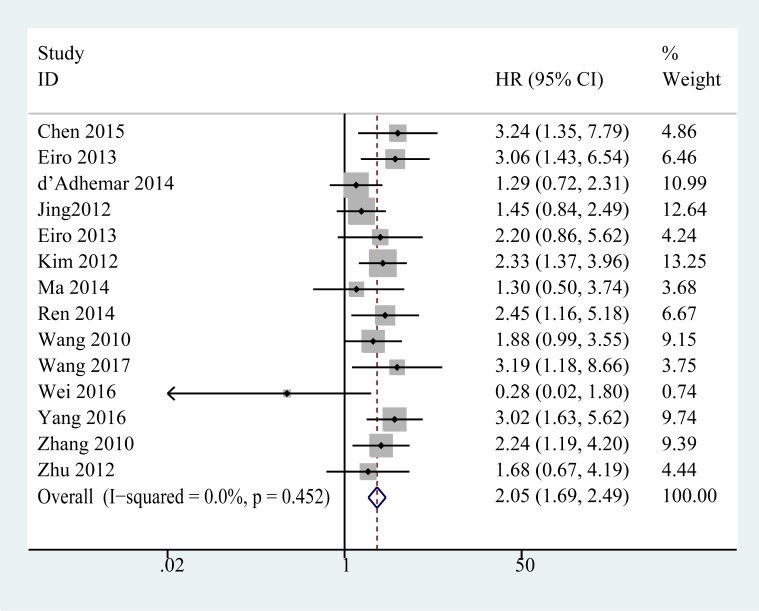
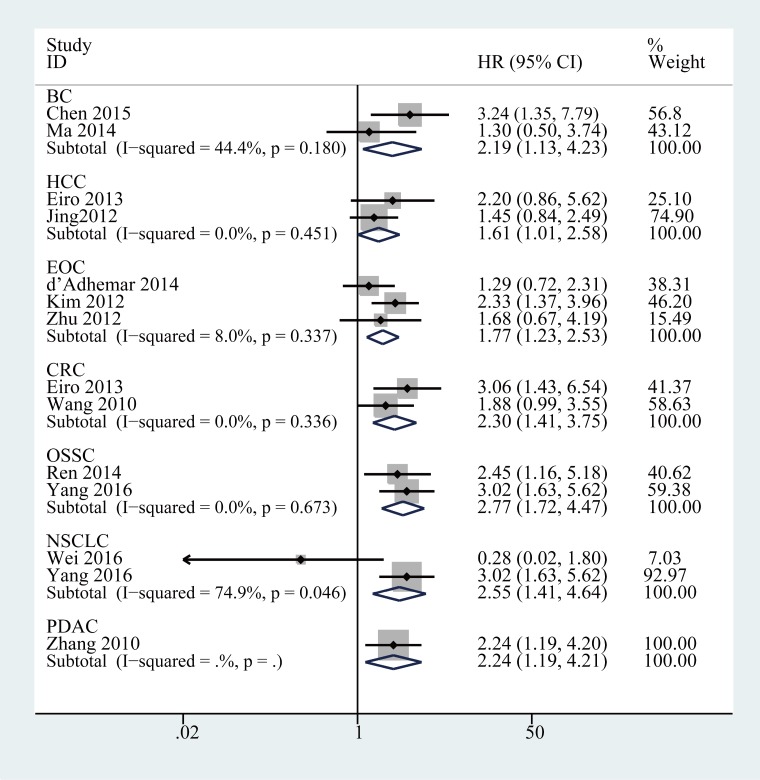
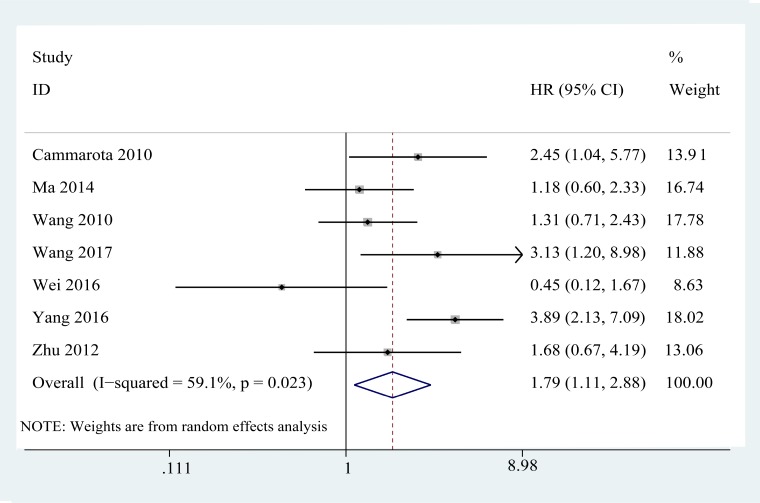
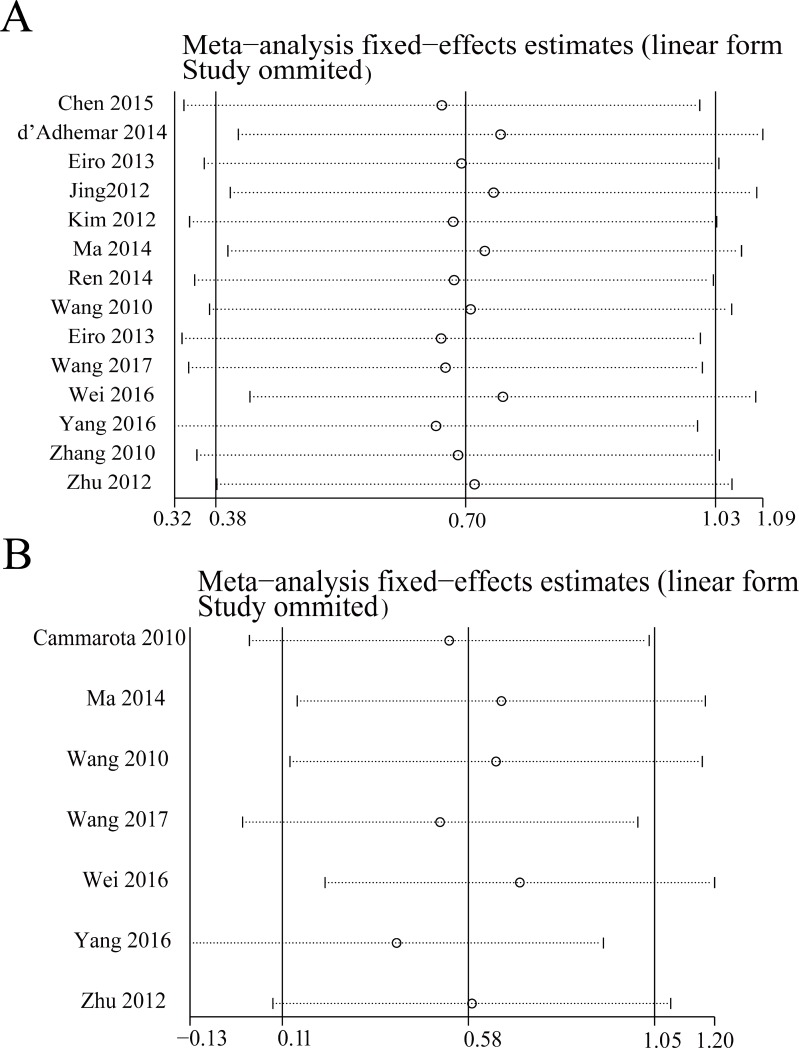
Data from 15 studies and 1294 patients were enrolled. Among the 15 studies, 14 studies demonstrated the association between overall survival(OS) and TLR4 expression, and 7 studies described the relationship between disease-free survival(DFS) and TLR4 expression. High expression of TLR4 was significantly associated with poor OS (pooled hazard ratio (HR) = 2.05; 95% confidence interval (CI) (1.49, 2,49), < 0.001). The results of meta regression analysis indicated that the subgroups of ethnic (PD = 0.924), tumor type (PD = 0.669), HR obtained method (PD = 0.945), analysis type (PD = 0.898), and cut-off value(PD = 0.835) were not the resource of heterogeneity. Moreover, patients with elevated TLR4 had a significantly worse DFS (pooled HR = 1.79; 95% CI (1.11, 2.88), < 0.05).
We searched PubMed, Embase and the Cochrane Library (last update by April 18, 2017) to identify literatures evaluating the value of TLR4 in cancer patients. Combined hazard ratios (HRs) for OS and DFS were assessed using fixed-effects models and random effects models respectively.
The meta-analysis suggests that elevated expression of TLR4 is associated with poor OS and shorter DFS of patients with solid tumors. The results indicate that TLR4, as a novel prognostic biomarker in solid tumors, could potentially help to improve treatment decision-making of solid tumors in clinical.
越来越多的证据表明,Toll样受体4(TLR4)的高表达与实体癌患者的预后显著相关。然而,其他研究未能得出类似结论。因此,进行了一项系统的荟萃分析,以评估TLR4在实体瘤中的预后价值。
纳入了15项研究中的1294例患者的数据。在这15项研究中,14项研究证明了总生存期(OS)与TLR4表达之间的关联,7项研究描述了无病生存期(DFS)与TLR4表达之间的关系。TLR4的高表达与较差的OS显著相关(合并风险比(HR)=2.05;95%置信区间(CI)(1.49,2.49),P<0.001)。荟萃回归分析结果表明,种族亚组(P=0.924)、肿瘤类型亚组(P=0.669)、HR获得方法亚组(P=0.945)、分析类型亚组(P=0.898)和临界值亚组(P=0.835)均不是异质性的来源。此外,TLR4升高的患者DFS显著更差(合并HR=1.79;95%CI(1.11,2.88),P<0.05)。
我们检索了PubMed、Embase和Cochrane图书馆(截至2017年4月18日的最新更新),以识别评估TLR4在癌症患者中的价值的文献。分别使用固定效应模型和随机效应模型评估OS和DFS的合并风险比(HRs)。
荟萃分析表明,TLR4表达升高与实体瘤患者较差的OS和较短的DFS相关。结果表明,TLR4作为实体瘤中的一种新型预后生物标志物,可能有助于改善临床实体瘤的治疗决策。