1 AuxoCell Laboratories, Inc., Cambridge, MA, USA.
Cell Transplant. 2018 Jan;27(1):181-193. doi: 10.1177/0963689717744787.
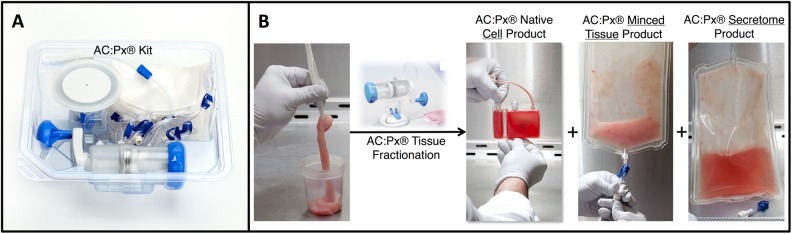
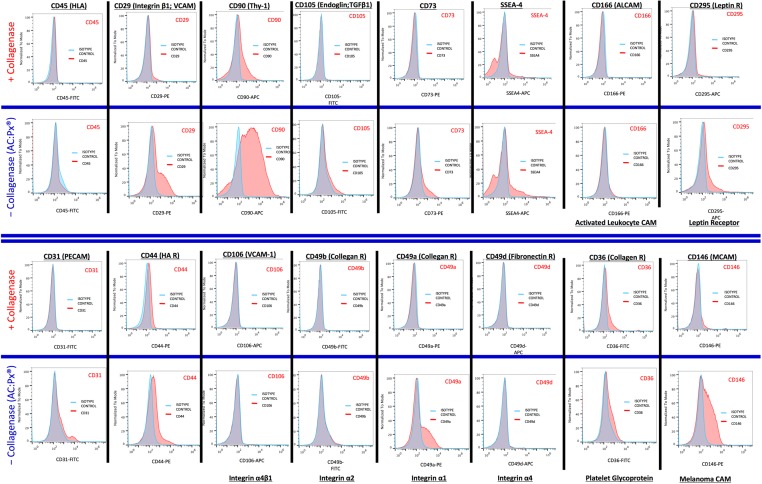
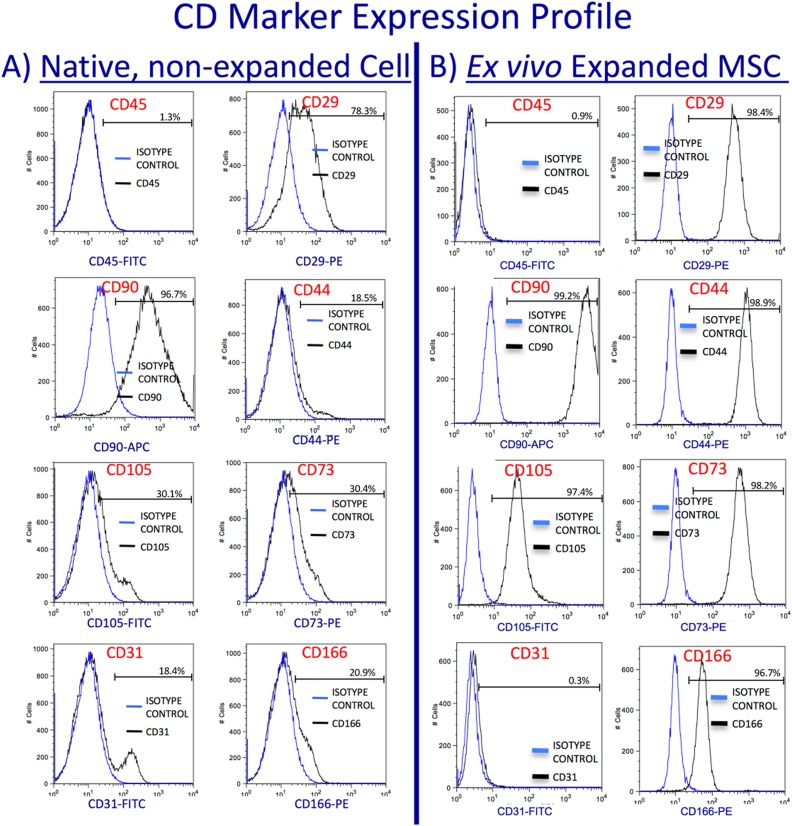
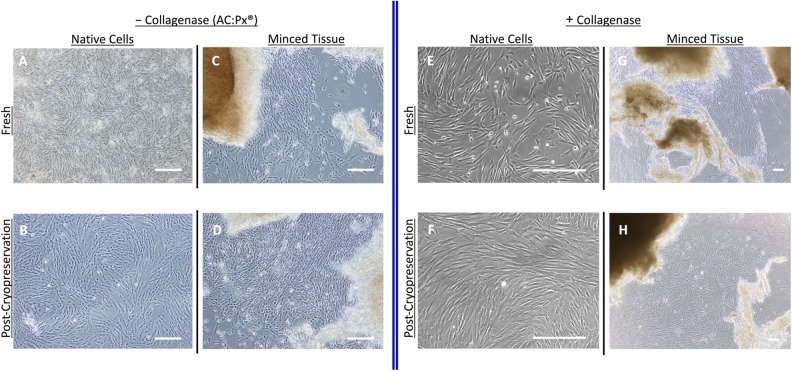
Enzymes are commonly used as a biochemical means to liberate cells from a host of tissues for use in in vitro studies and/or in vivo transplantations. However, very little understanding exists of the biological and functional effects that enzymes have on cells during the process of releasing the native cells from a given tissue. One specific reason for this is that no technology has existed as a nonenzymatic control to compare baseline biology and function for a given processed tissue. We have developed a sterile, onetime use, disposable system (referred to as the AuxoCell Processing System or AC:Px®) that allows for processing of solid tissue in a closed, standardized system using mechanical means to liberate cells without the need and/or use of any biochemical, enzymatic digestion. In this report, for the first time, we directly compare the cellular outputs derived from processing the same umbilical cord tissue (UCT) in the presence and absence of collagenase. In the presence of collagenase, we observed on average, approximately a 2.7-fold reduction in native mesenchymal stem/stromal cell (MSC) yields and a reduction in MSC-specific markers CD90, CD29, CD105, CD73, CD44, CD36, CD49b, CD49a, CD146, CD295, and CD166 and in endothelial marker CD31. These data directly exhibit that the use of collagenase to process UCT to release cells impacts cell recovery with respect to number and cell surface marker expression and, hence, could affect the in vivo function of the recovered native cellular population.
酶通常被用作一种生化手段,从多种组织中释放细胞,用于体外研究和/或体内移植。然而,人们对酶在释放特定组织中原生细胞的过程中对细胞的生物学和功能影响知之甚少。造成这种情况的一个具体原因是,没有非酶控技术作为对照,以比较给定处理组织的基线生物学和功能。我们开发了一种无菌、一次性使用、一次性使用的系统(称为 AuxoCell 处理系统或 AC:Px®),该系统允许使用机械手段在封闭、标准化的系统中处理固体组织,无需使用任何生化、酶消化来释放细胞。在本报告中,我们首次直接比较了在存在和不存在胶原酶的情况下处理相同脐带组织 (UCT) 所产生的细胞输出。在胶原酶存在的情况下,我们观察到,平均而言,原代间充质干细胞/基质细胞 (MSC) 的产量大约减少了 2.7 倍,并且 MSC 特异性标志物 CD90、CD29、CD105、CD73、CD44、CD36、CD49b、CD49a、CD146、CD295 和 CD166 的表达减少,内皮标志物 CD31 的表达也减少。这些数据直接表明,使用胶原酶处理 UCT 以释放细胞会影响细胞的恢复数量和细胞表面标志物的表达,因此可能会影响回收的天然细胞群体的体内功能。