Centre for Star and Planet Formation and Natural History Museum of Denmark, University of Copenhagen, Øster Voldgade 5-7, DK-1350, Denmark.
Museum für Naturkunde, Leibniz-Institut für Evolutions- und Biodiversitätsforschung, Berlin 10115, Germany.
Nature. 2018 Mar 21;555(7697):507-510. doi: 10.1038/nature25990.
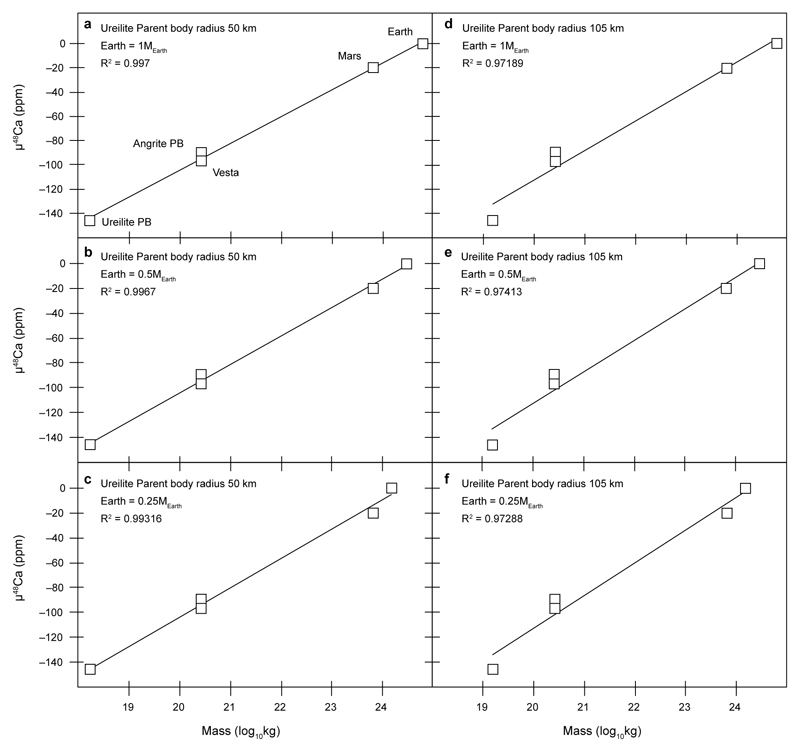
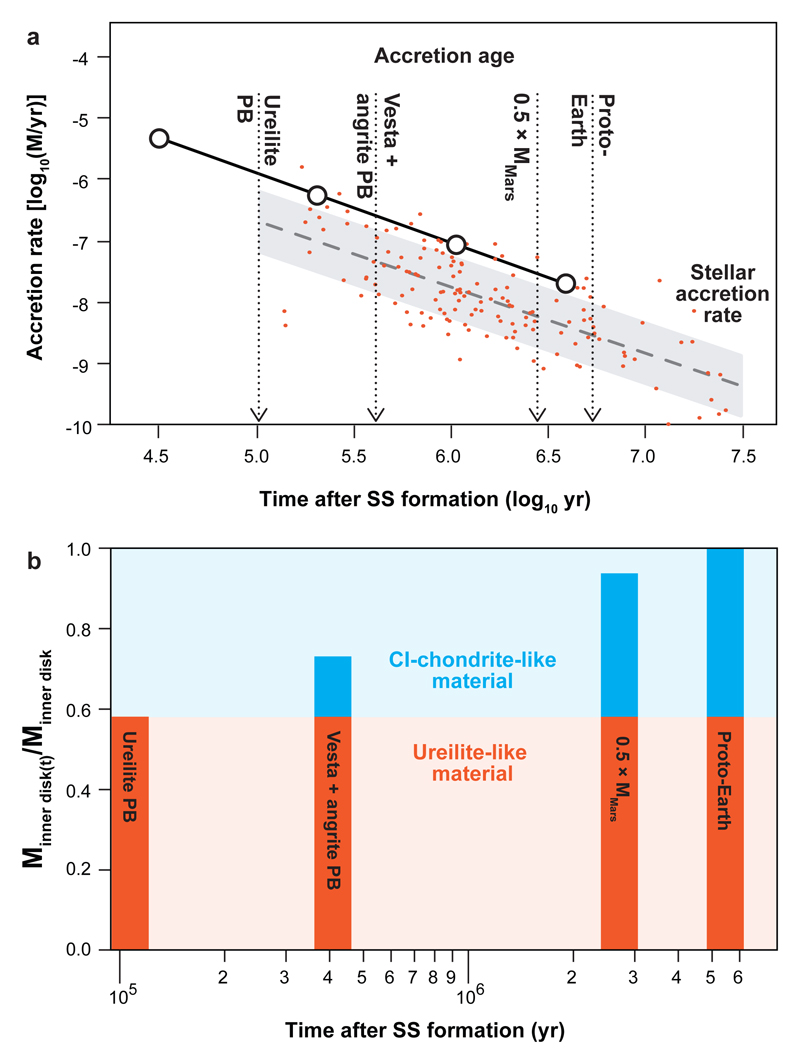
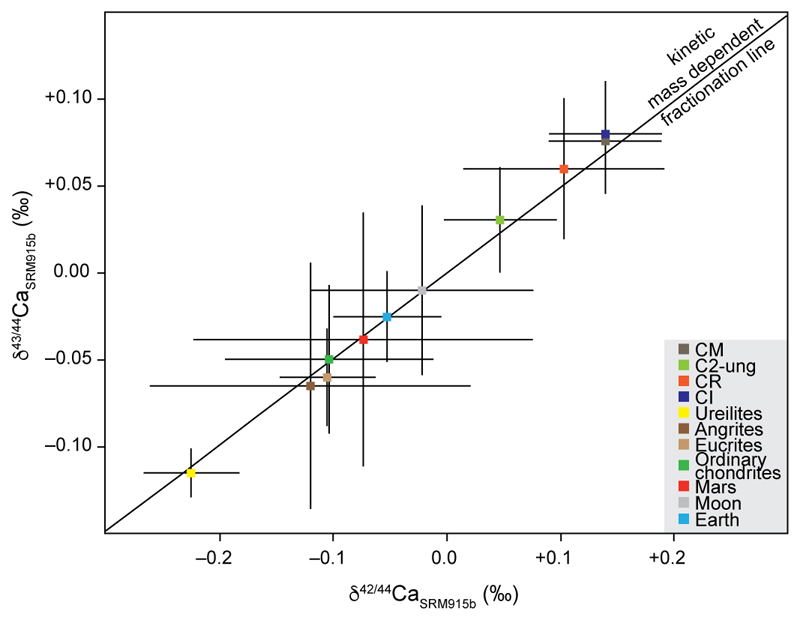
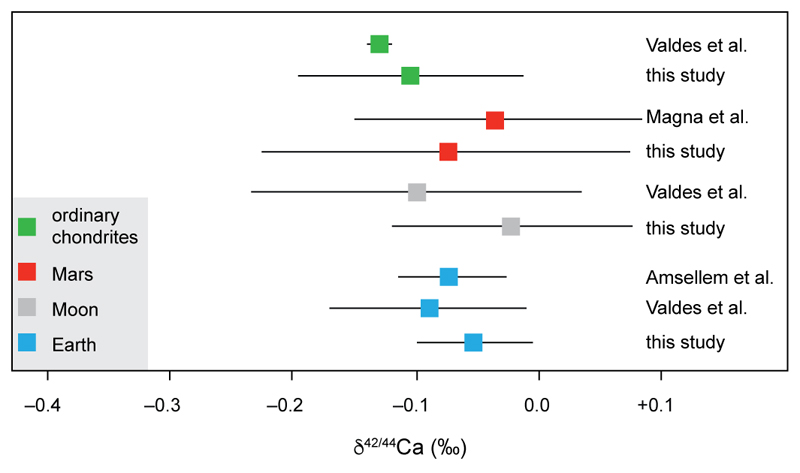
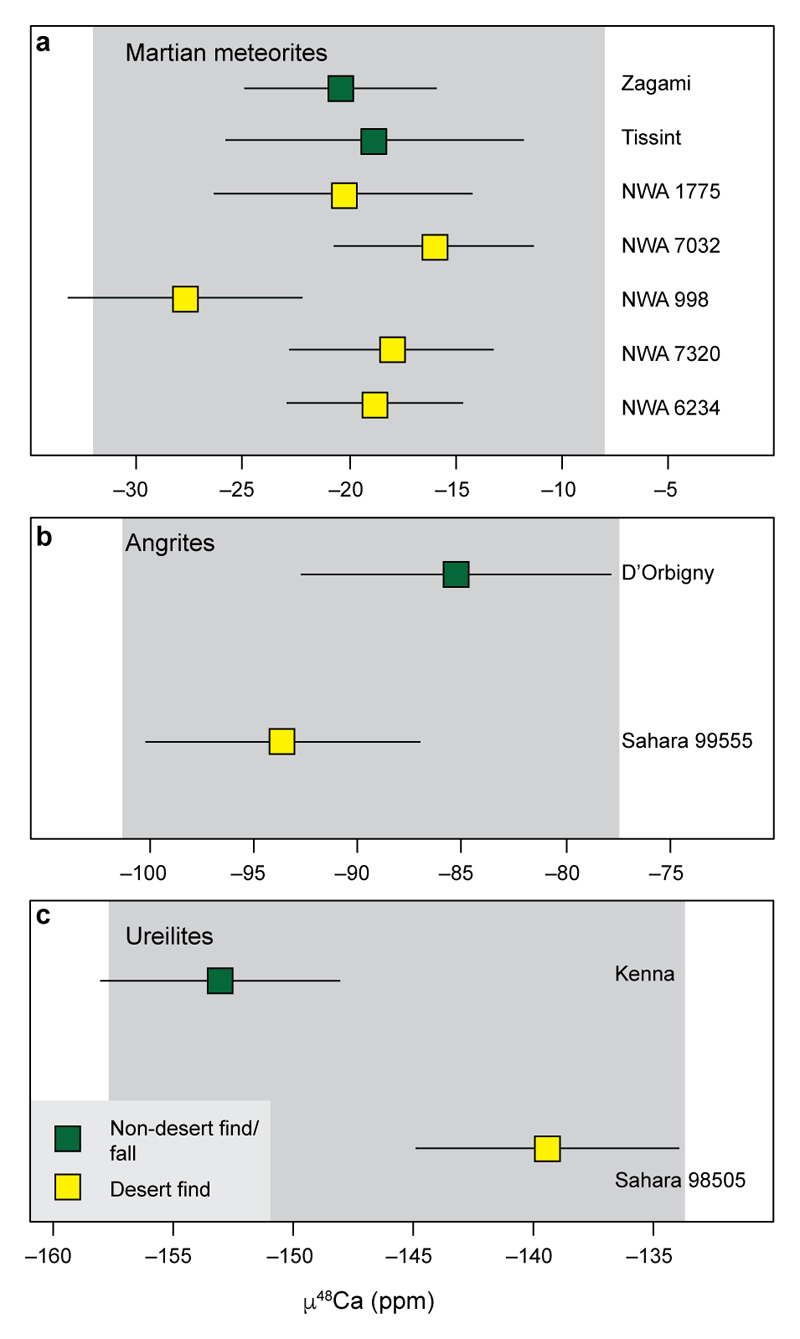
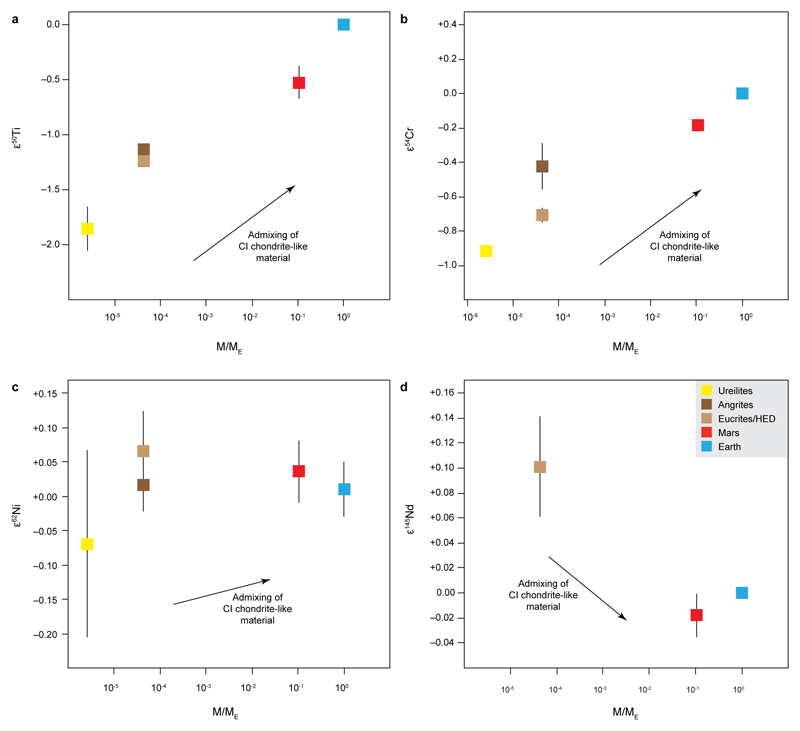
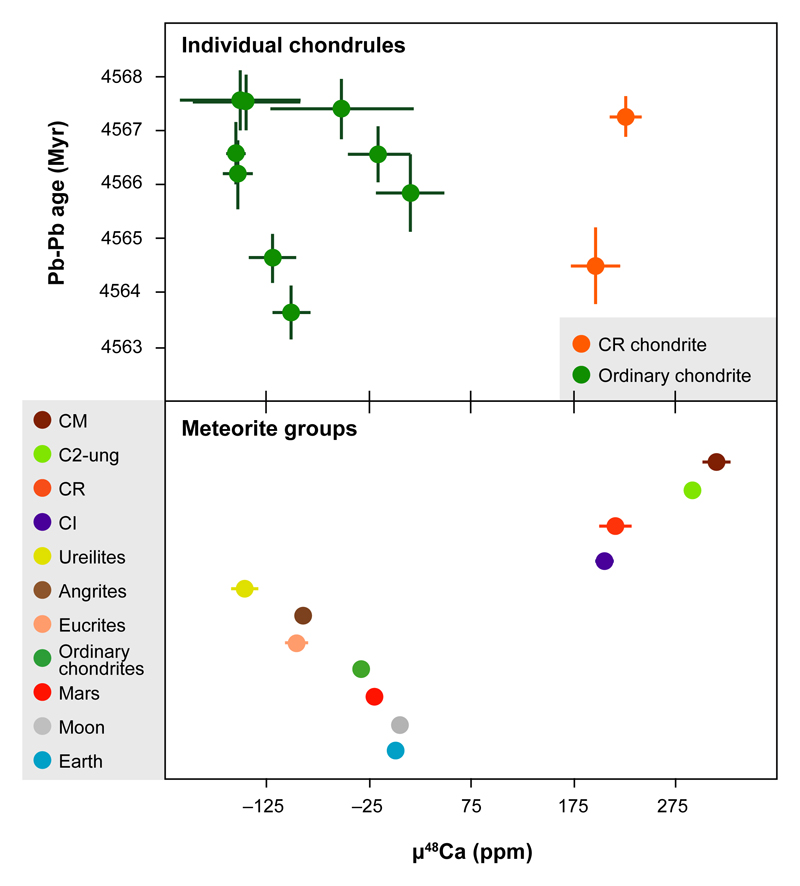
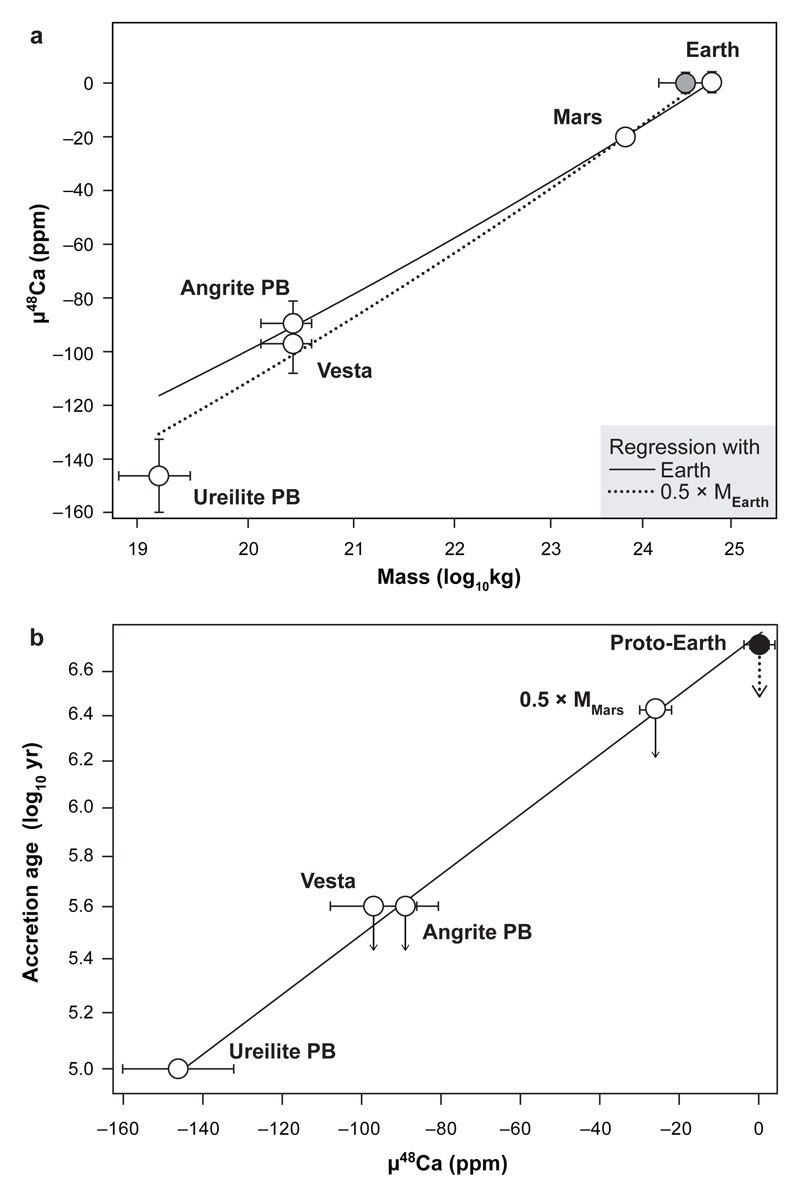
Nucleosynthetic isotope variability among Solar System objects is often used to probe the genetic relationship between meteorite groups and the rocky planets (Mercury, Venus, Earth and Mars), which, in turn, may provide insights into the building blocks of the Earth-Moon system. Using this approach, it has been inferred that no primitive meteorite matches the terrestrial composition and the protoplanetary disk material from which Earth and the Moon accreted is therefore largely unconstrained. This conclusion, however, is based on the assumption that the observed nucleosynthetic variability of inner-Solar-System objects predominantly reflects spatial heterogeneity. Here we use the isotopic composition of the refractory element calcium to show that the nucleosynthetic variability in the inner Solar System primarily reflects a rapid change in the mass-independent calcium isotope composition of protoplanetary disk solids associated with early mass accretion to the proto-Sun. We measure the mass-independent Ca/Ca ratios of samples originating from the parent bodies of ureilite and angrite meteorites, as well as from Vesta, Mars and Earth, and find that they are positively correlated with the masses of their parent asteroids and planets, which are a proxy of their accretion timescales. This correlation implies a secular evolution of the bulk calcium isotope composition of the protoplanetary disk in the terrestrial planet-forming region. Individual chondrules from ordinary chondrites formed within one million years of the collapse of the proto-Sun reveal the full range of inner-Solar-System mass-independent Ca/Ca ratios, indicating a rapid change in the composition of the material of the protoplanetary disk. We infer that this secular evolution reflects admixing of pristine outer-Solar-System material into the thermally processed inner protoplanetary disk associated with the accretion of mass to the proto-Sun. The identical calcium isotope composition of Earth and the Moon reported here is a prediction of our model if the Moon-forming impact involved protoplanets or precursors that completed their accretion near the end of the protoplanetary disk's lifetime.
太阳系天体中核合成同位素的变化通常被用来探测陨石群与类地行星(水星、金星、地球和火星)之间的遗传关系,而这反过来又可以深入了解地球-月球系统的组成部分。通过这种方法,人们推断出没有原始陨石与地球的组成相匹配,因此,形成地球和月球的原行星盘物质在很大程度上是不受限制的。然而,这一结论是基于这样一种假设,即观测到的内太阳系天体的核合成变异性主要反映了空间异质性。在这里,我们使用难熔元素钙的同位素组成来表明,内太阳系的核合成变异性主要反映了与早期向原太阳进行大规模吸积相关的原行星盘固体的质量独立钙同位素组成的快速变化。我们测量了来自钙长辉长无球粒陨石和钙长辉长无球粒陨石母体的样本以及灶神星、火星和地球的难熔元素钙的同位素组成,发现它们与母体小行星和行星的质量呈正相关,而母体小行星和行星的质量是其吸积时间尺度的一个代理。这种相关性意味着在地球行星形成区域内,原行星盘的整体钙同位素组成存在长期演化。在原太阳坍塌后一百万年内形成的普通球粒陨石的单个球粒揭示了内太阳系质量独立 Ca/Ca 比值的全部范围,这表明原行星盘物质的组成发生了快速变化。我们推断,这种长期演化反映了原始外太阳系物质与原太阳吸积过程中热加工的内原行星盘之间的混合。如果月球形成的撞击涉及到在原行星盘寿命结束时完成吸积的原行星或前体,那么这里报告的地球和月球的相同钙同位素组成是我们模型的一个预测。