Institut National de la Transfusion Sanguine (INTS), Département D'études des Agents Transmissibles par le Sang, Centre National de Référence Risques Infectieux Transfusionnels, Paris, France.
Institut Pasteur, Genotyping of Pathogens Pole, Laboratory for Urgent Response to Biological Threats, Environment and Infectious Risks, Paris, France.
PLoS One. 2018 Mar 22;13(3):e0194366. doi: 10.1371/journal.pone.0194366. eCollection 2018.
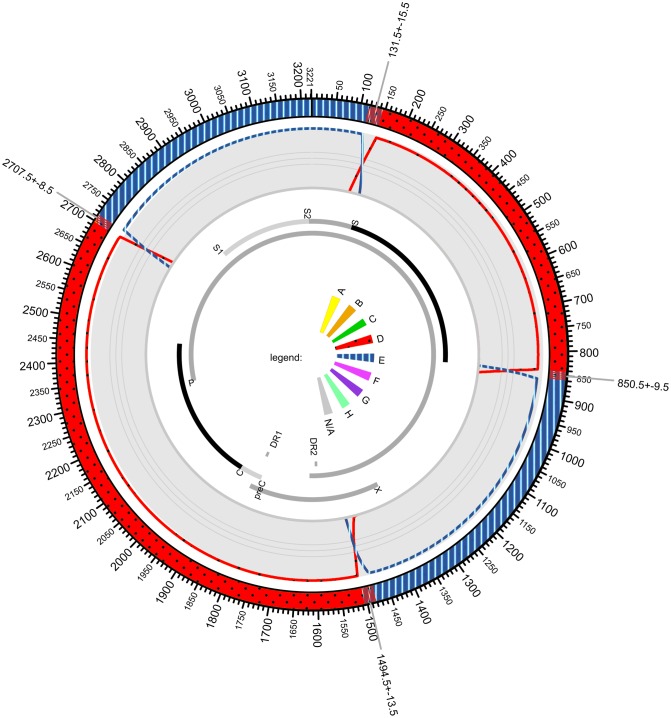
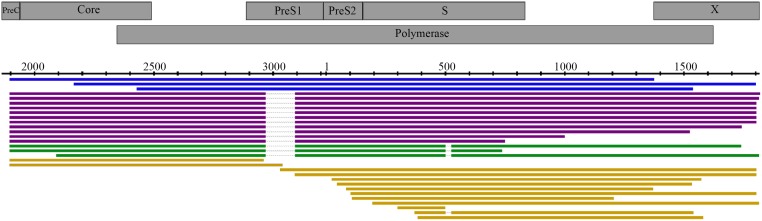
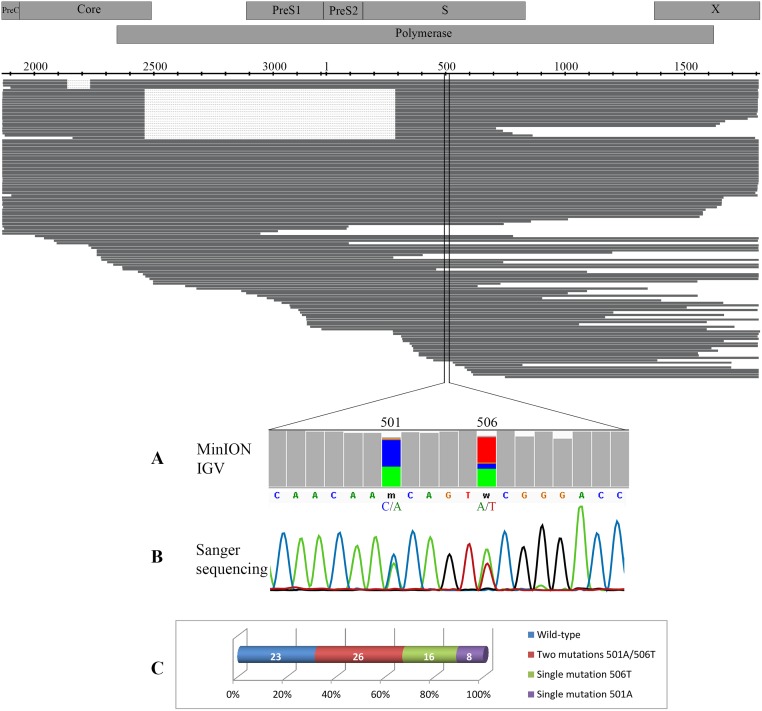
Until recently, the method of choice to characterize viral diversity consisted in cloning PCR amplicons of full-length viral genomes and Sanger-sequencing of multiple clones. However, this is extremely laborious, time-consuming, and low-throughput. Next generation short-read sequencing appears also limited by its inability to directly sequence full-length viral genomes. The MinION™ device recently developed by Oxford Nanopore Technologies can be a promising alternative by applying long-read single-molecule sequencing directly to the overall amplified products generated in a PCR reaction. This new technology was evaluated by using hepatitis B virus (HBV) as a model. Several previously characterized HBV-infected clinical samples were investigated including recombinant virus, variants that harbored deletions and mixed population. Original MinION device was able to generate individual complete 3,200-nt HBV genome sequences and to identify recombinant variants. MinION was particularly efficient in detecting HBV genomes with multiple large in-frame deletions and spliced variants concomitantly with non-deleted parental genomes. However, an average-12% sequencing error rate per individual reads associated to a low throughput challenged single-nucleotide resolution, polymorphism calling and phasing mutations directly from the sequencing reads. Despite this high error rate, the pairwise identity of MinION HBV consensus genome was consistent with Sanger sequencing method. MinION being under continuous development, further studies are needed to evaluate its potential use for viral infection characterization.
直到最近,用于描述病毒多样性的方法是选择克隆全长病毒基因组的 PCR 扩增子,并对多个克隆进行 Sanger 测序。然而,这种方法非常费力、耗时且通量低。下一代短读测序似乎也受到其无法直接测序全长病毒基因组的限制。牛津纳米孔技术公司(Oxford Nanopore Technologies)最近开发的 MinION 设备可以通过将长读长单分子测序直接应用于 PCR 反应中生成的总扩增产物,成为一种有前途的替代方法。该新技术使用乙型肝炎病毒(HBV)作为模型进行了评估。研究了几个先前经过特征描述的 HBV 感染临床样本,包括重组病毒、携带缺失和混合种群的变体。原始 MinION 设备能够生成单独的完整 3200nt HBV 基因组序列,并识别重组变体。MinION 特别有效地检测到具有多个大框内缺失和拼接变体的 HBV 基因组,同时还检测到未缺失的亲本基因组。然而,平均每个个体读数 12%的测序错误率、低通量以及对单核苷酸分辨率、多态性调用和直接从测序读数中检测突变的影响,都带来了挑战。尽管存在这种高错误率,但 MinION HBV 共识基因组的两两同一性与 Sanger 测序方法一致。MinION 正在不断发展,需要进一步研究来评估其在病毒感染特征描述中的潜在用途。