Microbiology, DIMES, University of Bologna, Bologna, Italy.
Centre of Foodomics, Department of Agro-Food Science and Technology, University of Bologna, Cesena, Italy.
PLoS One. 2018 Mar 22;13(3):e0194827. doi: 10.1371/journal.pone.0194827. eCollection 2018.
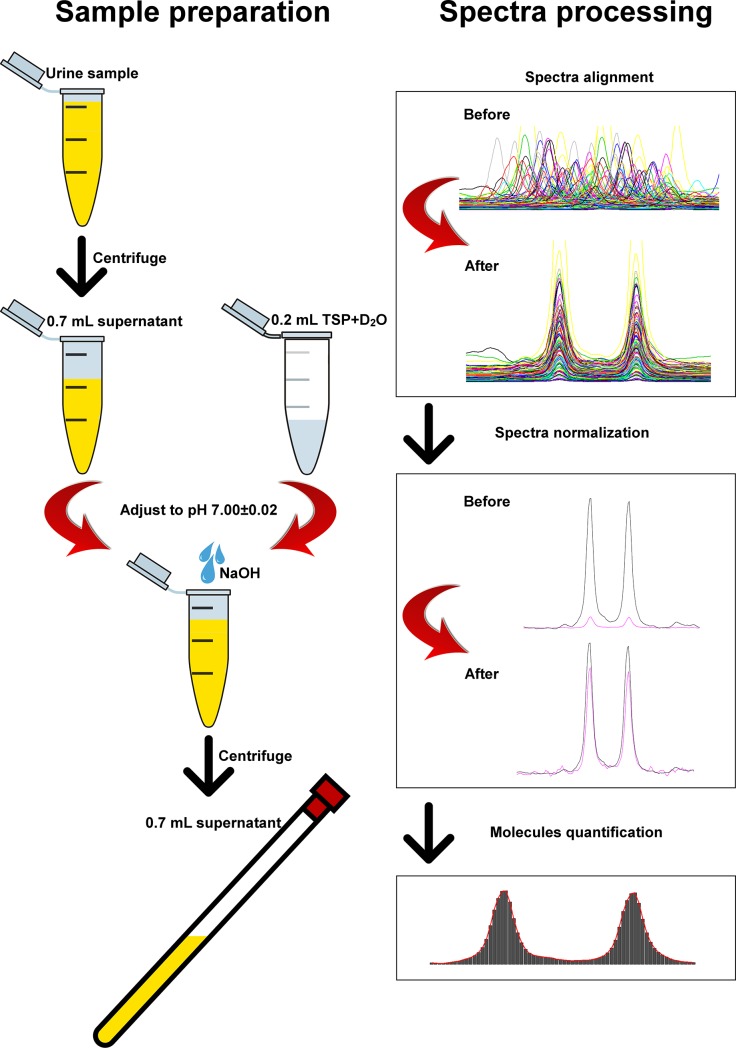
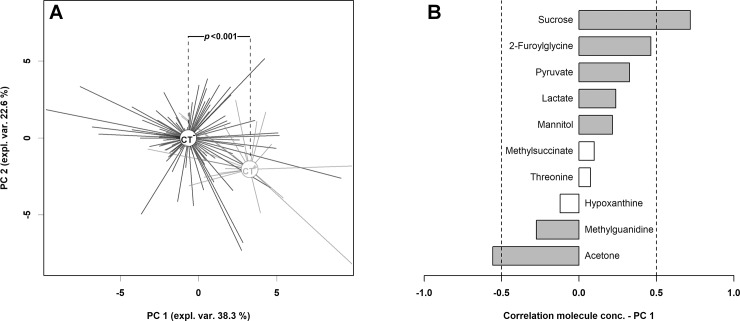
The aim of this study was to characterize the urine metabolome of women with Chlamydia trachomatis (CT) uro-genital infection (n = 21), comparing it with a group of CT-negative subjects (n = 98). By means of a proton-based nuclear magnetic resonance (1H-NMR) spectroscopy, we detected and quantified the urine metabolites of a cohort of 119 pre-menopausal Caucasian women, attending a STI Outpatients Clinic in Italy. In case of a CT positive result, CT molecular genotyping was performed by omp1 gene semi-nested PCR followed by RFLP analysis. We were able to identify several metabolites whose concentrations were significantly higher in the urine samples of CT-positive subjects, including sucrose, mannitol, pyruvate and lactate. In contrast, higher urinary levels of acetone represented the main feature of CT-negative women. These results were not influenced by the age of patients nor by the CT serovars (D, E, F, G, K) responsible of the urethral infections. Since the presence of sugars can increase the stability of chlamydial proteins, higher levels of sucrose and mannitol in the urethral lumen, related to a higher sugar consumption, could have favoured CT infection acquisition or could have been of aid for the bacterial viability. Peculiar dietary habits of the subjects enrolled, in term of type and amount of food consumed, could probably explain these findings. Lactate and pyruvate could result from CT-induced immunopathology, as a product of the inflammatory microenvironment. Further studies are needed to understand the potential role of these metabolites in the pathogenesis of CT infection, as well as their diagnostic/prognostic use.
本研究旨在描述解脲支原体(CT)泌尿生殖道感染女性的尿液代谢组学特征(n=21),并将其与一组 CT 阴性受试者(n=98)进行比较。通过质子磁共振波谱(1H-NMR)分析,我们检测并定量了意大利一家性传播感染门诊的 119 名绝经前白人女性队列的尿液代谢物。对于 CT 阳性结果,通过 omp1 基因半巢式 PCR 进行 CT 分子基因分型,随后进行 RFLP 分析。我们能够鉴定出几种代谢物,其浓度在 CT 阳性受试者的尿液样本中明显升高,包括蔗糖、甘露醇、丙酮酸和乳酸。相比之下,丙酮在 CT 阴性女性尿液中的含量较高是其主要特征。这些结果不受患者年龄或引起尿道感染的 CT 血清型(D、E、F、G、K)的影响。由于糖的存在可以增加衣原体蛋白的稳定性,尿道腔中蔗糖和甘露醇水平的升高,与更高的糖消耗有关,可能有利于 CT 感染的获得,或者有利于细菌的存活。可能是受试者特殊的饮食习惯,包括所摄入食物的类型和数量,导致了这些发现。乳酸和丙酮酸可能是 CT 引起的免疫病理学的产物,是炎症微环境的产物。需要进一步的研究来了解这些代谢物在 CT 感染发病机制中的潜在作用,以及它们在诊断/预后方面的应用。