Departments of Pharmacology and Global Medical Science, Wonju College of Medicine, Yonsei University, Wonju, 26426, Korea.
Department of Pharmacology, Tan Tao University, School of Medicine, Tan Tao University Avenue Tan Duc E., City, Duc Hoa, Long An, 850000, Vietnam.
Sci Rep. 2018 Mar 22;8(1):5025. doi: 10.1038/s41598-018-23298-2.
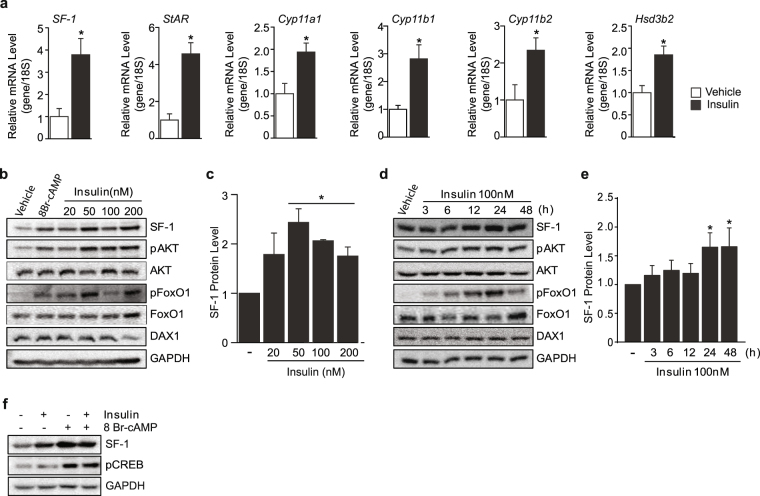
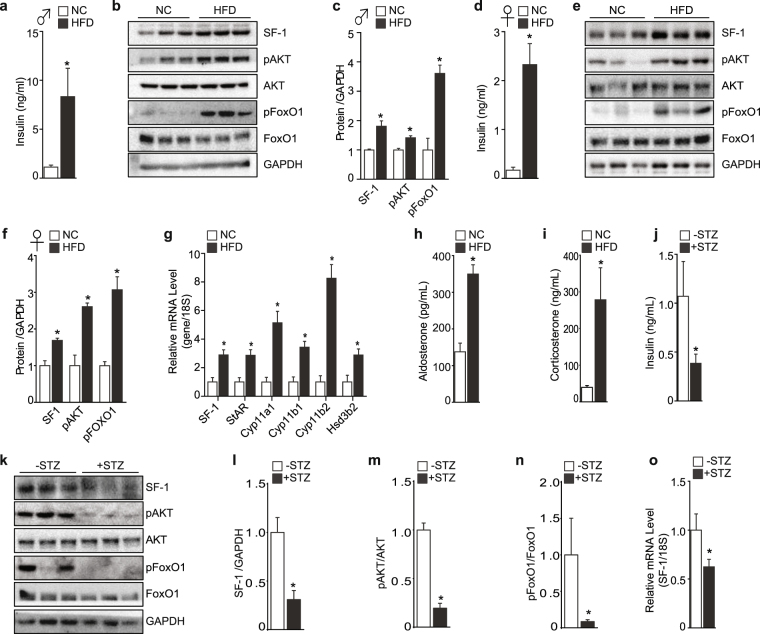
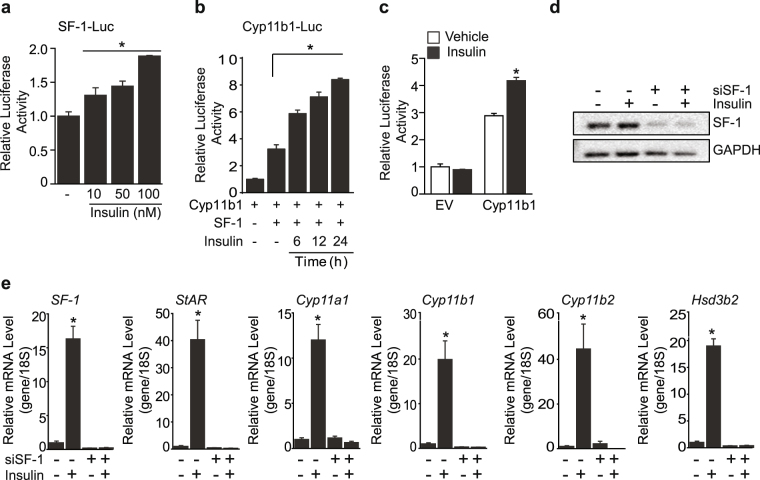
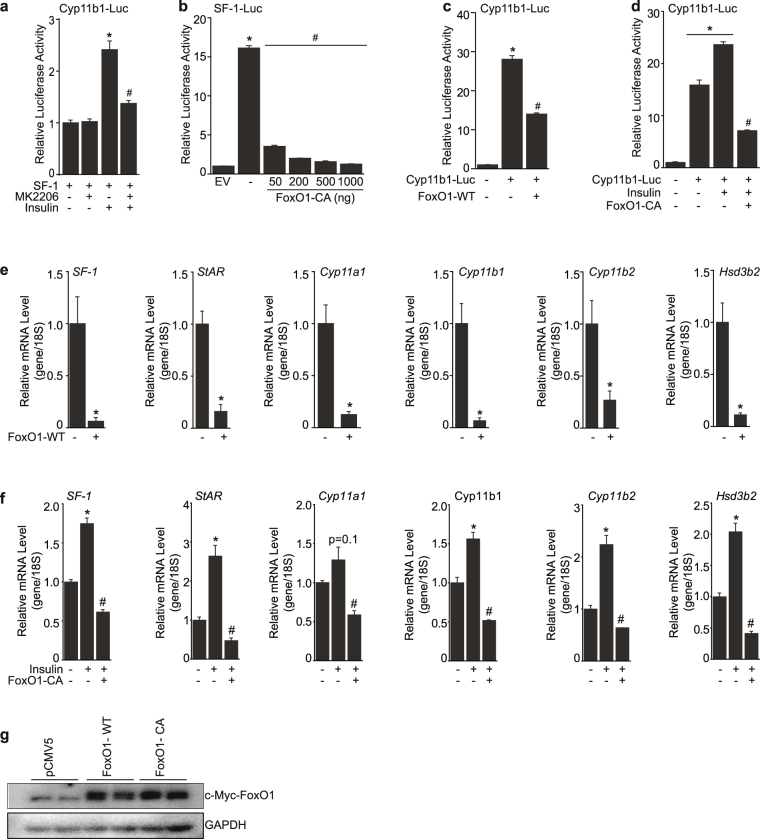
Development of metabolic syndrome is associated with hyperactivity of the HPA axis characterized by elevated levels of circulating adrenal hormones including cortisol and aldosterone. However, the molecular mechanism leading to the dysregulation of the HPA axis is not well elucidated. In this study, we found that insulin regulates adrenal steroidogenesis by increasing the expression and activity of steroidogenic factor 1 (SF-1) both in vitro and in vivo and this insulin effect was partly through inhibition of FoxO1. Specifically, insulin increased the protein and RNA levels of SF-1 and steroidogenic target genes. Further, adrenal SF-1 expression was significantly increased by hyperactivation of insulin signaling in mice. Together with the elevated SF-1 expression in adrenal glands, hyperactivation of insulin signaling led to increased aldosterone and corticosterone levels. On the other hand, suppressing the insulin signaling using streptozotocin markedly reduced the expression of adrenal SF-1 in mice. In addition, overexpression of FoxO1 significantly suppressed SF-1 and its steroidogenic target genes implying that the positive effect of insulin on SF-1 activity might be through suppression of FoxO1 in the adrenal gland. Taken together, these results indicate that insulin regulates adrenal steroidogenesis through coordinated control of SF-1 and FoxO1.
代谢综合征的发展与 HPA 轴的过度活跃有关,其特征是循环肾上腺激素水平升高,包括皮质醇和醛固酮。然而,导致 HPA 轴失调的分子机制尚不清楚。在这项研究中,我们发现胰岛素通过增加类固醇生成因子 1(SF-1)的表达和活性来调节肾上腺类固醇生成,无论是在体外还是体内,这种胰岛素作用部分是通过抑制 FoxO1 实现的。具体来说,胰岛素增加了 SF-1 和类固醇生成靶基因的蛋白和 RNA 水平。此外,胰岛素信号的过度激活使小鼠肾上腺 SF-1 表达显著增加。伴随着肾上腺 SF-1 表达的升高,胰岛素信号的过度激活导致醛固酮和皮质醇水平升高。另一方面,使用链脲佐菌素抑制胰岛素信号显著降低了小鼠肾上腺 SF-1 的表达。此外,FoxO1 的过表达显著抑制了 SF-1 及其类固醇生成靶基因的表达,表明胰岛素对 SF-1 活性的正效应可能是通过抑制肾上腺中的 FoxO1 实现的。总之,这些结果表明,胰岛素通过协调控制 SF-1 和 FoxO1 来调节肾上腺类固醇生成。