Dubey Kshatresh Dutta, Wang Binju, Vajpai Manu, Shaik Sason
Institute of Chemistry , The Lise Meitner-Minerva Center for Computational Quantum Chemistry , The Hebrew University of Jerusalem , 91904 , Jerusalem , Israel . Email:
Department of Biological Sciences and Bioengineering , Indian Institute of Technology-Kanpur , Kanpur-208016 , UP , India.
Chem Sci. 2017 Aug 1;8(8):5335-5344. doi: 10.1039/c7sc01932g. Epub 2017 Jun 13.
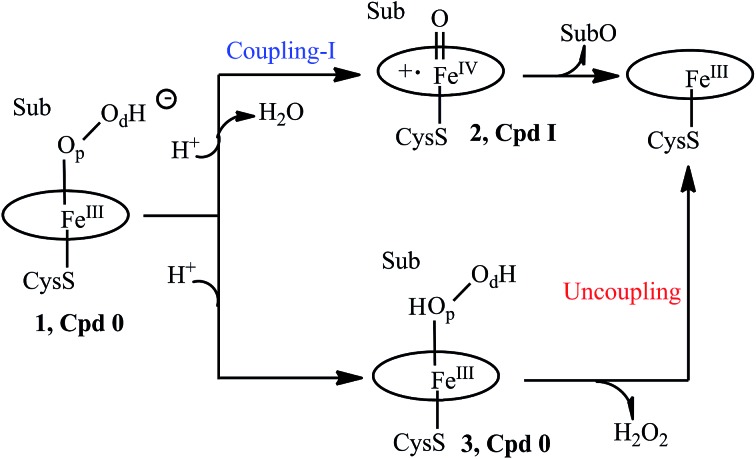
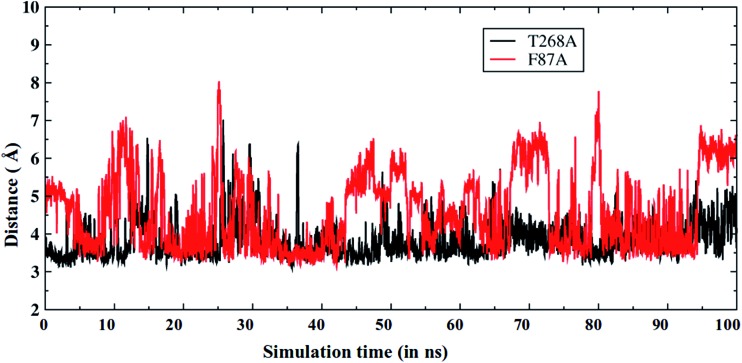
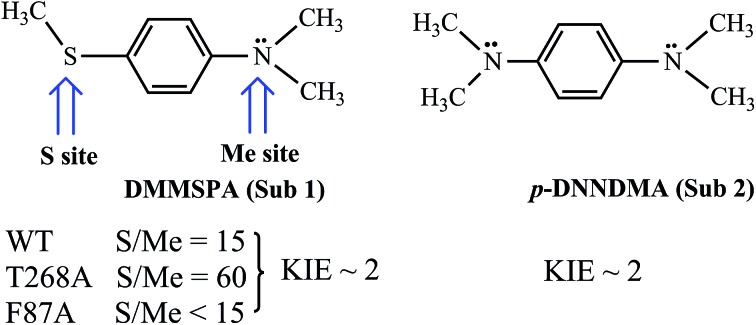
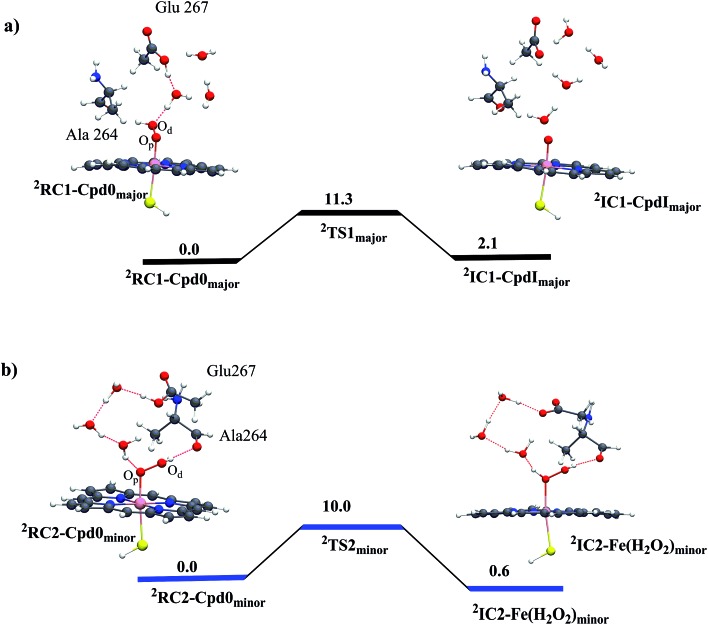
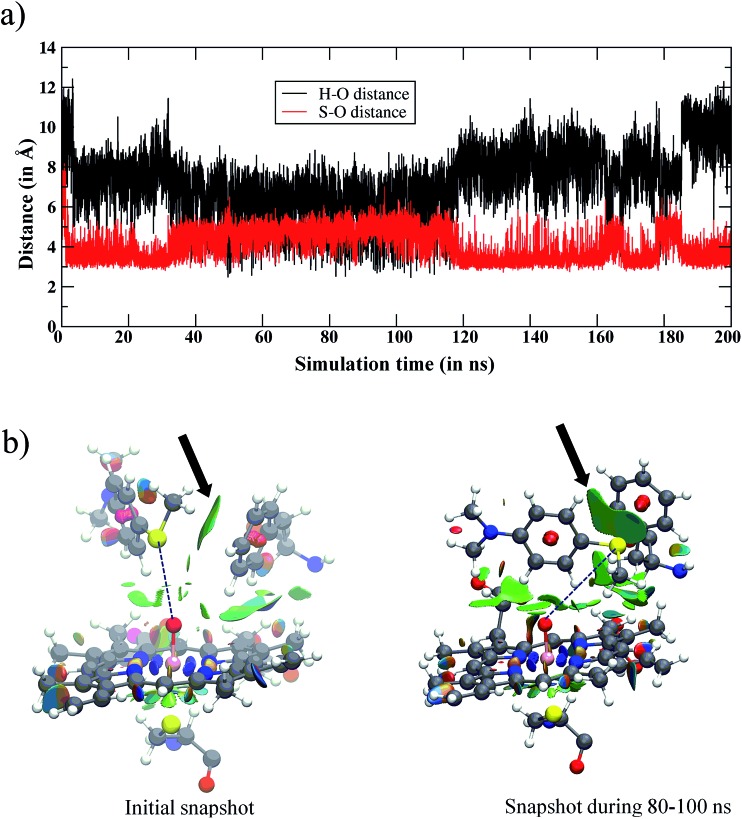
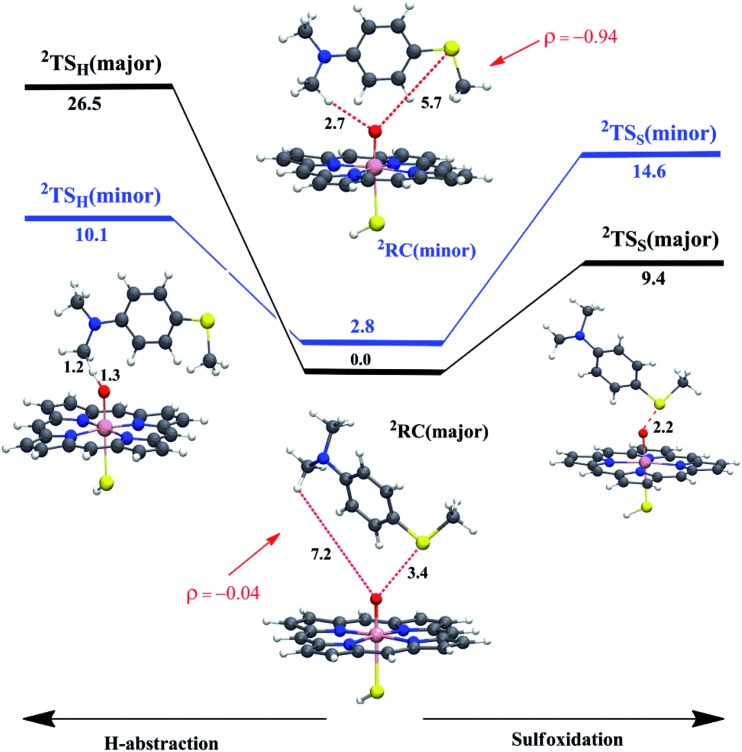
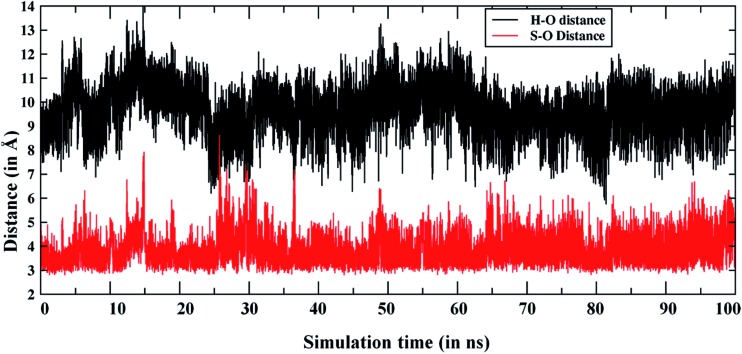
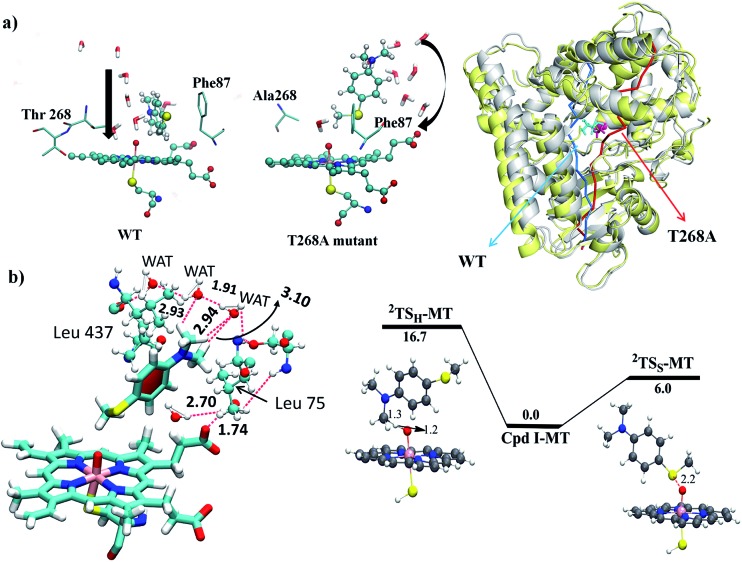
It is a long-standing mechanistic consensus that the mutation of the proton-shuttle mediator Threonine (T) in Cytochrome P450 enzymes severs the water channel and thereby quenches the formation of the active species: the high-valent iron(iv)-oxo porphyrin π-cation radical species, compound I (Cpd I). Using MD simulations and hybrid QM/MM calculations of P450 we demonstrate that this is not the case. Thus, while the original water channel is disrupted in the T268A mutant of the enzyme, a new channel is formed that generates Cpd I. With this new understanding, we address the puzzling regiochemical and kinetic-isotope effect (KIE) results (Volz , , 2002, , 9724-9725) on the sulfoxidation and -dealkylation of dimethyl-(4-methylsulfanyl-phenyl)-amine by wild type (WT) P450 and its T268A F87A mutants. We show that the observed variable ratio of S/Me oxidation for these enzymes, the constant KIE, originates from Cpd I being the sole oxidant. Thus, while the conserved KIE probes the conserved nature of the transition state, the variable regiochemical S/Me ratio reflects the active-site reorganization in the mutants: the shifted location of the new water channel in T268A tightens the binding of the S-end by Cpd I and increases the S/Me ratio, whereas the absence of π-interaction with the S-end in F87A creates a looser binding that lowers the S/Me ratio. Our results match the experimental findings. As such, this study sheds light on puzzling experimental results, and may shift a central paradigm in P450 research. The broader implication on enzymatic research is that a single-site mutation is not a localised alteration but one that may lead to a profound change in the active site, sufficiently so as to change the chemoselectivity of catalyzed reactions.
长期以来,人们在机理上达成的共识是,细胞色素P450酶中质子穿梭介质苏氨酸(T)的突变会切断水通道,从而抑制活性物种的形成:高价铁(IV)-氧代卟啉π-阳离子自由基物种,即化合物I(Cpd I)。通过对P450进行分子动力学(MD)模拟和量子力学/分子力学(QM/MM)混合计算,我们证明事实并非如此。因此,虽然该酶的T268A突变体中原来的水通道被破坏,但会形成一个新的通道,该通道会生成Cpd I。基于这一新认识,我们探讨了关于野生型(WT)P450及其T268A、F87A突变体对二甲基-(4-甲硫基-苯基)-胺进行硫氧化和脱烷基反应令人困惑的区域化学和动力学同位素效应(KIE)结果(Volz等人,2002年,9724 - 9725页)。我们表明,这些酶观察到的S/Me氧化可变比率以及恒定的KIE源于Cpd I是唯一的氧化剂。因此,虽然保守的KIE探测过渡态的保守性质,但可变的区域化学S/Me比率反映了突变体中活性位点的重组:T268A中新水通道位置的改变加强了Cpd I对S端的结合并增加了S/Me比率,而F87A中与S端缺乏π相互作用则产生了更松散的结合,降低了S/Me比率。我们的结果与实验发现相符。因此,本研究揭示了令人困惑的实验结果,并可能改变P450研究中的一个核心范式。对酶学研究更广泛的意义在于,单点突变不是局部改变,而是可能导致活性位点发生深刻变化,足以改变催化反应的化学选择性。